
On the morning of May 20, I was wheeled into one of the 24 operating rooms at the University of Washington Hospital.
I was greeted at the operating table by a host of doctors, anesthesiologists and nurses. Knowing they were working for the “UW brand,” I borrowed a line from “Bow Down to Washington,” the school’s fight song, to give them a little pre-surgery pep talk. They smiled, acknowledging my nervous attempt at last-minute, gallows humor.
The words that followed – and frankly the last ones I remember before waking up seven hours later in the recovery room – were grounded in hope and the significance of the task at hand.
“Today’s going to be a good day, Rick,” said my renowned, gifted surgeon, Dr. Sarah Psutka, before I nodded off into la-la land.
It would be a good day, despite all the pain I had in my abdomen that evening and the days to follow. Dr. Psutka, and her assistant, Dr. Carson, told me they had accomplished what they set out to do. Dr. Psutka had successfully removed the cancerous tumor on my right kidney – which apparently was no small feat – while preserving 85 percent of the otherwise-healthy kidney. Because the mostly-exterior, 6-centimeter tumor was behind the kidney, Dr. Psutka said she had to “flip the kidney over” with her hands to cut the tumor.

That image didn’t ease my pain. Only a favorable pathology report would ease the discomfort emanating from the 8 1/2-inch-long incision just below my right rib cage.
Dr. Carson, in his check-in with me on day 3 of my stay at UW, hinted he and Dr. Ptsuka were expecting good news.
“We feel very good about what we did,” he told me. “And we’re expecting a good report card from pathology.”
An “A+” report card, as it turned out. No cancer was found “on the margins,” or in other words, healthy tissue beyond the tissue with cancer cells. No cancer in the surrounding “fatty tissue,” which I imagine after consuming a lot of pizza and IPA beers over the years was considerable.
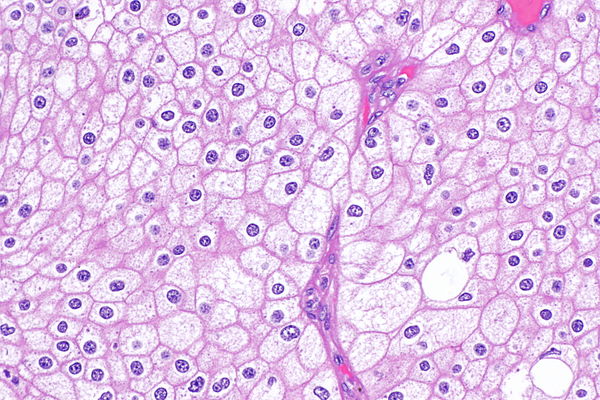
The shocker in the pathology report was this: The cancer was found to be “Chromofobe Renal Cell Carcinoma,” a rare but less aggressive than the cancer that afflicts most kidneys, “Clear Renal Cell Carcinoma.”
“This is a rarer cancer of the kidney that generally has a more indolent behavior,” Dr. Psutka told me.
“Indolent” is a fancy term for “habitually lazy, or disinclined to exert oneself.” Which I found interesting. Perhaps fitting. When I was little, my parents and aunt and uncle from Minnesota would occasionally refer to my cousin and myself, in a half-kidding sort of way, as “Lazy Ole Me.” I guess we were slackers back in the day. That label must have drove me to prove them wrong, because I think I’m anything but lazy now.
“Chromofobe Renal Cell Carcinoma” was content to just sit there, not socialize with nearby organs, such as the lungs and liver, where more aggressive forms of kidney cancer tend to dangerously wander. I guess I can be an introvert and anti-social at times.
Truth is, the tumor was large enough it would eventually mix it up with nearby organs, I’m told. I am so thankful this was caught early.
Most common types of kidney cancer
| Renal cancer | Percentage in patients |
| Clear Cell Carcinoma | 70-80 percent |
| Papillary Cell Carcinoma | 10-15 percent |
| Chromofobe Cell Carcinima | 3-5 percent |
I will not need follow-up treatment for cancer. The surgical removal of the cancerous tumor was the treatment. I will require annual screenings for at least five years going forward.
Thank you God, for knitting me together, for knowing my innermost thoughts, as well as my innermost organs. And thank you that the pesky tumor that threatened to cut my life short was actually the real “Lazy Ole Me” in this scenario.

Leave a Reply