
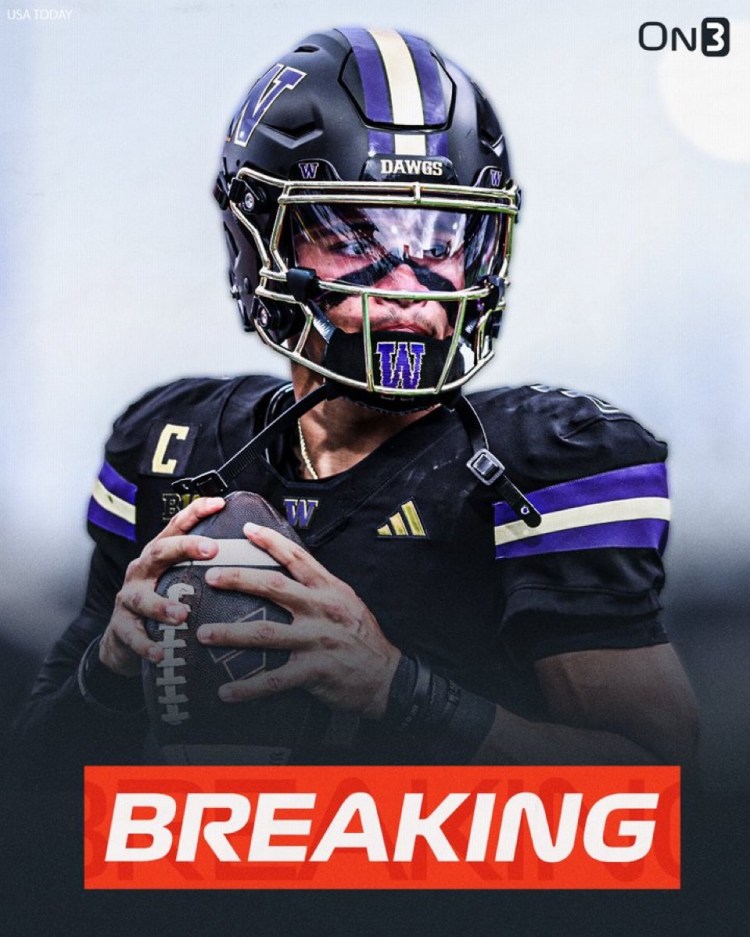
Growing up in western Washington, I naturally gravitated to being a fan of the Seattle SuperSonics, Seahawks, Mariners, and yes, University of Washington football and basketball.
As I grew older, however, my passion for the three professional sports teams waned. A big piece of that disenchantment I attribute to my career in sports journalism. As a newspaper insider, I guess I knew too much about “how the sausage was made.” Highly-paid pro athletes seem entitled. Some were hard to talk to. Reporters often had to grovel for interviews. I experienced that first-hand. Too many prima donnas. Too many meaningless games.
But UW? I’ll have to admit purple and gold runs in my veins. It’s in my DNA. That passion had never wavered. My earliest memories of sports are listening to UW football games on the radio on Saturday afternoons with my dad. Seattle’s first pro sports team, the Sonics, didn’t arrive until 1967, when I was 13. My dad took me to my first UW football game when I was 9. I was hooked that day in 1963. I loved the pageantry of college football. The marching bands. The buildup to kickoff. The raucous student section. Media access to players was no problem. We knew their names. They spent four seasons at a school, sometimes five with a redshirt. They played for the love of the game. They weren’t paid.
Of course that was so Don James-era. It’s all changed now. College football in 2026 is broken. It’s NFL free agency without binding contracts and guardrails. Washington quarterback Demond Williams shocked the college football world when he announced last evening (January 6) he was entering the transfer portal for a better deal, just four days after he had signed a one-year, near top-of-the-market NIL deal with UW for $4 million, according to The Seattle Times.
I was perplexed, but at least tried to understand, why frontline players Adam Mohammad and Raiden Vines-Bright transferred to California and Arizona State, respectively. But Demond? Or should we call him “Demand?” That was shocking. To quote Chevy Chase in National Lampoon’s Christmas Vacation, “if I woke up tomorrow with my head sewn into the carpet I wouldn’t be more surprised than I am right now.”
That’s because Demond Williams was the face of UW football. Coach Jedd Fisch made him so. He brought Demond with him from Basha High School in Chandler, Arizona. He played him his freshman season, many times in odd situations over the more experienced Will Rogers, just to get his feet wet. Fisch generated significant hype for his dual-threat quarterback by making bold predictions about him becoming a first-round NFL draft pick and a Heisman finalist. When Demond struggled against Ohio State, Michigan, Wisconsin and Oregon this past season Jedd was quick to defend him. “He’s just 18 years old,” he said. Next year’s team, built around Demond, was expected to be College Football Playoff-caliber. The three-year plan was on schedule. The coach and quarterback seemed joined at the hip.
Sources say that relationship went south in a hurry yesterday afternoon (January 6). Someone had apparently reached out to Demond. The quarterback told his coach he could get more money elsewhere. The exchange got heated. Since bringing Demond to UW, Jedd has seemingly bent over backwards to accommodate him. Now it seems Demond has stabbed his coach in the back.
The timing of Demond’s next step that day, his announcement on Instagram, may haunt him for awhile. He announced his intentions during the memorial service for a fellow UW soccer player who died of cancer. This is bad optics. A large contingent of UW football players and coaches were at that memorial service for Mia Hamant, and learned of Demond’s farewell on social media. Demond was not at the service.
Jedd wasn’t the only Fisch who felt betrayed. His wife, Amber, posted this on Instagram: “Announces during a funeral of an athlete at University of Washington how disgusting! While all of his other teammates were at the funeral!”
Oh, the drama. And frankly it’s been building since July 1, 2021, when “Name, Image and Likeness” (NIL) was adopted by the NCAA. It essentially allowed student athletes to be paid for promoting products or services. Then along came revenue sharing. On July 1, 2025, an NCAA antitrust settlement allowed Division 1 schools to share up to $20.5 million of their athletics revenue to pay players. But that doesn’t include money from unlimited “NIL collectives,” or third-party organizations funded by donors, boosters, businesses and fans. Football programs like Ohio State, Oregon, Texas Tech, Texas A&M, Michigan and Texas are believed to have rosters in the neighborhood of $35-$40 million. There was supposed to be tighter regulation of NIL deals. There was supposed to be “a salary cap.” It hasn’t happened.
The promise of a huge payday has fueled high-priced quarterbacks in the transfer portal. It’s no coincidence that the “Final Four” of the College Football Playoffs are led by transfer quarterbacks in their first season as starters with their respective teams.
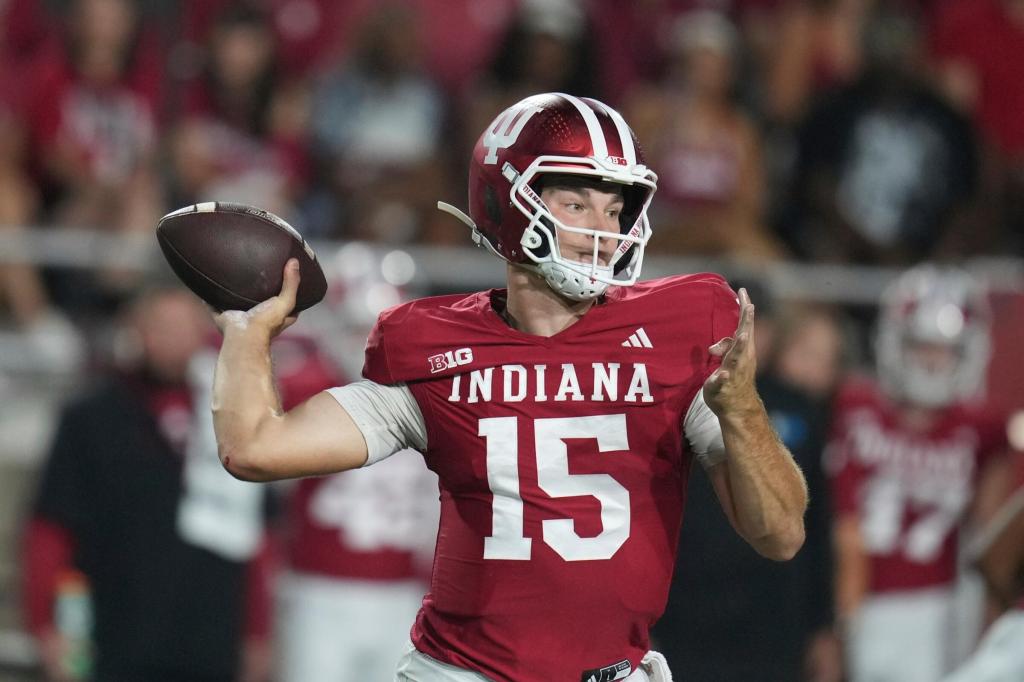

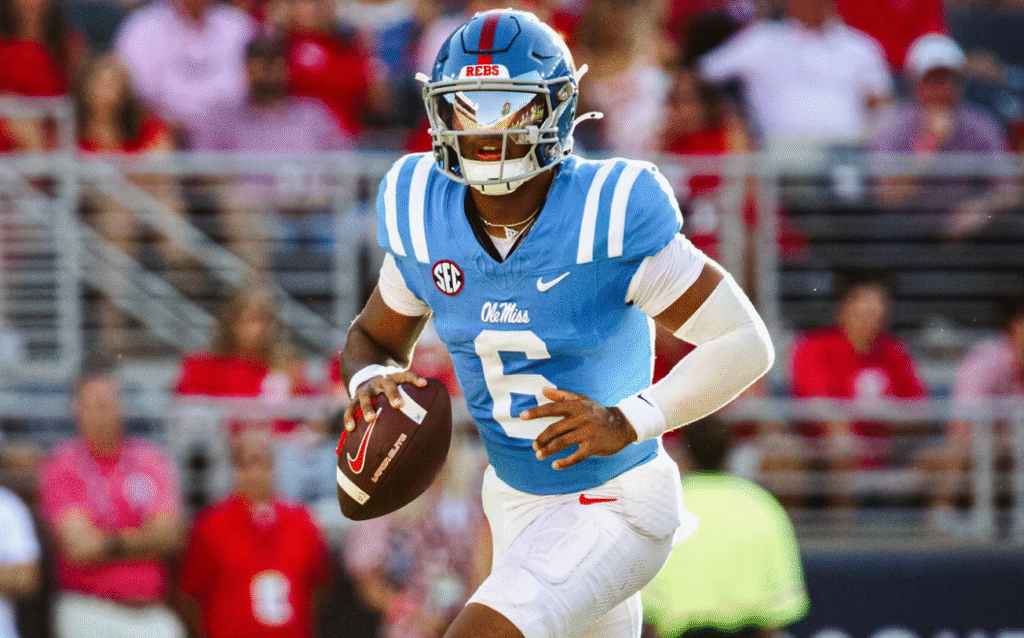
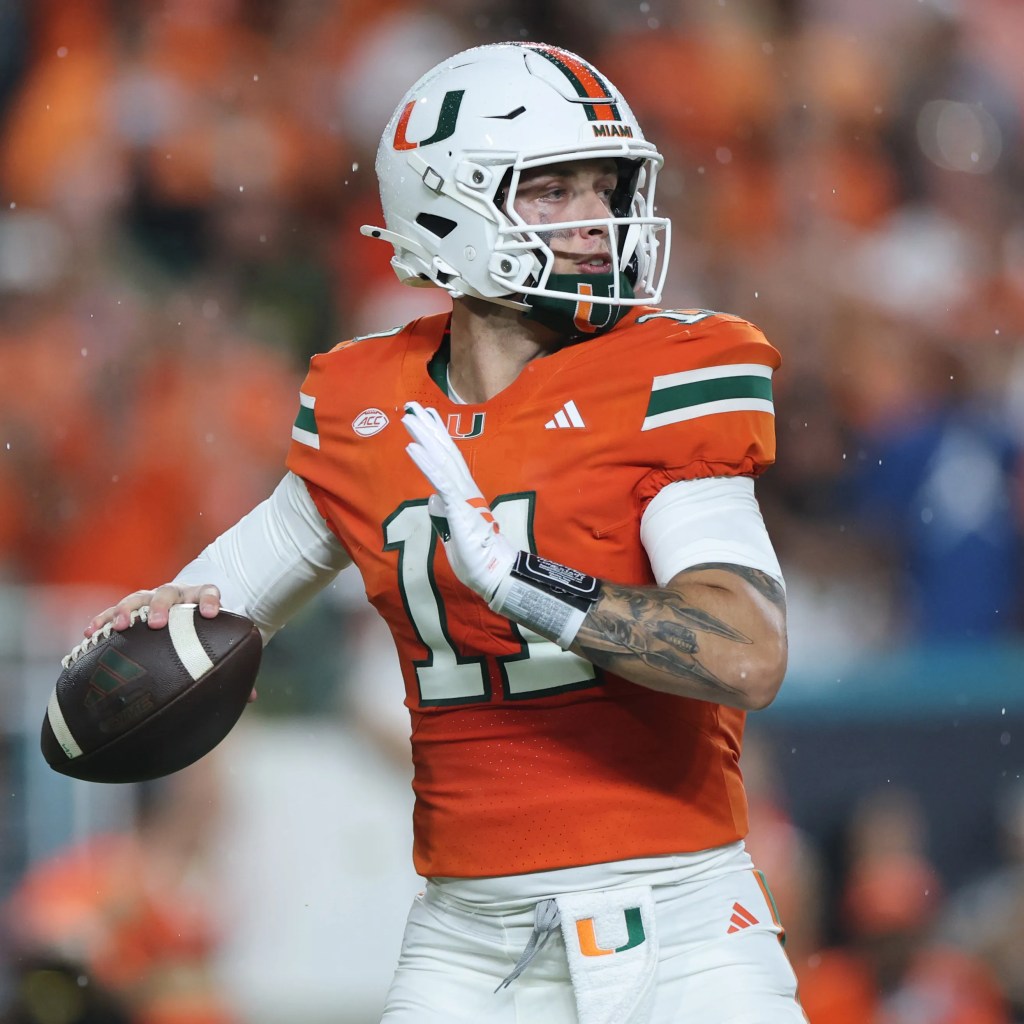
More than 4,500 Division 1 players have entered the transfer portal in 2026. The winter portal window officially opened on January 2, and runs through January 16. Quarterbacks usually command the highest prices. CBS Sports recently did a position-by-position salary price range (see below). The survey, done before the portal opening, now actually seems a little low as Texas Tech last week signed Cincinnati quarterback Brendan Sorsby to a $5 million deal. It’s been reported Demond is getting up to $6 million at his next stop. LSU and Miami have been mentioned as schools to watch.
For whatever it’s worth, I met Demond’s parents before the Michigan game in Ann Arbor. I told them “you must be proud of your son. We’re glad he’s a Husky.”
Less than three months later, he’s a Husky no more.
| PORTAL PAYDAYS | High end | Average | Low end |
| Quarterbacks | $3.5 million or more | $1.5 million-$2.5 million | $750,000 to $1 million |
| Running backs | $1 million or more | $400,000 to $700,000 | $250,000 |
| Wide receiver | $1 million-$2 million | $500,000 to $800,000 | $300,000 to $500,000 |
| Tight end | $600,000-$800,000 | $300,000-$500,000 | $200,000-$300,000 |
| Offensive tackle | $1 million or more | $500,000-$1 million | $300,000-$500,000 |
| Interior offensive line | $600,000-$800,000 | $300,000-$500,000 | $200,000-$300,000 |
| Defensive edge | $1million-$1.7 million | $600,000-$1 million | $300,000-$500,000 |
| Defensive tackle | $800,000->$1.5 million | $500,000-$700,000 | $250,000-$500,000 |
| Linebacker | $700,000 or more | $250,000-$500,000 | $150,000-$250,000 |
| Cornerback | $800,000->$1 million | $400,000-$700,000 | $150,000-$350,000 |
| Safety | $700,000-$1 million | $350,000-$500,000 | $200,000-$350,000 |
| Specialists | $50,000-$200,000 |


Leave a comment