
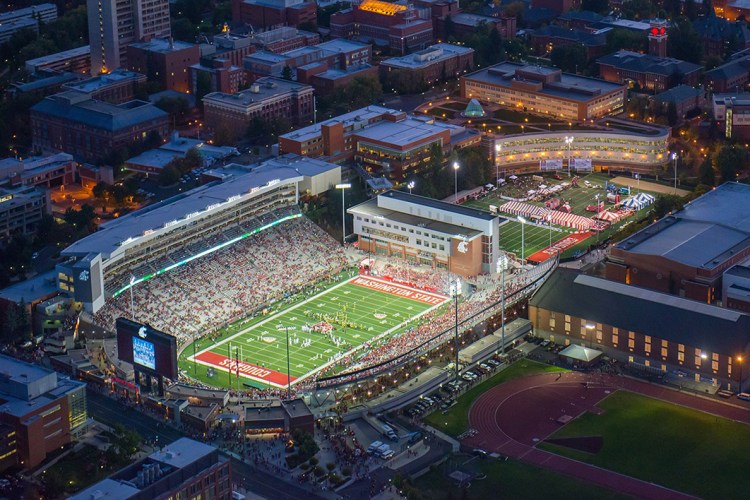
I don’t know why it took me so long. I was born in Washington, have lived all but nine of my 70-plus years in this state, yet until recently had never set foot on the campus of Washington State University in Pullman.
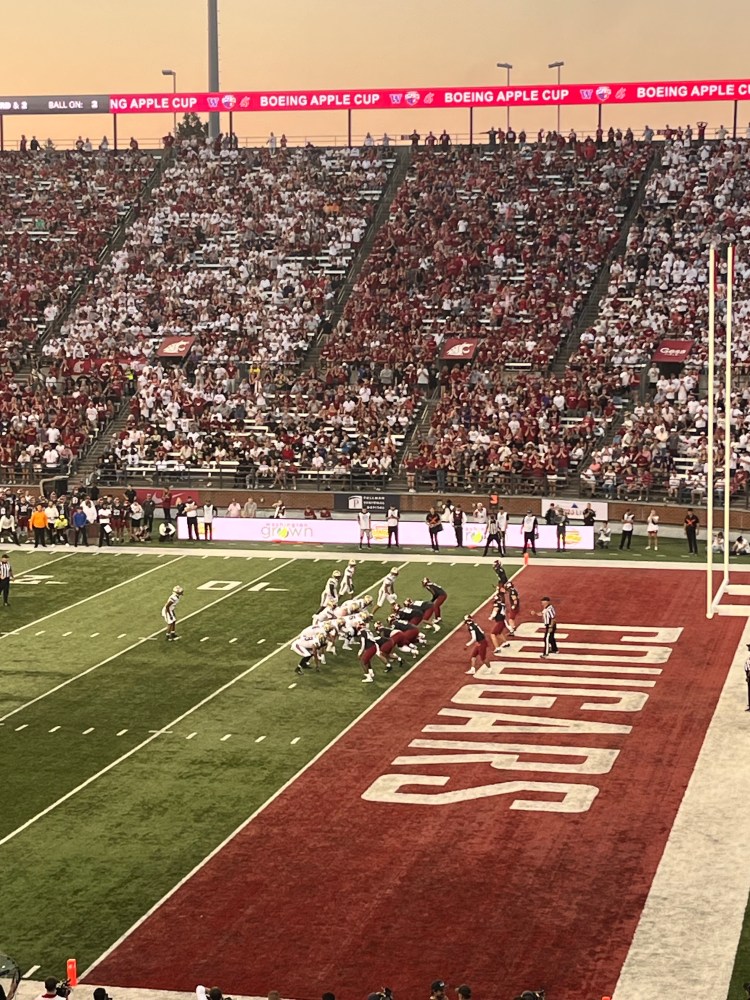
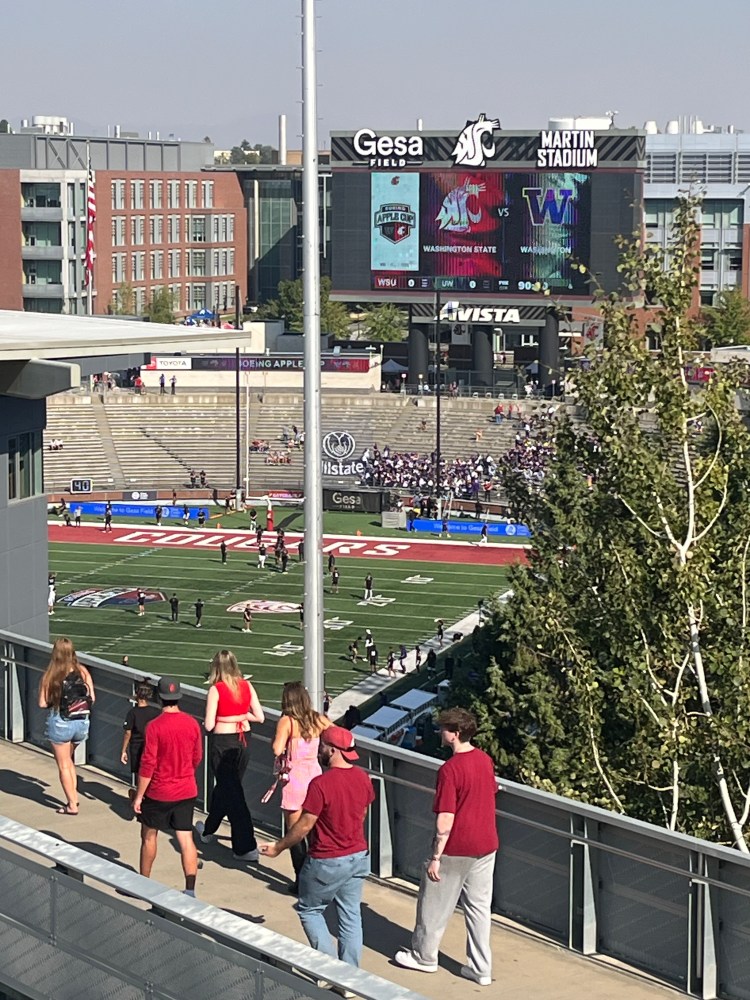
But there we were, in quaint Martin Stadium, surrounded by Cougar fans, on a sun-splashed, late September afternoon in the Palouse, to watch WSU and UW play in the Apple Cup. It was glorious.
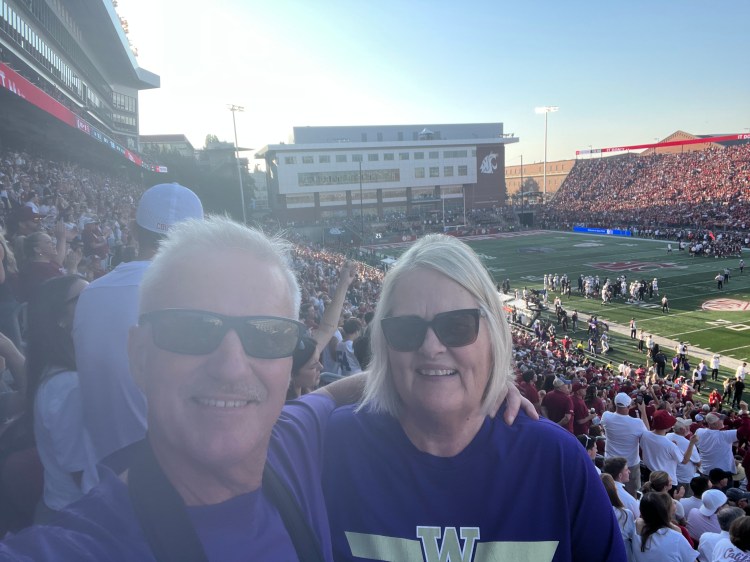
I’m sorry I was late to the party. And having had many conversations with Coug alums over the years, I understand life at Wazzu was one big party!
I had always wanted to watch an Apple Cup in Pullman. But I could never summon the courage to make the trip over the mountains in late November, when the contest was traditionally played. I preferred to watch those games –usually played in sub-freezing temperatures, and occasionally in howling snow storms – from the comfort of my family-room couch.
That all changed when the Huskies left the Pac-12 for the promise of a more lucrative future in the Big Ten, leaving the Cougars to fend for themselves. The bold move – which WSU fans will never forgive UW for – relegated the Apple Cup to a non-conference matchup in September.
I, for one, certainly wasn’t complaining when the 117th Apple Cup kicked off at 4:40 p.m. amid 80-degree temperatures and a slight breeze. UW won the game decisively, 59-24, though for three quarters it was much closer than that. The game was okay, not great. It was the experience I won’t forget.
My perception of Pullman had always been colored by Apple Cup humor. You know, the back-and-forth jokes between the two schools in the days leading up to the rivalry game, including the one about directions to Pullman: “Go east until you smell it. Then go south until you step in it.”
Many WSU fans perceive UW fans as “arrogant,” and chafe at Huskies referring to Cougars as their “little brother.” Or, perceiving Cougars as country bumpkins, “Cousin Clem.”
Even legendary UW Coach Don James, who was usually understated and not one to take shots at an opponent, could talk some smack. Once speaking at a spring coaches tour in Portland, James referenced Pullman.
“A tornado went through there,” he said, “and did a million dollars worth of improvements.”
Husky and Cougar players were also known to talk a little trash. Before the 1987 Apple Cup in Seattle, UW quarterback Chris Chandler said this of the Cougs:
“No matter what happens, they have to go back to Pullman. And I feel sorry for them.”
Shed no tears for the Cougs. They love Pullman – and are fiercely loyal and true to their school.
My friend and former colleague, Craig Smith, covered WSU football for The Seattle Times in the 1980s and 1990s. Because the team was his beat, Craig spent a lot of time in Pullman. I remember him telling me he was struck by the tight-knit, bond WSU students seem to have – the sense of family, an “us against the world” mentality while isolated together in the remote town in the northeast corner of the state. Years after graduation, Cougars are drawn “home” to the familiar haunts of ole Wazzu. Craig called this sense of community “Mother Pullman.”
Driving east from the Columbia River on Highway 26, and passing the rolling wheat fields of the Palouse, is the only way to run to the warm embrace of “Mother Pullman.” Can’t say there’s anything memorable between the river and Othello. But once you hit Washtucna, you see the familiar “quilting effect” of the rolling hills, which change from vibrant green in spring to golden brown in the summer. Giant grain elevators proudly proclaim “GO COUGS” in bold letters the closer you get to Pullman.
Finally, NW Davis Way leads you down the hill to the edge of downtown Pullman. Except there’s nothing really special about the downtown. Instead, your eyes are fixed on the big hill behind downtown, and the towering brick buildings that adorn this picturesque, 620-acre campus. Pullman IS Washington State University.

Martin Stadium is not separate from campus, as Husky Stadium is at UW, and Autzen Stadium at the University of Oregon. The stadium is carved into the campus. The Compton Union Building (bookstore) and Terrell and Holland libraries are a couple minutes walk from the stadium, as are several other classroom buildings.
Down Colorado Street, near the frat houses, is the historic “Coug” restaurant and bar, where former WSU coaches Jim Sweeney, Walden, Dennis Erickson, Mike Price and Mike Leach were known to drown their sorrows after a tough loss, or celebrate a big victory. Just east of the stadium, near the indoor practice facility is Ferdinand’s Ice Cream Shoppe and WSU Creamery, which Cougs claim serves the best ice cream on the planet. You can also purchase popular “Cougar Gold” cheese there.
It is here, on this quaint, walkable campus, where memories are made, and lifelong bonds are formed. My friend Dave Harrison, who played football for Jim Walden and remains a die-hard Coug, met his wife at Wazzu.
“It’s (WSU) a pretty special place for Ann and me,” he said wistfully.
Even Huskies acknowledge this. Perhaps Joe Steele, a star running back for UW in the 1970s, said it best.
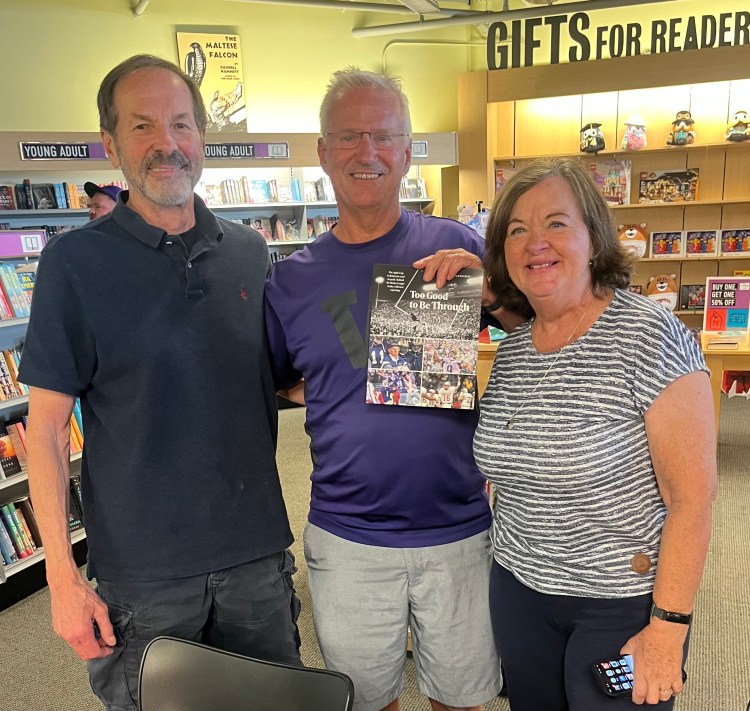
“Washington State’s a beautiful place,” Steele told Bud Withers in his recently-released book “Too Good to be Through,” a historical account of the Apple Cup. “The campus, where it sits, the stadium. The Washington experience is one thing – it’s inner-city, it’s got its challenges … one thing about the Cougars, you go to Washington State, you’re Cougars for life.”
1982: When the rivalry got serious
I was a young sportswriter in Oregon working in the office one Saturday afternoon when the Associated Press teletype machine spit out the shocking final score: Washington State 24, Washington 20. It was one of those “I-remember-where-I-was-when-I-heard” moments.
The Huskies entered the game 10-1 and ranked No. 5 in the nation, and only needed to defeat the 2-7-1 Cougars to return to the Rose Bowl for the third consecutive year. UW was behind 21-20 in the waning minutes of the game, but seemed destined to break the hearts of the Cougar faithful when usually-reliable kicker Chuck Nelson lined up for what appeared to be a 33-yard, game-winning field goal. But the referees ruled Nelson’s kick sailed inches wide right, ending his streak of a then NCAA-record 30th consecutive made field goals. It was WSU’s first win over UW in nine years. Instead of a trip to Pasadena, the loss sent the Huskies to the Aloha Bowl.
As a follower of UW sports since my earliest memories (thanks dad!), I had always viewed the Apple Cup as a nice, intrastate rivalry. Back then, in most years neither the Huskies nor the Cougars were very good. Hence, there wasn’t much on the line. But by the late ’70s, the UW football program had become a player on the national stage under James. There was this aura of invincibility under the legendary coach. Not only had James proven he could win big games, his teams usually won when they were supposed to. How could UW lose to such an inferior opponent?
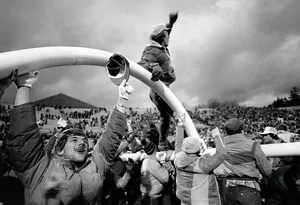
The game in 1982 was also the first Apple Cup played in Pullman in 28 years. Prior to that, WSU’s home games in the rivalry were played in Joe Albi Stadium in Spokane. Bringing the game back to Pullman gave the Cougars more of a – and frankly overdue – home-field advantage. Cougar fans were so excited to beat the Huskies they tore down a goal post, carried it out of the stadium and dumped it in the Palouse River.
My friend Dave was a backup center and special teams player on that ’82 team. He said the Cougs were still smarting from the previous year’s game, in Seattle, when the Huskies won 23-10 in a winner-to-the-Rose Bowl game.
“After watching my high-school teammate (UW receiver and future Seattle Seahawk) Paul Skansi catch a touchdown pass, and the very long bus ride back to Pullman after the 1981 game, I just remember how painful that was for all us,” recalled Dave. “After a miserable season in 1982, returning the favor was pretty big for us Cougs.”
The ’82 game would not be a fluke. The following season in Seattle, the unranked Cougs knocked the Huskies out of the Rose Bowl once again. This time, with a big, physical defensive front, they completely shut down No. 15 Washington, 17-6. Just as the ’81 game stung the Cougs, the back-to-back losses to WSU had to be galling for UW fans.
Although the Huskies have had the upper hand for the most part since, I believe that game 43 years ago was a turning point for the rivalry. That’s when the Apple Cup became more competitive – and jokes and the trash talk began.
Below are the Apple Cup scores from 1974-1985. The 1982 season marked the return of the game to Pullman, and started a run where WSU won three games in a four-year span.
| Year | Site | Result (AP ranking) |
| 1974 | Spokane | UW 24, WSU 17 |
| 1975 | Seattle | UW 28, WSU 27 |
| 1976 | Spokane | UW 51, WSU 32 |
| 1977 | Seattle | UW (#19) 35, WSU 15 |
| 1978 | Spokane | UW 38, WSU 8 |
| 1979 | Seattle | UW (#16) 17, WSU 7 |
| 1980 | Spokane | UW (#16) 30, WSU 23 |
| 1981 | Seattle | UW (#17) 23, WSU (#14) 10 |
| 1982 | Pullman | WSU, 24, UW (#5) 20 |
| 1983 | Seattle | WSU 17, UW (#15) 6 |
| 1984 | Pullman | UW (#8) 38, WSU 29 |
| 1985 | Seattle | WSU 21, UW 20 |

Leave a comment