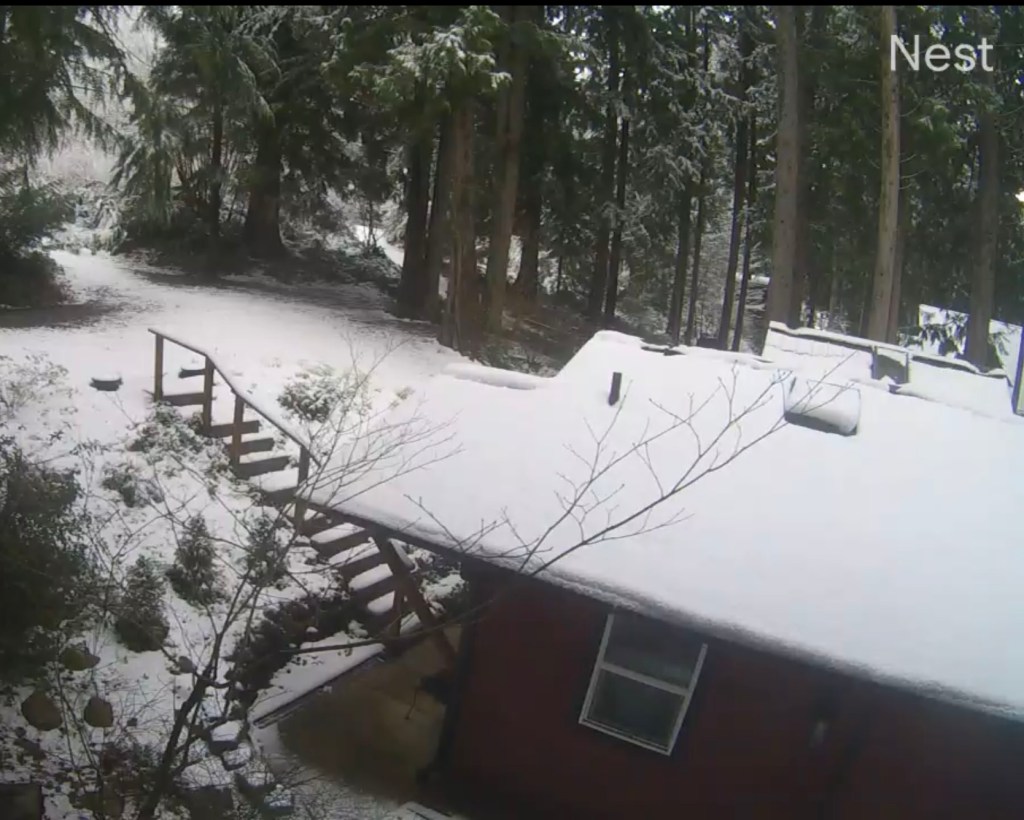
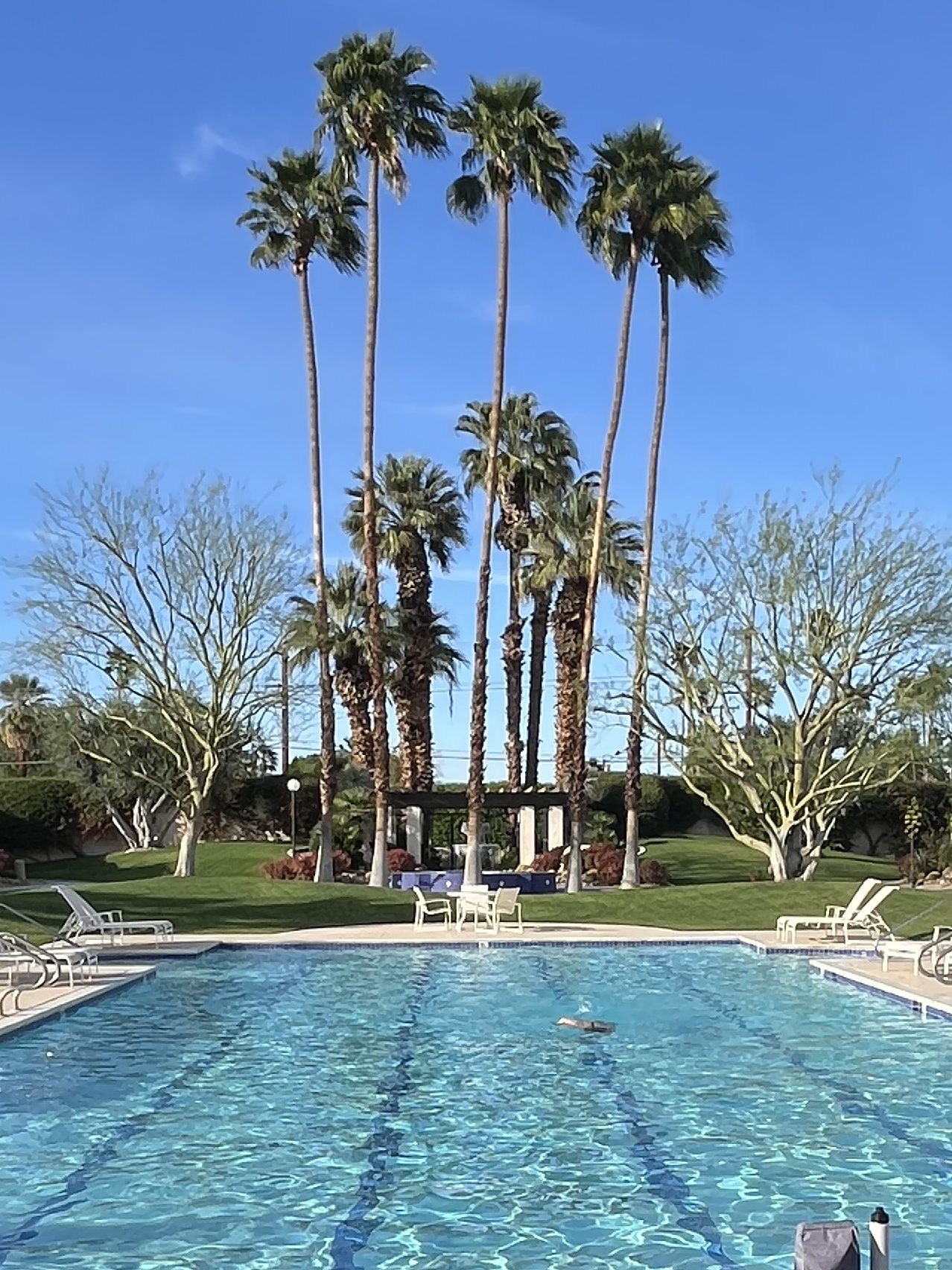
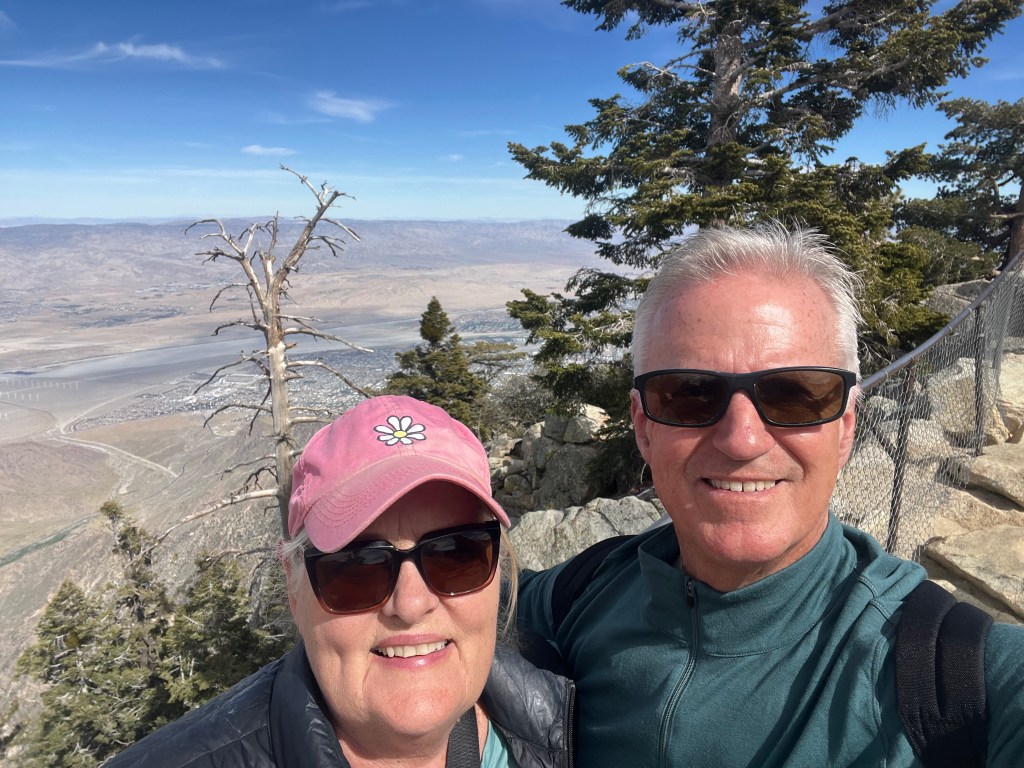
Our camera at our cabin at Lake Cavanaugh on March 10 showed 29 degrees and some measurable inches of snow.On the same day, more than 1,300 miles to the south, it’s 80 degrees and blue skies at our condo in Palm Springs, California.
The weather back home is frightful. Meanwhile, here in sunny Palm Springs, California, it’s absolutely delightful.
March is our getaway month from the gray and dreary Pacific Northwest winters, the annual rite of passage we’ve come to know as “The Big Dark.” Vicki has learned to put up with the drip, drip rain and overcast skies during our 41 years living in the PNW. But by March, she’s had enough. You can take the girl out of California (Sacramento-raised, to be exact). But you can’t take the California out of the girl. So you take the girl back to California.
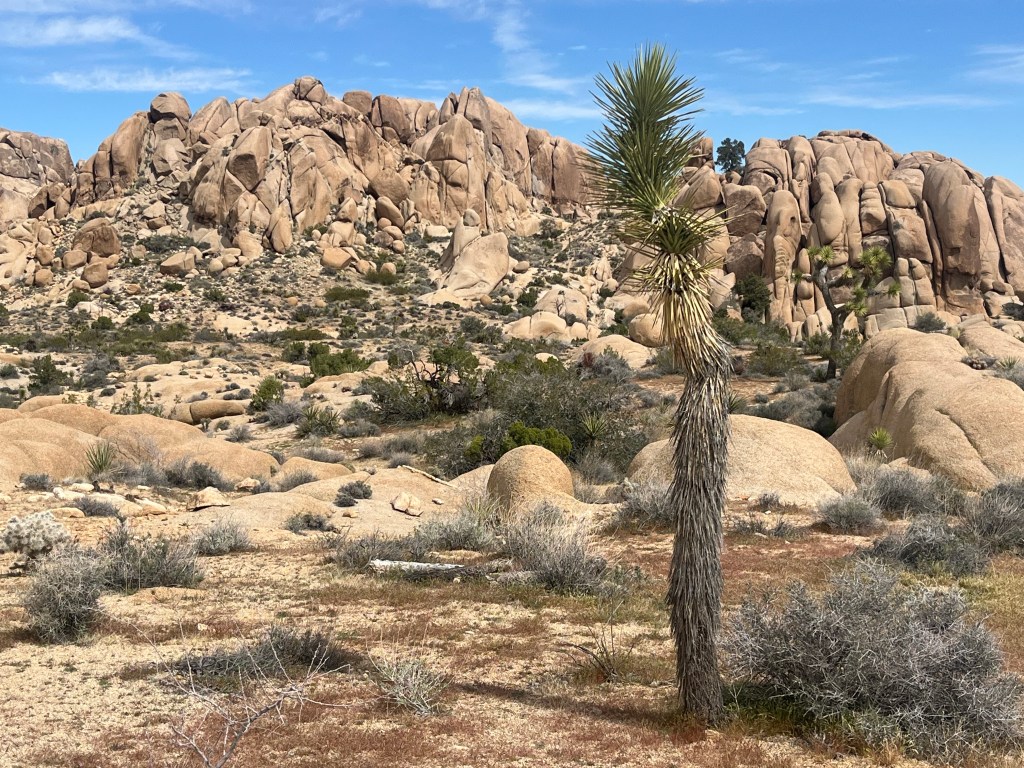
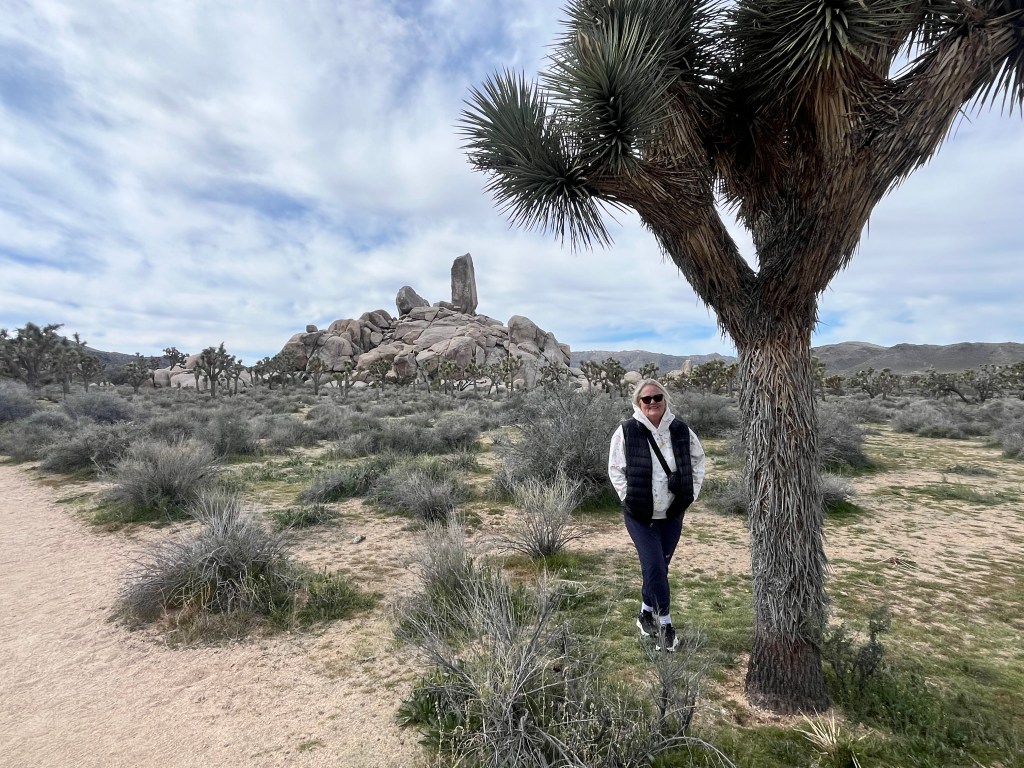
We spent a day exploring Joshua Tree National Park. Framed in the foreground by a Joshua Tree, here we’re looking at Split Rock.
Over the decades, our default escape has been Arizona, and occasionally Hawaii. This year, we decided to mix it up. We had never been to Palm Springs. Don’t know why it took us so long. It’s an upscale, desert oasis, famous for its stunning mid-century, modern architecture and Hollywood celebrity history. Joshua Tree National Park is only a hour’s-drive to the north.
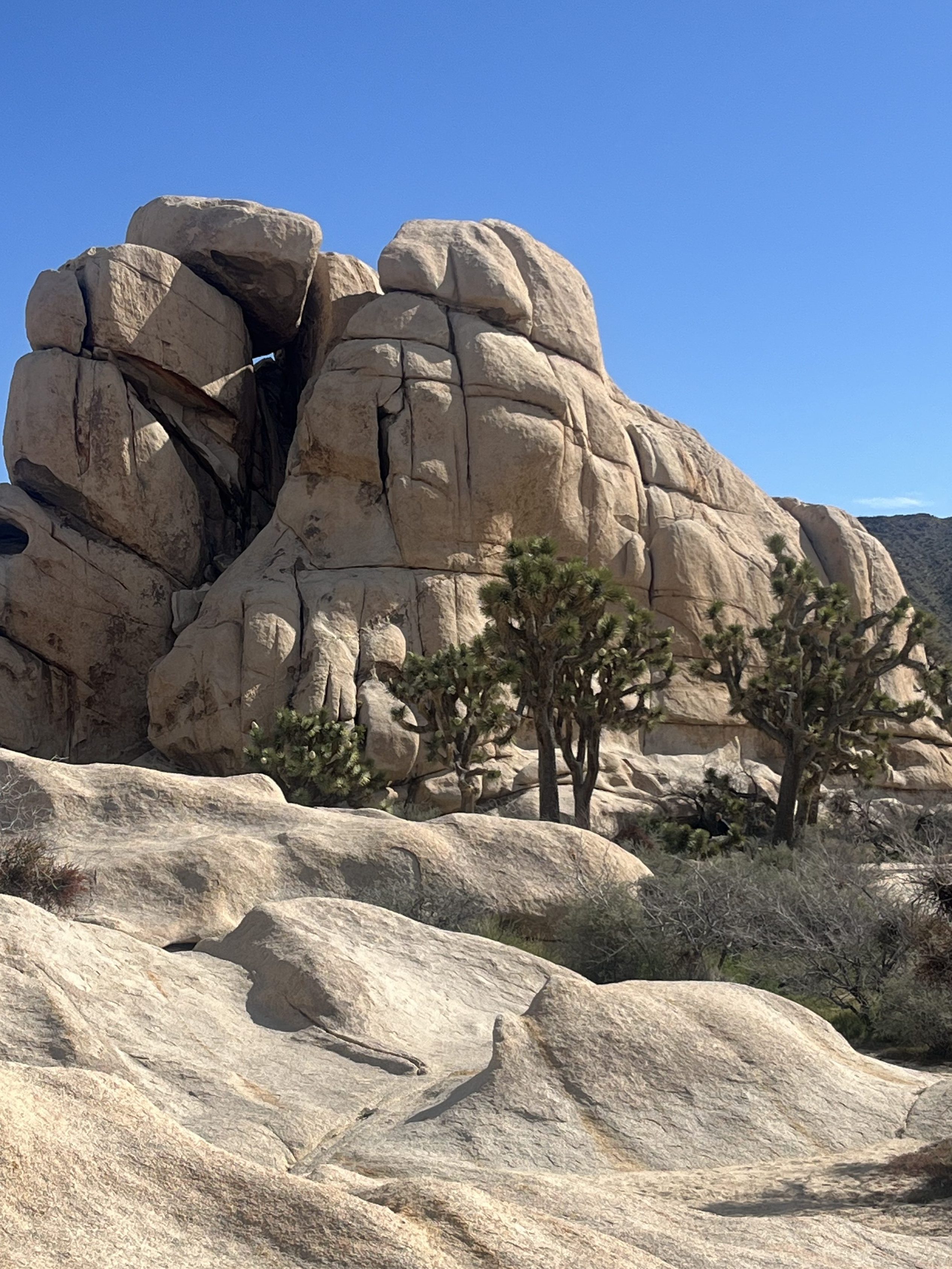
We’ve been to a few national parks – Yosemite, Yellowstone, the Grand Tetons, and of course North Cascades, Rainier and Olympic parks in our state. Joshua Tree is just different. It’s a surreal collection of otherworldly desert landscapes defined by twisted Joshua Trees and massive quartz, boulder formations that leave you scratching your head, thinking “how did those rocks get there?”
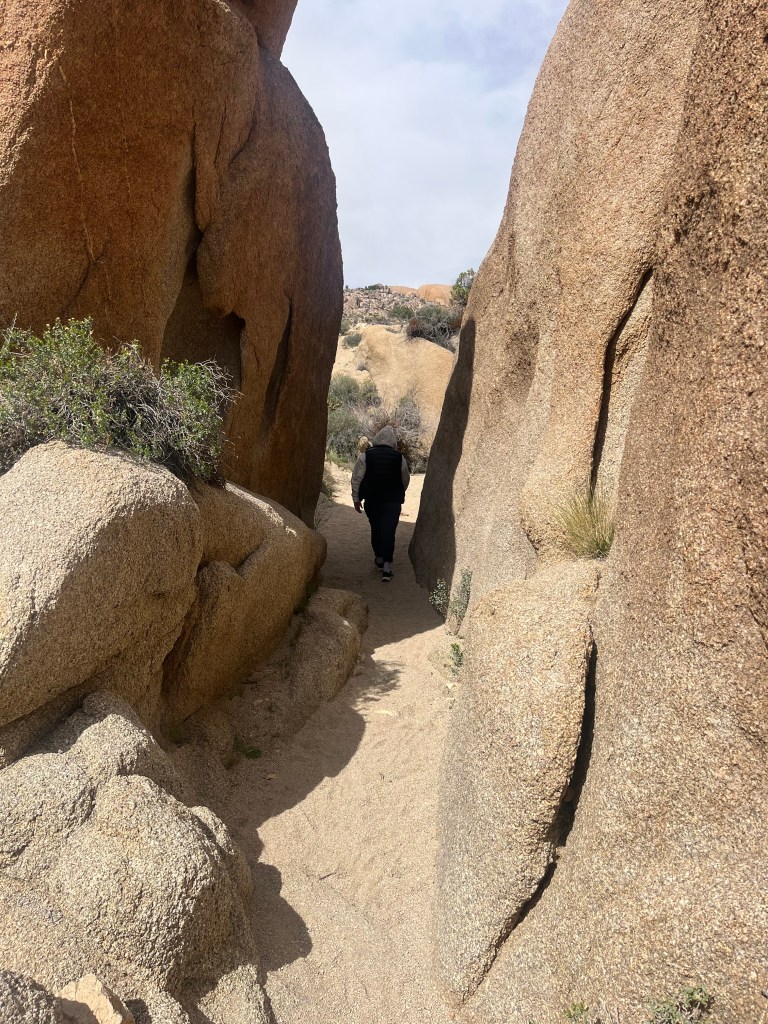
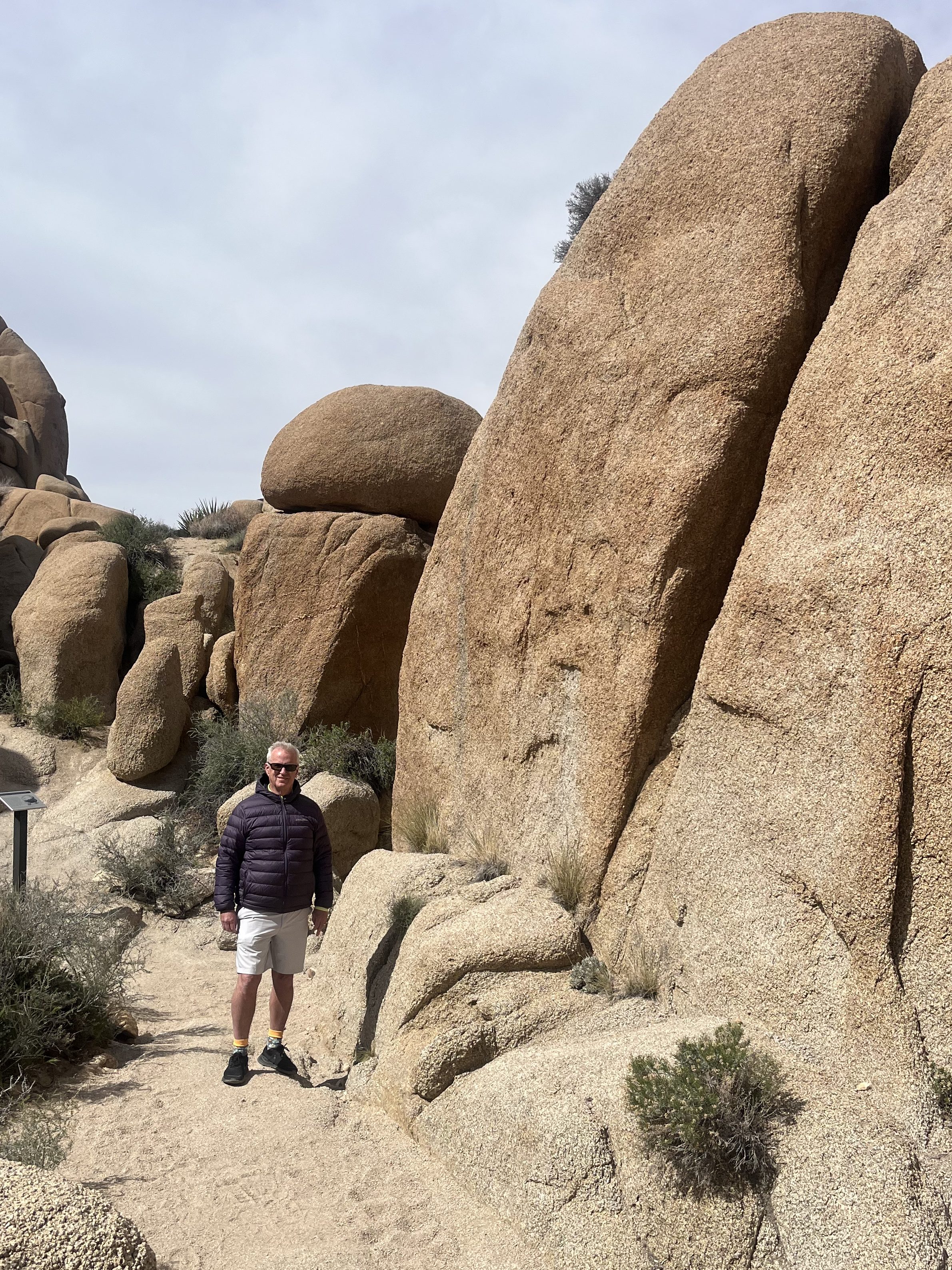
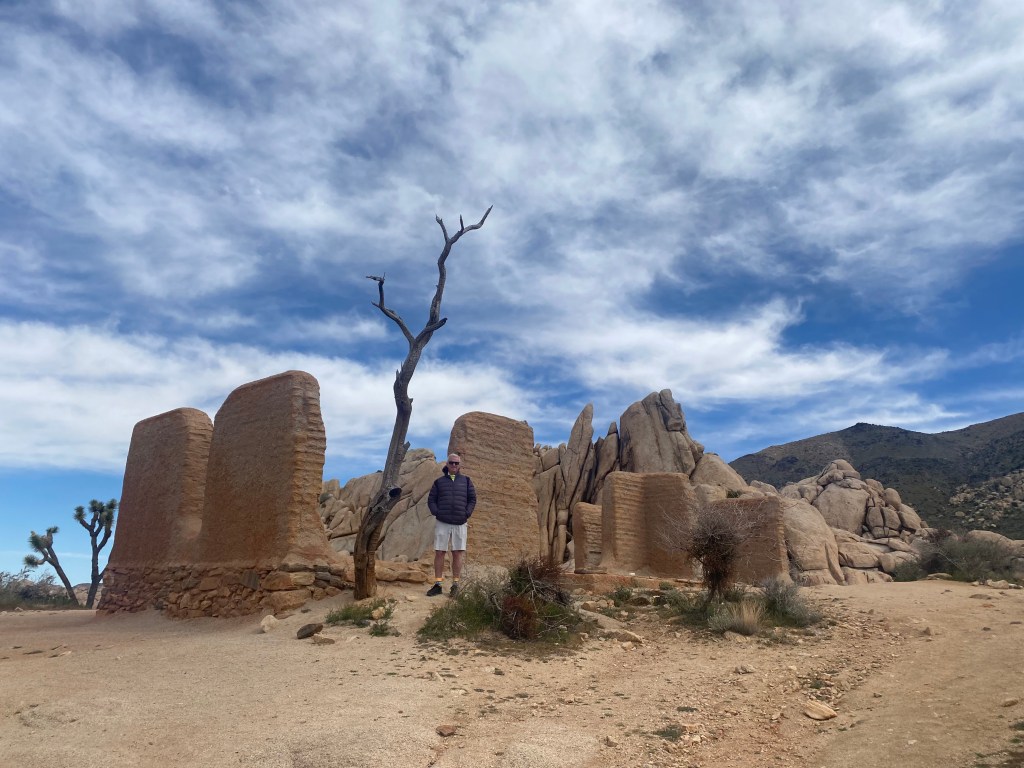
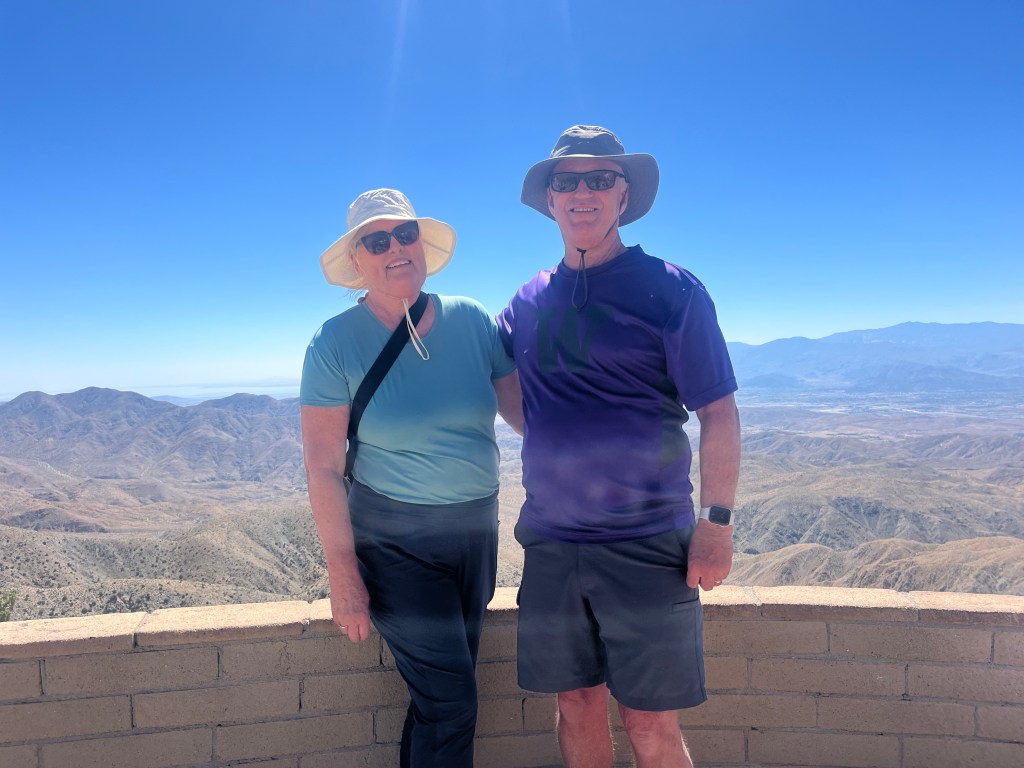
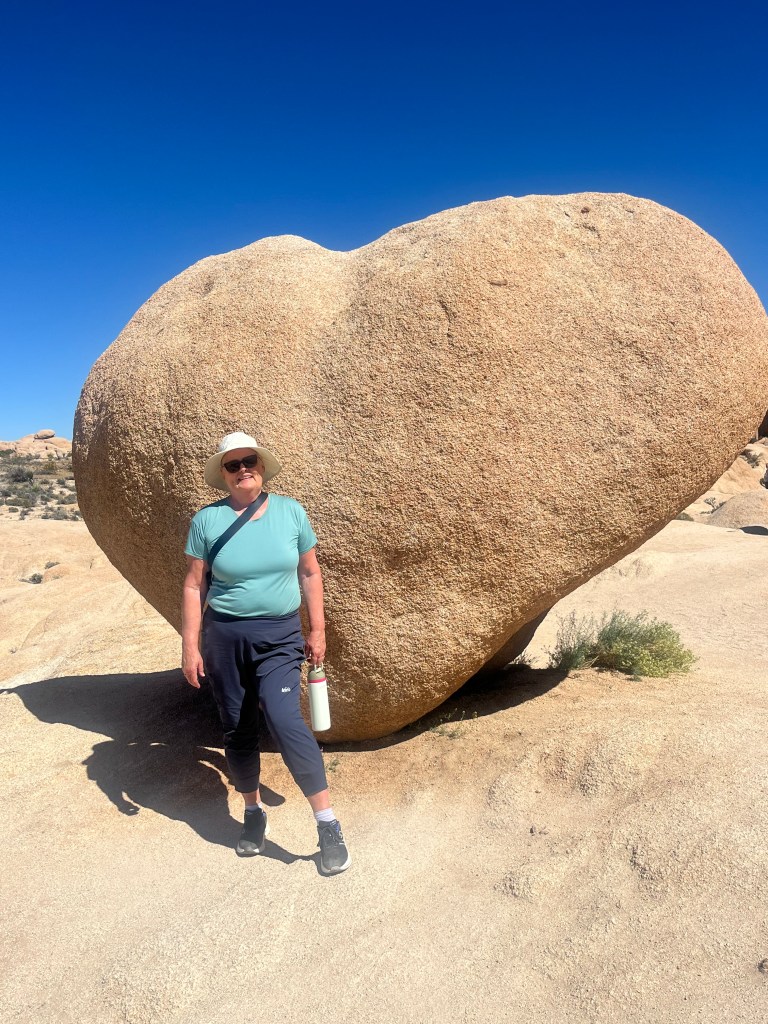
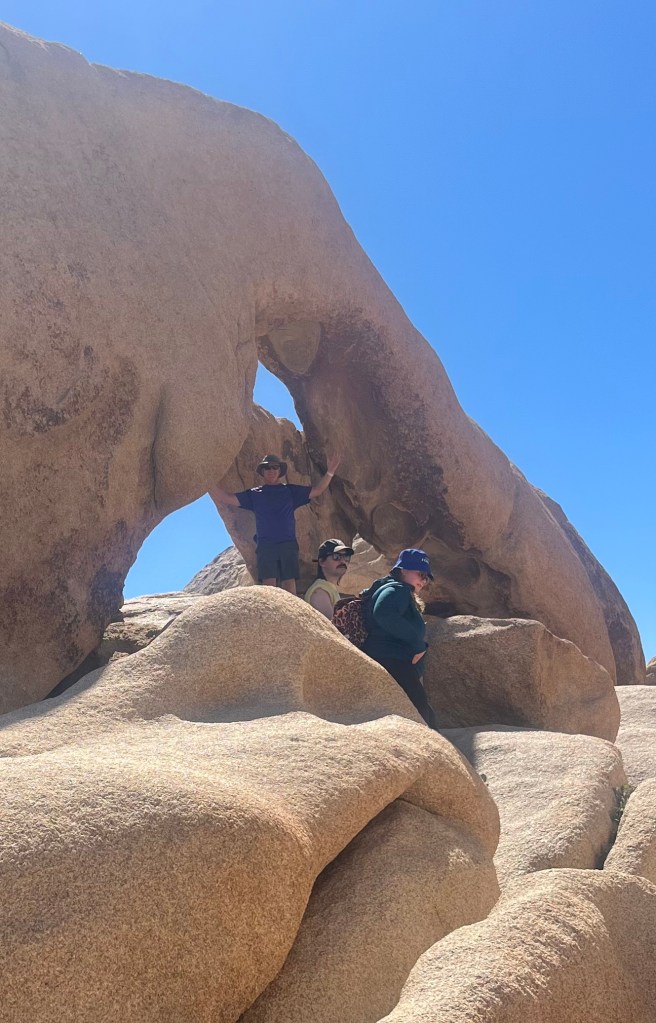
Intersection Rock in the most climbed rock in the park, with more than 40 climbing routes. We watched a couple climbers in action on this sunny-but-brisk day.Vicki walks through one of several “slot canyons” along the Wilderness Trail.That’s me by one of the “split canyons.” I wasn’t aware Joshua Tree National Park was about 4,500 elevation. We went from 75 degree temps in Palm Springs (about 500 feet elevation) to high 40s in the park. Good thing we brought some extra layers of clothing.Vicki along a trail through an open valley of Joshua Trees. Our destination was the remains of “Ryan Ranch,” a historic adobe structure built in 1896.And this is what the remains of that decaying structure – well two, if you count me – looks like. We also found the remains of a capped well. Homesteader J.D. Ryan operated the nearby Lost Horse Mine here.At Keys View (elevation 5,185 feet) on our second tour of the national park. Sweeping views of the Coachella Valley (Sultan Sea, Palm Desert and Palm Springs)Vicki in front of “Heart Rock,” the destination of a hike in high 80-degree temperatures on our second visit to the park.That’s me in front of “Arch Rock,” same hike.
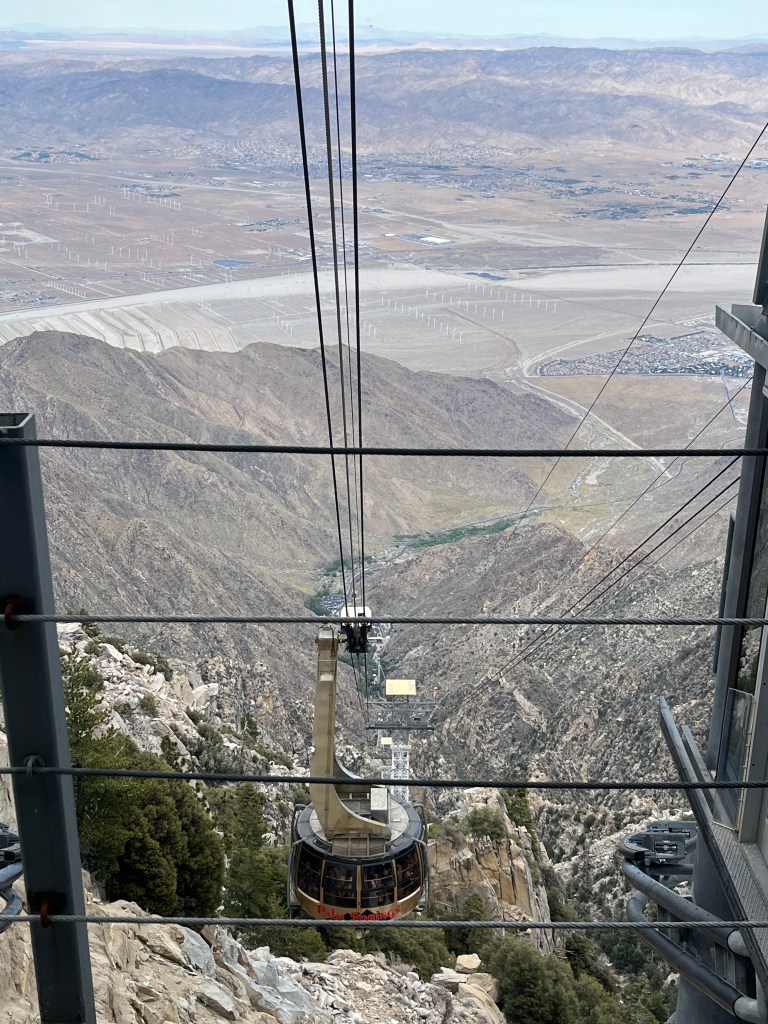
Another highlight was to ride the Palm Springs Aerial Tramway. It’s a 2.5-mile ride in the world’s largest rotating cable car that climbs nearly 6,000 feet to a mountain station near the top of Mount San Jacinto.
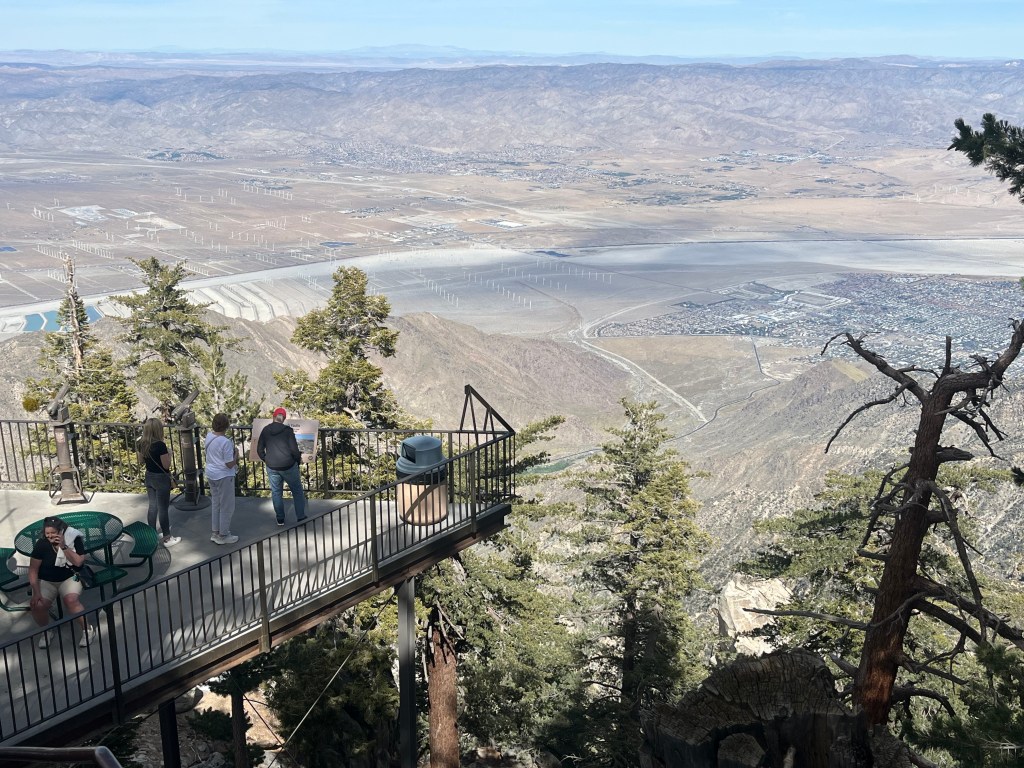
It’s a 10-minute ride from the valley station, elevation 2,643 feet, to the mountain station, at 8,516 feet. There’s only two cable cars in operation. Each holds 80 people. March is a busy month for the tram. We had to wait nearly two hours for our ride to the top.There’s a 30-degree difference in temperature from the valley station to the mountain station. We brought a couple layers of clothing. The high in Palm Springs was 97 on this day. I figured it was in the low 60s here at the top.The observation decks offer expansive views of the Coachella Valley towns of Palm Springs, Desert Hot Springs and even the Sultan Sea, 50 miles to the southeast. Joshua Tree National Park would be on the cusp of the mountain range you see near the top of the photo.
Most of our time here is spent soaking in the southwest sun. Walks around the neighborhood in the cool of the morning, usually followed by a round of tennis. Relaxing and reading by the pool. Exploring downtown Palm Springs. And maybe best of all, eating dinner on our spacious, private patio in shorts and t-shirts while basking in 70-degree temps. That’s the California life Vicki remembers from her youth.
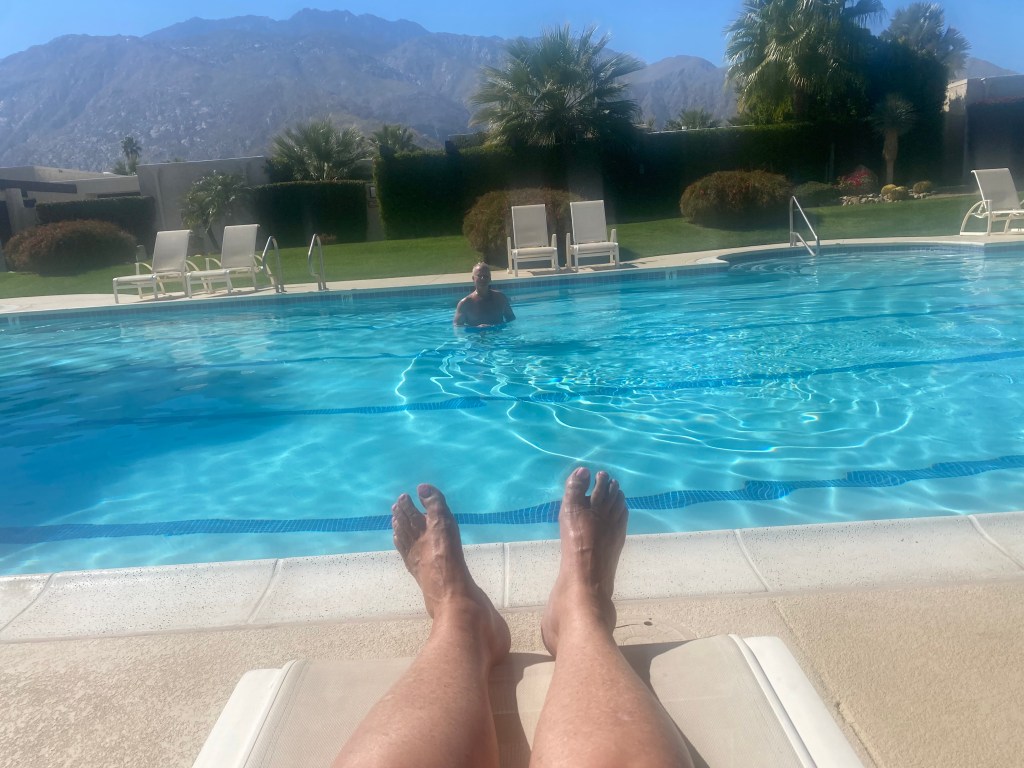
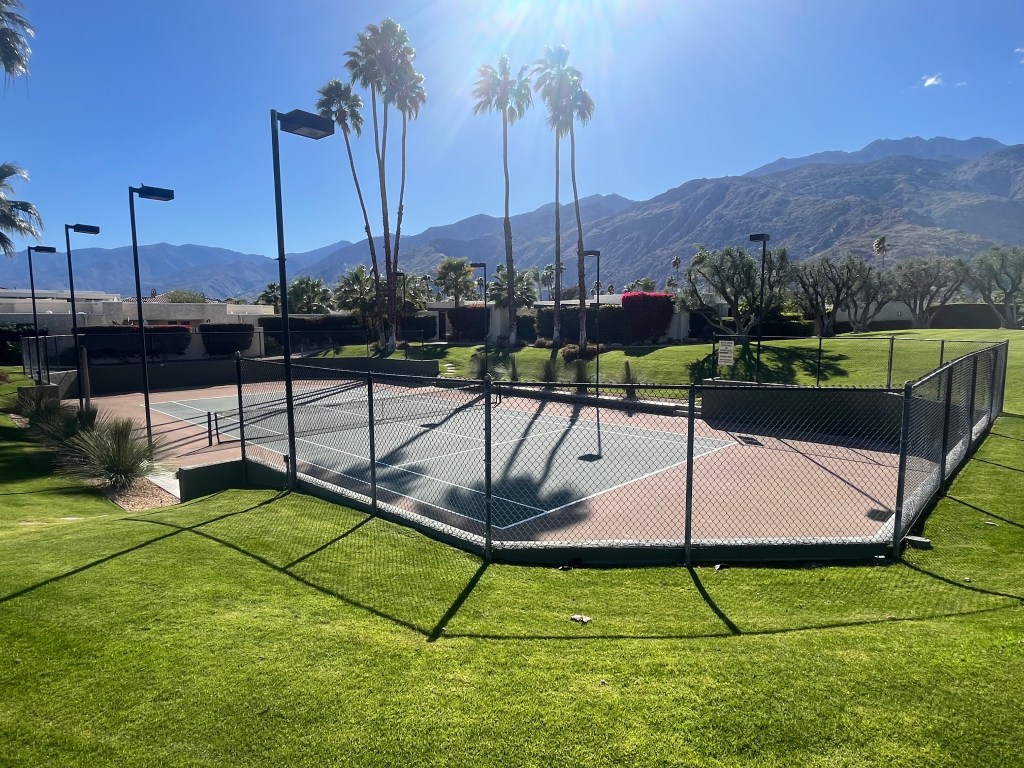
A familiar scene: Me in the pool and Vicki at poolside.Tennis truly is a year-round sport here in the Coachella Valley. So it’s no surprise court time can be hard to come by. But we have this one all to ourselves every morning in the community of condos we’re staying. We haven’t played this much tennis together since we were dating in college. Let’s just say our game could use some work. We also play pickelball, but in the evenings at a nearby public court, as trying to secure court time in the mornings is next to impossible.
It’s supposed to reach the 90s later this week, and approach 100 degrees by next week. Given the alternative – Midwest-like temperatures at home – I think we can handle that.
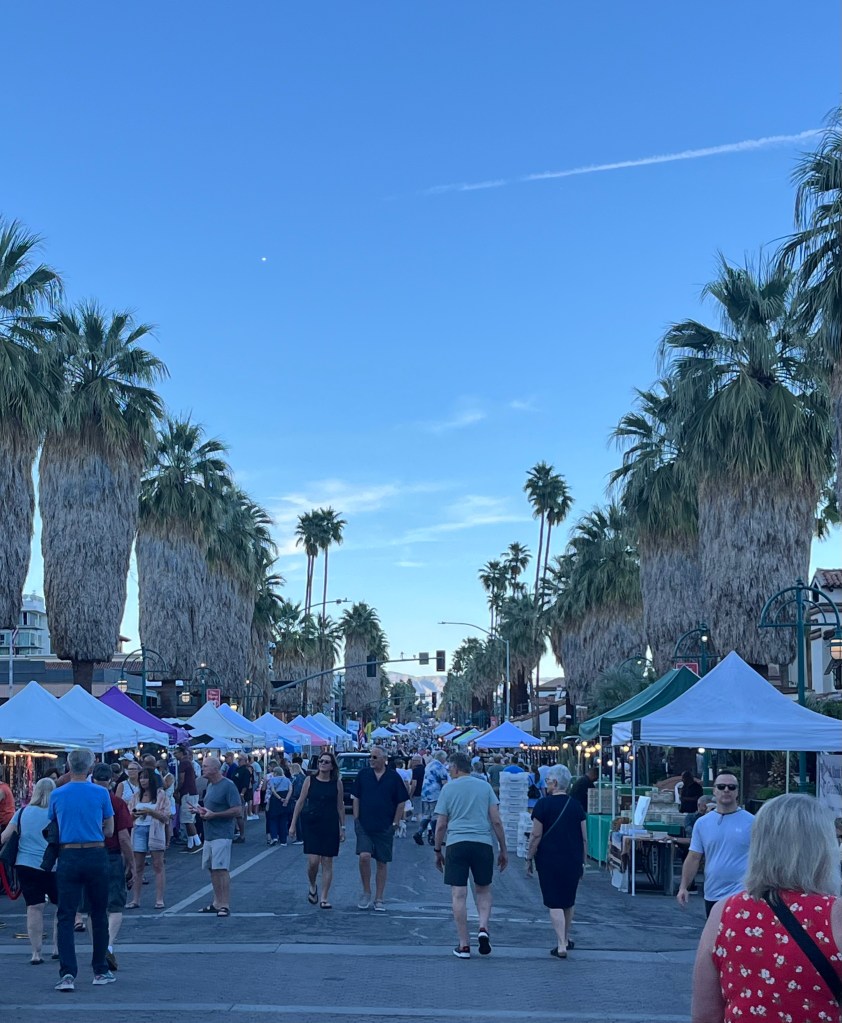
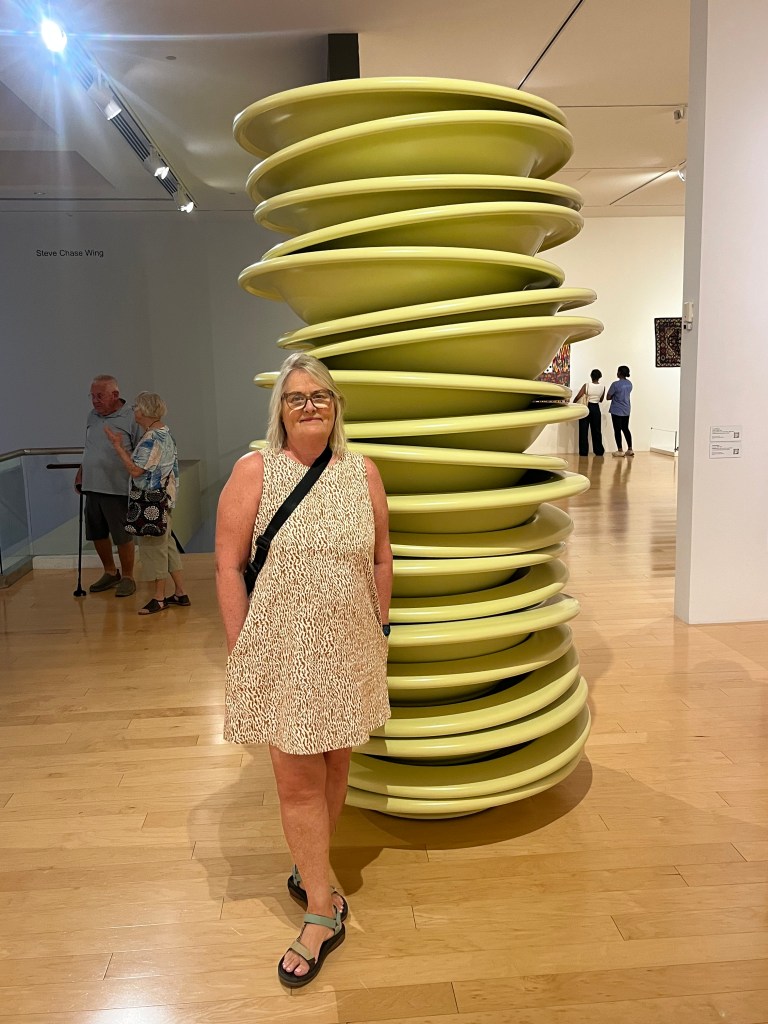
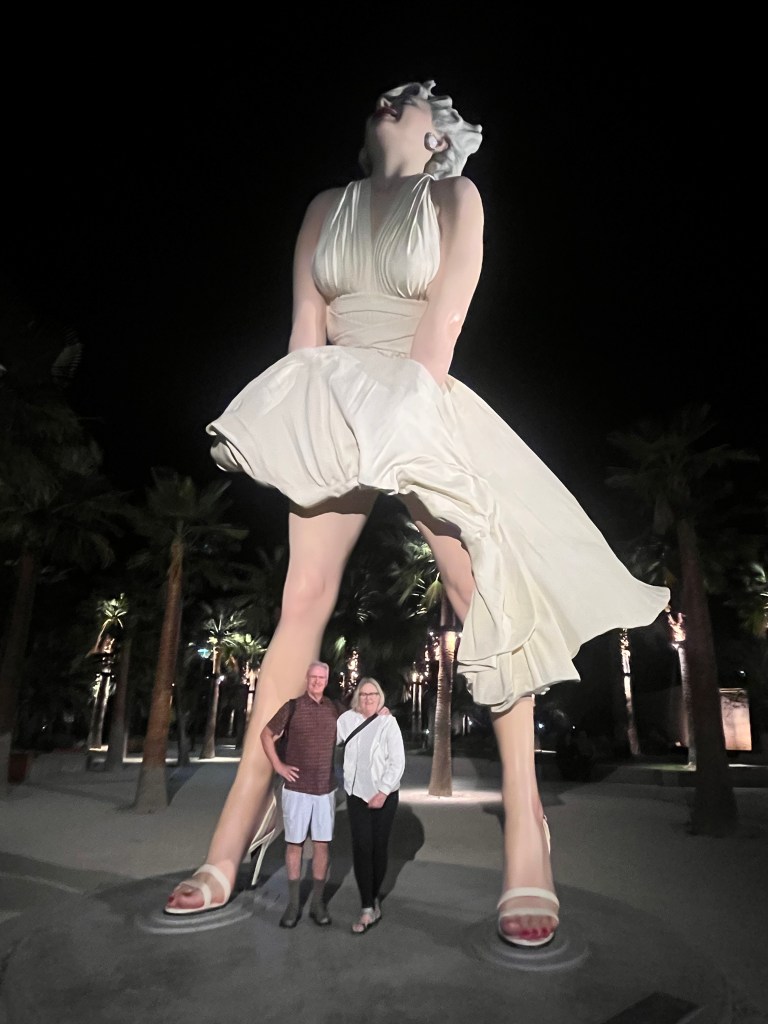
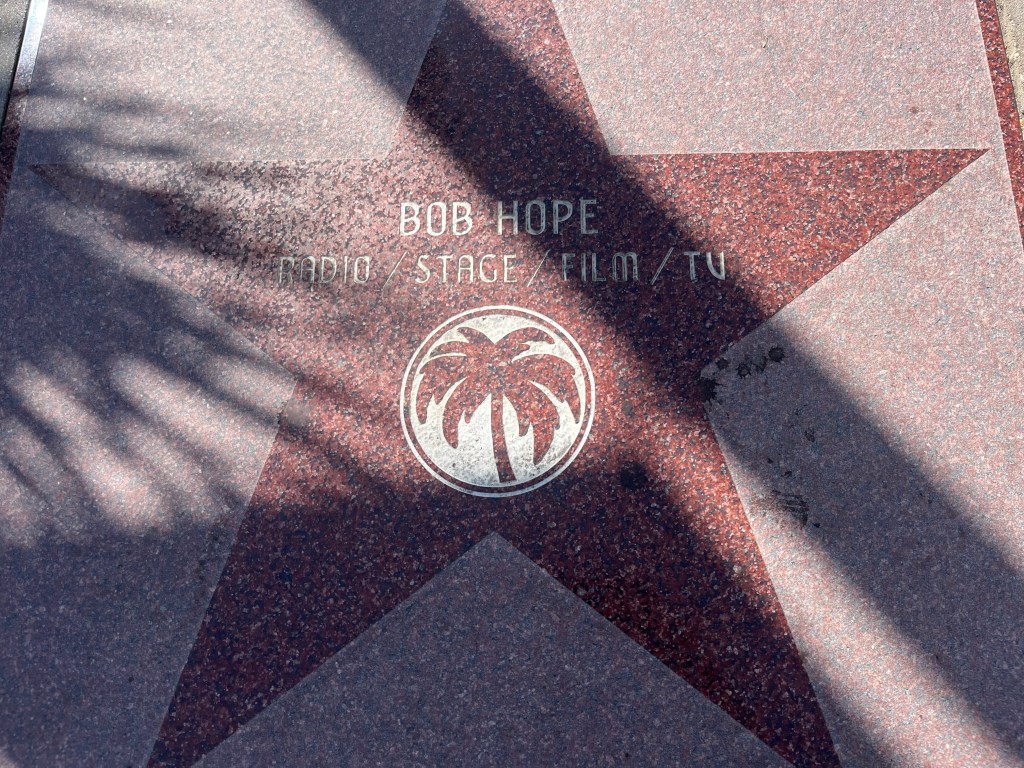
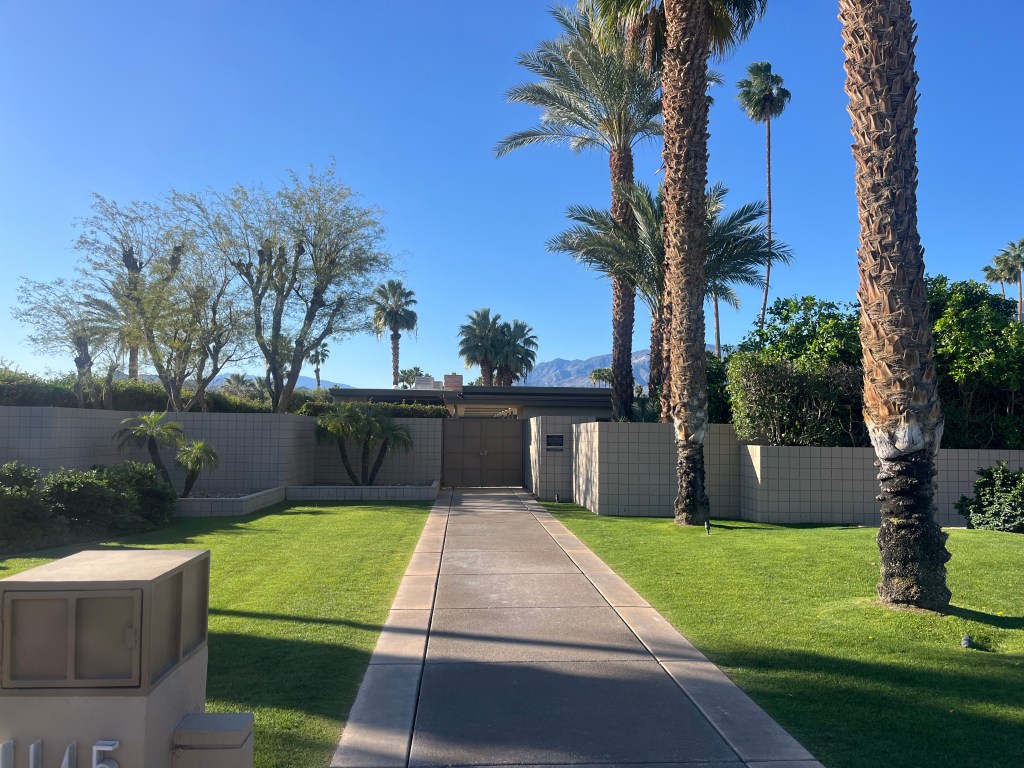
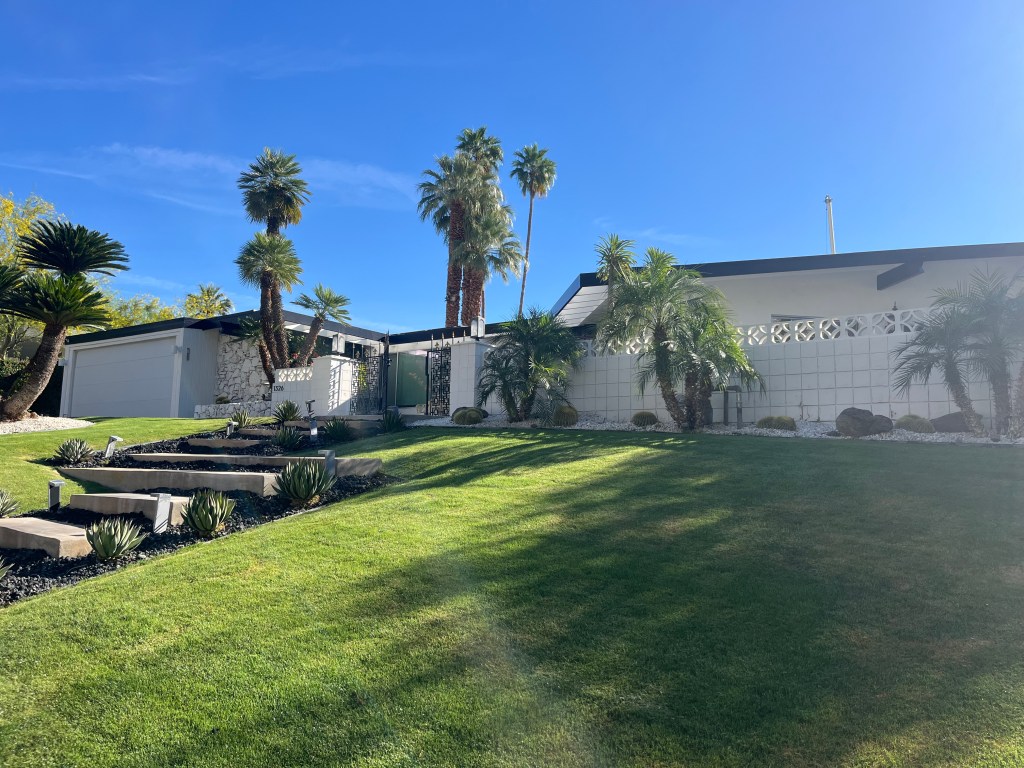
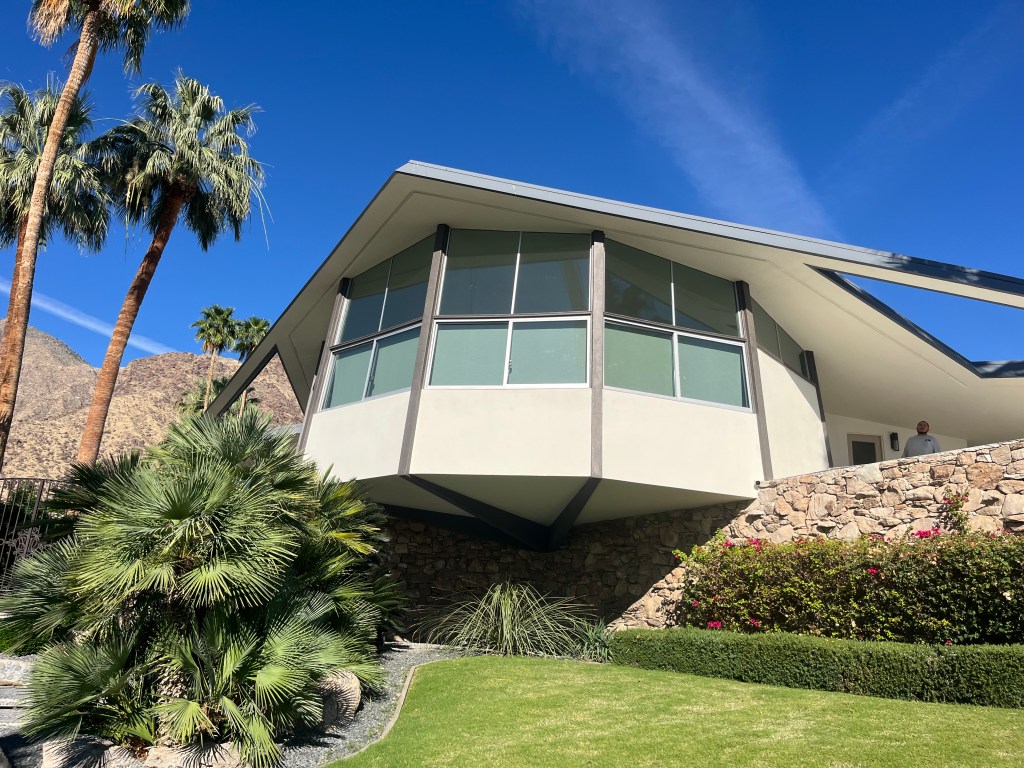
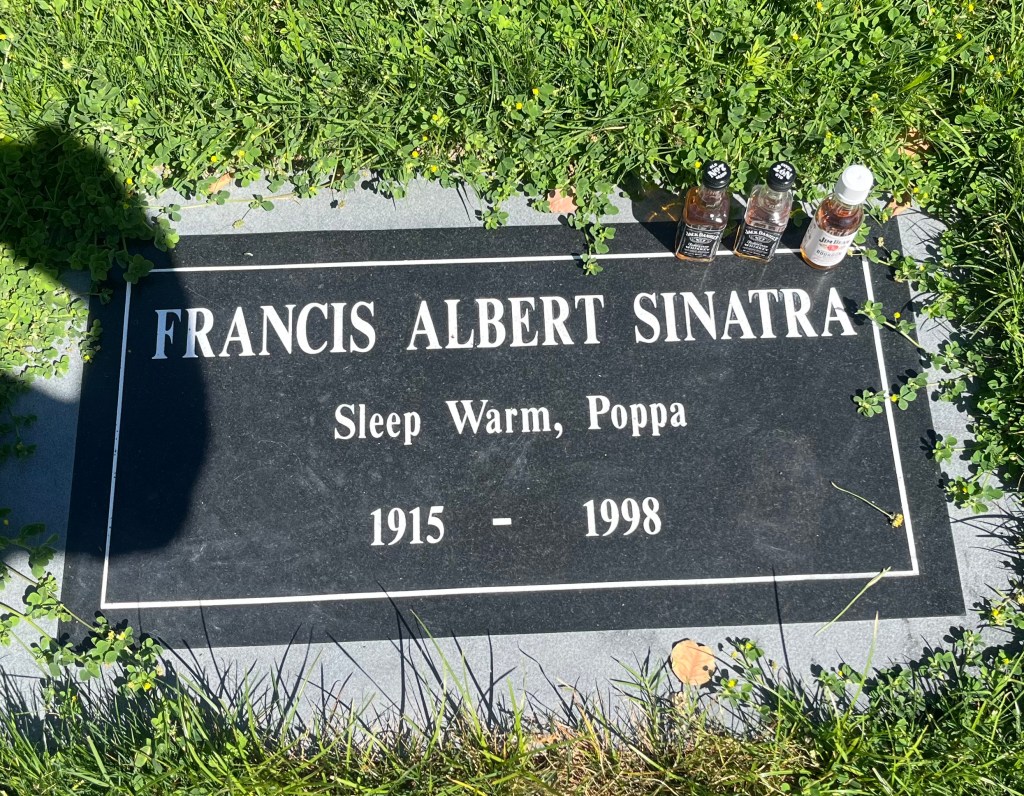
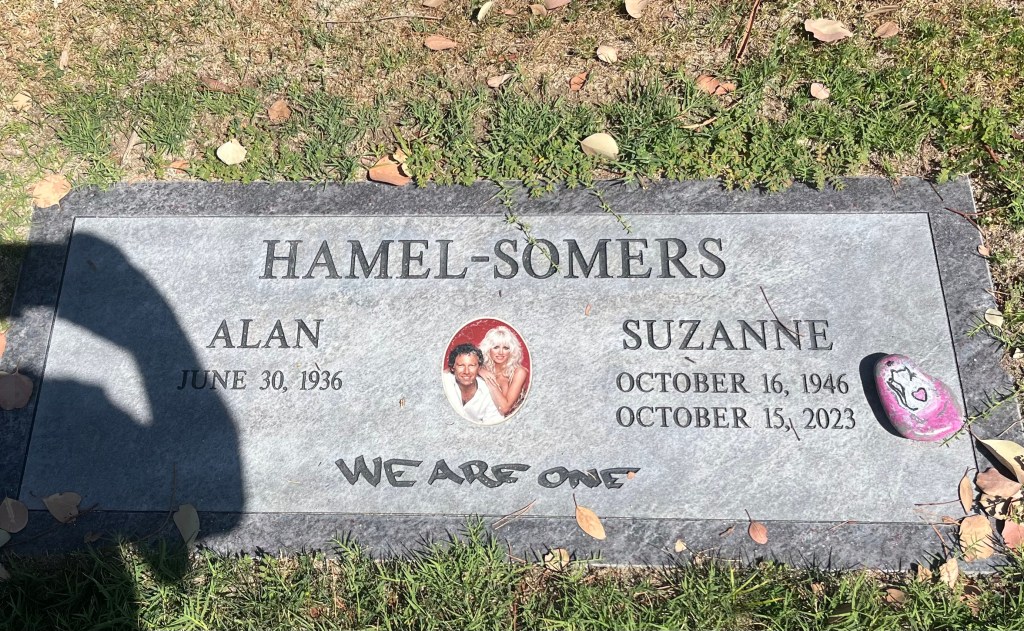
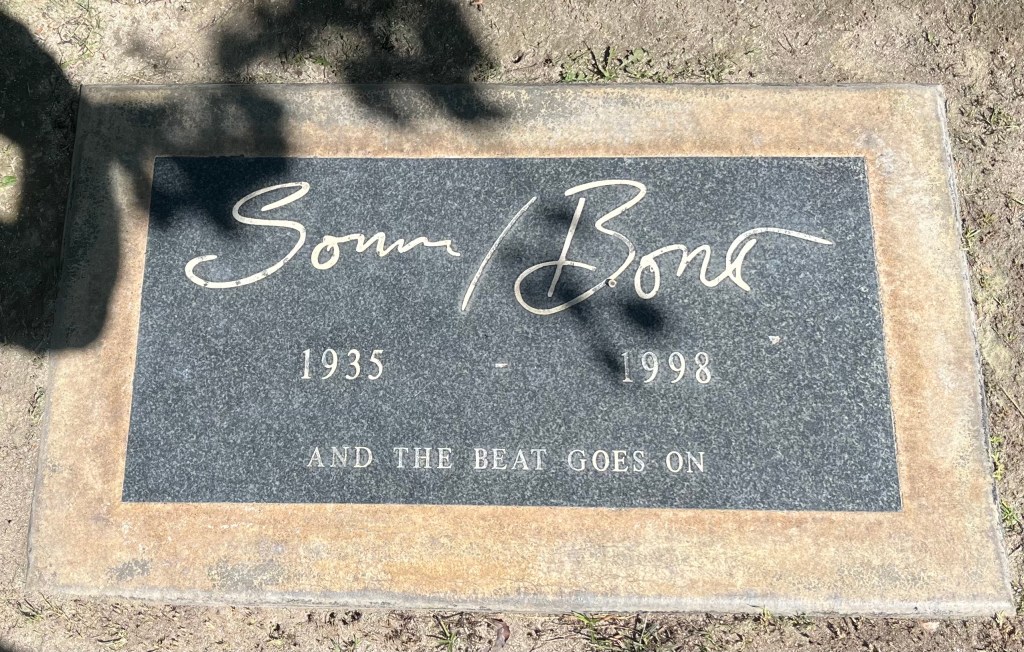
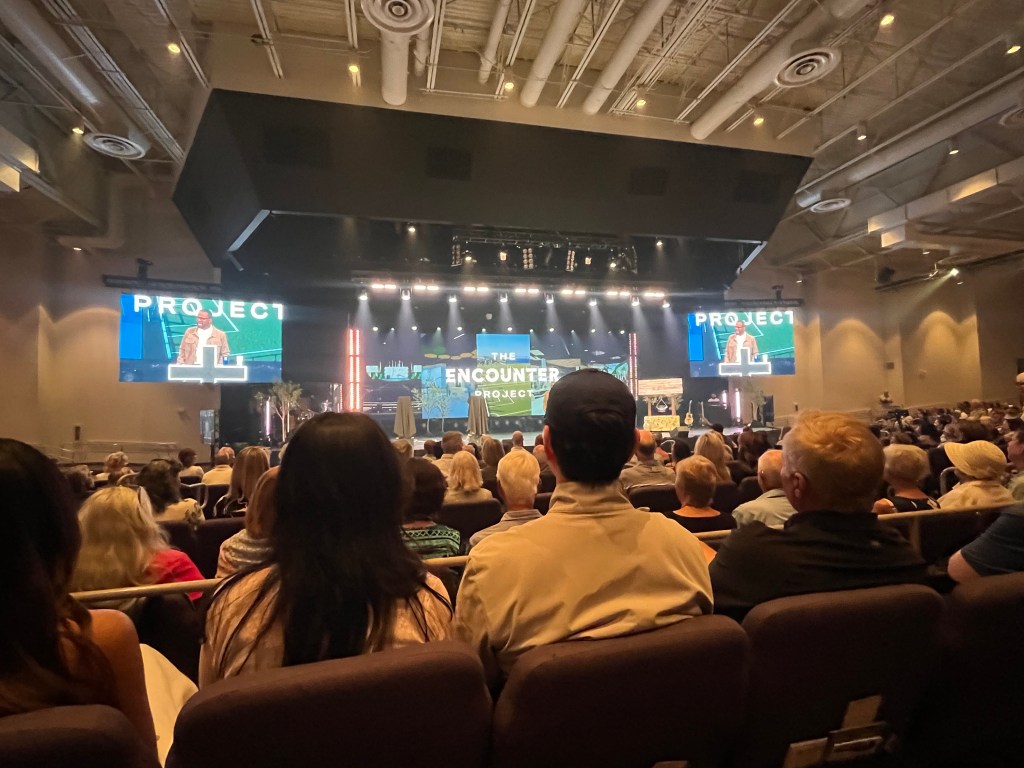
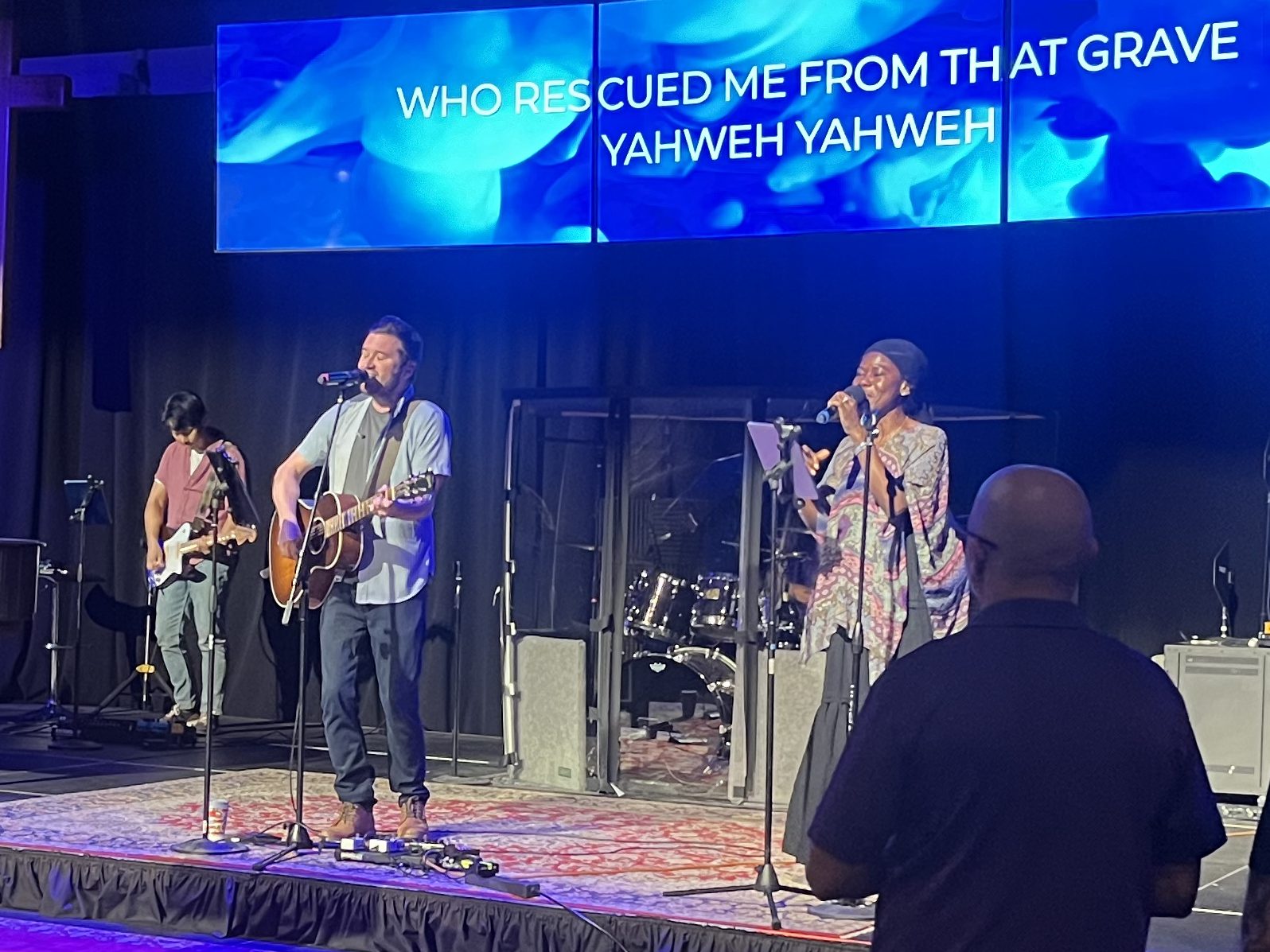
Every Thursday evening of the year is “Village Fest,” a pedestrian-only street fair on Palm Canyon Drive in downtown Palm Springs. It features more than 200 local vendors selling food, art and crafts, plus live entertainment. About a six-block area is closed to vehicles from 5 p.m.-10 p.m. Free admission to the two art museums in town are also in play from 5 p.m.-8 p.m.Well, here’s a real dish. Vicki at the Palm Springs Art Museum, which is free on Thursday evenings during Village Fest. The place was packed this evening, when temps in Palm Springs rose to 107.Vicki and I at the “Forever Marilyn” statue in downtown Palm Springs. The 26-foot-tall sculpture depicts Marilyn, a popular sex symbol of the 1950s and early 1960s, in her iconic pose from the 1955 film “The Seven Year Itch.” The sculpture has been somewhat controversial for its suggestive nature. Marilyn rented a 3,000-square-foot home known as the “Marilyn Monroe Doll House,” which recently sold for over $3 million. Even today, 64 years after her death, her legend in Palm Springs casts a long shadow.Bob Hope is among many Hollywood stars featured in the “Walk of the Stars” in downtown Palm Springs. A boulevard in the area is also named for him. Interstate 10 connecting Palm Springs to Palm Desert and Indio is named for Sonny Bono, former Palm Springs mayor. I also noticed roads named for Dinah Shore, Gene Autry and Gerald Ford, to name a few.Frank Sinatra’s “Twin Palms” estate is a five-minute walk from our condo in what is known as the “Movie Colony” neighborhood, where many Hollywood stars had homes. Sunny Palm Springs was a convenient getaway for many famous actors because of its proximity to Los Angeles. A “two-hour rule” was a 1930s-1950s Hollywood studio contract stipulation requiring actors to be within a two-hour drive of LA studios for last-minute reshoots. Sinatra’s historic mid-century home is now a luxury event venue for private parties. We couldn’t get past the locked gate to see the house with its iconic piano-shaped pool. We have also walked by the former homes of Bob Hope, Bing Crosby and Jack Benny.Marilyn Monroe’s former house in the Vista Las Palmas neighborhood, known as the “Marilyn Monroe Doll House.” It still has the iconic pink mailbox.Elvis Presley’s “Honeymoon Hideaway,” where Elvis and Priscilla Ann were married. The couple lived there early in their marriage.We like to attend churches from various denominations and backgrounds when we travel. We visited Wellspring Church, a multi-ethnic and inter-generational church in nearby Indian Wells. Led by a dynamic African-American pastor, Ricky Jenkins, the church draws around 5,000 worshippers each weekend over the course of four services (a Saturday evening service and three on Sunday morning). Worshipping at Mission Hills Covenant in Rancho Mirage. Ran into a couple from Bethany Covenant who also have a cabin on Lake Cavanaugh. Here’s another coincidence. The lead worship singer in this photo (with the string guitar) was recognized by our daughter, Sonja, on this blog. She texted me “I know that guy.” She said he was a worship leader for a church in Lynnwood she attended when she was a student at Seattle Pacific. So I approached him the next Sunday, and he confirmed it. He remembered Sonja and her friends. His name is Pete Wilson. He moved to the Palm Springs area a few years ago. He’s now on staff at Mission Hills as worship director.
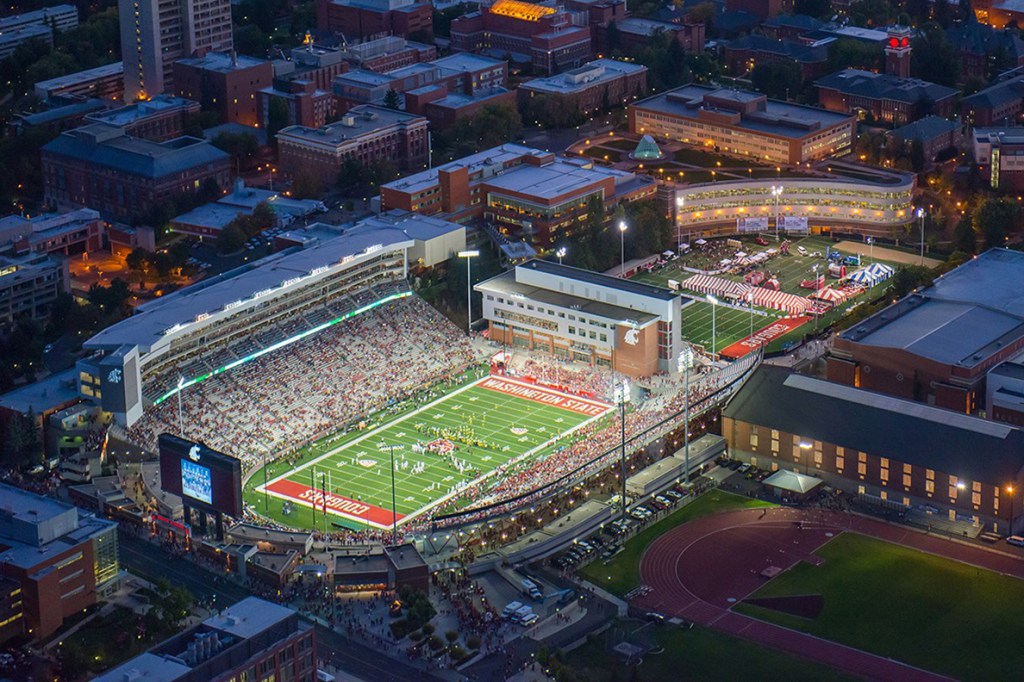
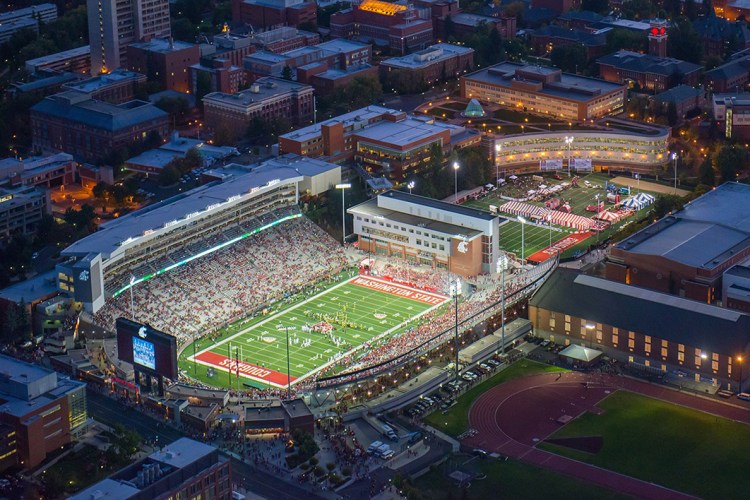
An aerial photo of cozy Martin Stadium, home of the Washington State Cougars, in Pullman. The Compton Union Building is just beyond the Cougar Football Complex behind the west end zone, and the Terrell Library behind that.
I don’t know why it took me so long. I was born in Washington, have lived all but nine of my 70-plus years in this state, yet until recently had never set foot on the campus of Washington State University in Pullman.
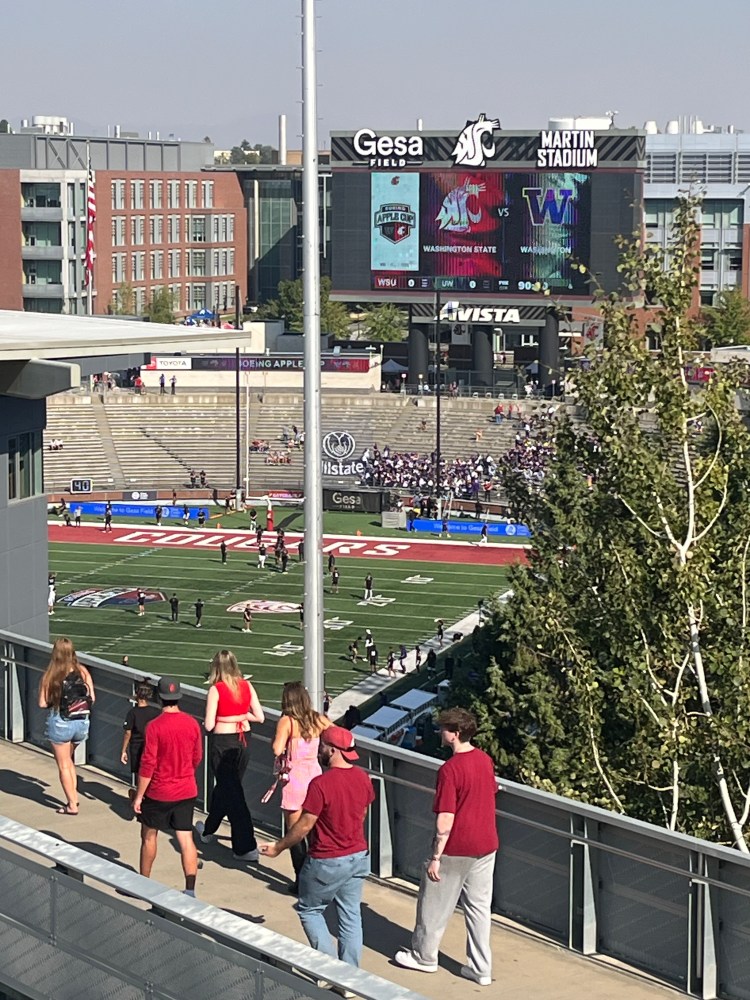
But there we were, in quaint Martin Stadium, surrounded by Cougar fans, on a sun-splashed, late September afternoon in the Palouse, to watch WSU and UW play in the Apple Cup. It was glorious.
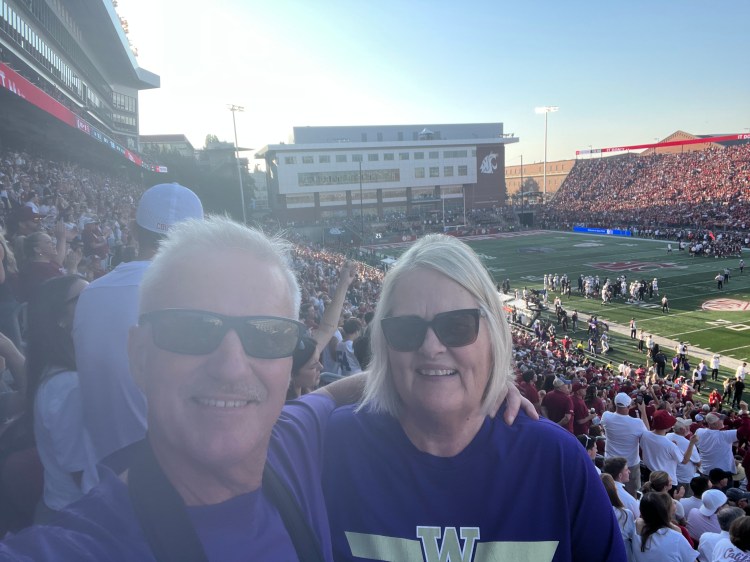
Vicki and I at the September 20 Apple Cup in Martin Stadium. That’s the Cougar Football Complex in the background. We were surrounded by Cougar fans, who were absolutely giddy that on this day beer was sold for the first time in the stadium (how ironic!). I asked the beer-drinking guy next to me if this was his first beer in the stadium. “No, it’s my fourth,” he replied. He was on beer No. 4 for the game.
I’m sorry I was late to the party. And having had many conversations with Coug alums over the years, I understand life at Wazzu was one big party!
I had always wanted to watch an Apple Cup in Pullman. But I could never summon the courage to make the trip over the mountains in late November, when the contest was traditionally played. I preferred to watch those games –usually played in sub-freezing temperatures, and occasionally in howling snow storms – from the comfort of my family-room couch.
That all changed when the Huskies left the Pac-12 for the promise of a more lucrative future in the Big Ten, leaving the Cougars to fend for themselves. The bold move – which WSU fans will never forgive UW for – relegated the Apple Cup to a non-conference matchup in September.
I, for one, certainly wasn’t complaining when the 117th Apple Cup kicked off at 4:40 p.m. amid 80-degree temperatures and a slight breeze. UW won the game decisively, 59-24, though for three quarters it was much closer than that. The game was okay, not great. It was the experience I won’t forget.
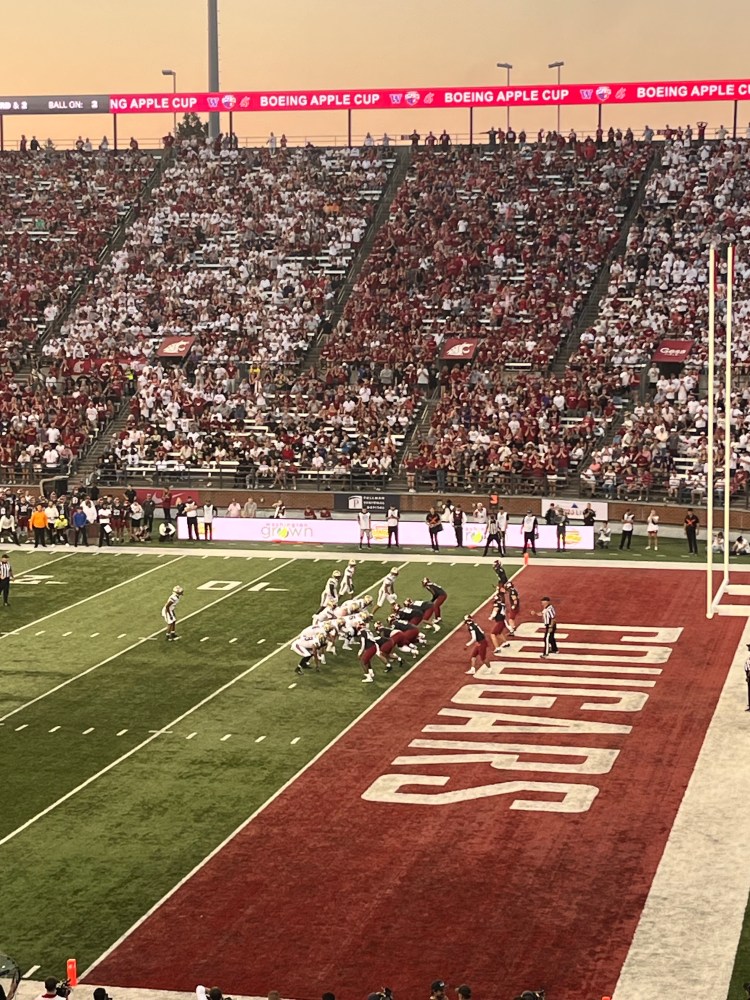
The Huskies drive for yet another touchdown in their 59-24 victory over the Cougars, a game that was more competitive than the final score indicated.
My perception of Pullman had always been colored by Apple Cup humor. You know, the back-and-forth jokes between the two schools in the days leading up to the rivalry game, including the one about directions to Pullman: “Go east until you smell it. Then go south until you step in it.”
Many WSU fans perceive UW fans as “arrogant,” and chafe at Huskies referring to Cougars as their “little brother.” Or, perceiving Cougars as country bumpkins, “Cousin Clem.”
Even legendary UW Coach Don James, who was usually understated and not one to take shots at an opponent, could talk some smack. Once speaking at a spring coaches tour in Portland, James referenced Pullman.
“A tornado went through there,” he said, “and did a million dollars worth of improvements.”
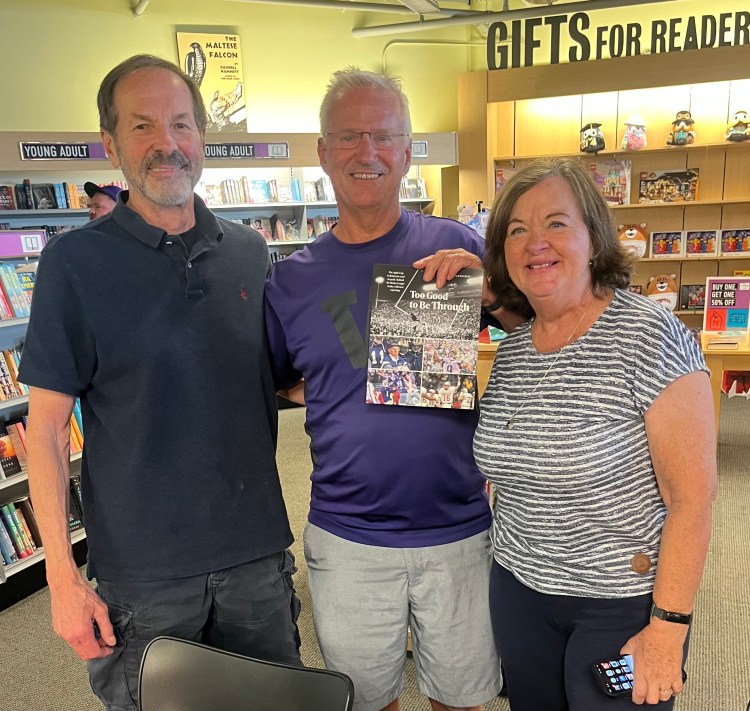
Myself with Bud Withers, and his wife, Velvet, in the WSU Bookstore before the Apple Cup. I’m holding Bud’s book “Too Good to be Through.” It’s the first book written on the Apple Cup, and one I highly recommend. Bud is an award-winning sports writer. We worked together for several years at The Seattle Times.
Husky and Cougar players were also known to talk a little trash. Before the 1987 Apple Cup in Seattle, UW quarterback Chris Chandler said this of the Cougs:
“No matter what happens, they have to go back to Pullman. And I feel sorry for them.”
Shed no tears for the Cougs. They love Pullman – and are fiercely loyal and true to their school.
The Cougar Band plays the school’s fight song before the teams take the field. That’s the student section on the left side of the grandstands across the field. Alcohol wasn’t allowed to be served there, but of course we all know alcohol has been consumed in that section for many decades, as is the case with most schools.
My friend and former colleague, Craig Smith, covered WSU football for The Seattle Times in the 1980s and 1990s. Because the team was his beat, Craig spent a lot of time in Pullman. I remember him telling me he was struck by the tight-knit, bond WSU students seem to have – the sense of family, an “us against the world” mentality while isolated together in the remote town in the northeast corner of the state. Years after graduation, Cougars are drawn “home” to the familiar haunts of ole Wazzu. Craig called this sense of community “Mother Pullman.”
Driving east from the Columbia River on Highway 26, and passing the rolling wheat fields of the Palouse, is the only way to run to the warm embrace of “Mother Pullman.” Can’t say there’s anything memorable between the river and Othello. But once you hit Washtucna, you see the familiar “quilting effect” of the rolling hills, which change from vibrant green in spring to golden brown in the summer. Giant grain elevators proudly proclaim “GO COUGS” in bold letters the closer you get to Pullman.
Finally, NW Davis Way leads you down the hill to the edge of downtown Pullman. Except there’s nothing really special about the downtown. Instead, your eyes are fixed on the big hill behind downtown, and the towering brick buildings that adorn this picturesque, 620-acre campus. Pullman IS Washington State University.
Martin Stadium is not separate from campus, as Husky Stadium is at UW, and Autzen Stadium at the University of Oregon. The stadium is carved into the campus. The Compton Union Building (bookstore) and Terrell and Holland libraries are a couple minutes walk from the stadium, as are several other classroom buildings.
Down Colorado Street, near the frat houses, is the historic “Coug” restaurant and bar, where former WSU coaches Jim Sweeney, Walden, Dennis Erickson, Mike Price and Mike Leach were known to drown their sorrows after a tough loss, or celebrate a big victory. Just east of the stadium, near the indoor practice facility is Ferdinand’s Ice Cream Shoppe and WSU Creamery, which Cougs claim serves the best ice cream on the planet. You can also purchase popular “Cougar Gold” cheese there.
It is here, on this quaint, walkable campus, where memories are made, and lifelong bonds are formed. My friend Dave Harrison, who played football for Jim Walden and remains a die-hard Coug, met his wife at Wazzu.
The terrace along Terrell Library offers great views of the stadium.
“It’s (WSU) a pretty special place for Ann and me,” he said wistfully.
Even Huskies acknowledge this. Perhaps Joe Steele, a star running back for UW in the 1970s, said it best.
“Washington State’s a beautiful place,” Steele told Bud Withers in his recently-released book “Too Good to be Through,” a historical account of the Apple Cup. “The campus, where it sits, the stadium. The Washington experience is one thing – it’s inner-city, it’s got its challenges … one thing about the Cougars, you go to Washington State, you’re Cougars for life.”
1982: When the rivalry got serious
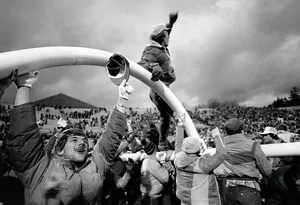
Cougar fans tear down the goal post after WSU stunned heavily-favored UW in the 1982 Apple Cup. The students eventually carried the goal post out of Martin Stadium and dumped it into the Palouse River.
I was a young sportswriter in Oregon working in the office one Saturday afternoon when the Associated Press teletype machine spit out the shocking final score: Washington State 24, Washington 20. It was one of those “I-remember-where-I-was-when-I-heard” moments.
The Huskies entered the game 10-1 and ranked No. 5 in the nation, and only needed to defeat the 2-7-1 Cougars to return to the Rose Bowl for the third consecutive year. UW was behind 21-20 in the waning minutes of the game, but seemed destined to break the hearts of the Cougar faithful when usually-reliable kicker Chuck Nelson lined up for what appeared to be a 33-yard, game-winning field goal. But the referees ruled Nelson’s kick sailed inches wide right, ending his streak of a then NCAA-record 30th consecutive made field goals. It was WSU’s first win over UW in nine years. Instead of a trip to Pasadena, the loss sent the Huskies to the Aloha Bowl.
As a follower of UW sports since my earliest memories (thanks dad!), I had always viewed the Apple Cup as a nice, intrastate rivalry. Back then, in most years neither the Huskies nor the Cougars were very good. Hence, there wasn’t much on the line. But by the late ’70s, the UW football program had become a player on the national stage under James. There was this aura of invincibility under the legendary coach. Not only had James proven he could win big games, his teams usually won when they were supposed to. How could UW lose to such an inferior opponent?
The game in 1982 was also the first Apple Cup played in Pullman in 28 years. Prior to that, WSU’s home games in the rivalry were played in Joe Albi Stadium in Spokane. Bringing the game back to Pullman gave the Cougars more of a – and frankly overdue – home-field advantage. Cougar fans were so excited to beat the Huskies they tore down a goal post, carried it out of the stadium and dumped it in the Palouse River.
My friend Dave was a backup center and special teams player on that ’82 team. He said the Cougs were still smarting from the previous year’s game, in Seattle, when the Huskies won 23-10 in a winner-to-the-Rose Bowl game.
“After watching my high-school teammate (UW receiver and future Seattle Seahawk) Paul Skansi catch a touchdown pass, and the very long bus ride back to Pullman after the 1981 game, I just remember how painful that was for all us,” recalled Dave. “After a miserable season in 1982, returning the favor was pretty big for us Cougs.”
The ’82 game would not be a fluke. The following season in Seattle, the unranked Cougs knocked the Huskies out of the Rose Bowl once again. This time, with a big, physical defensive front, they completely shut down No. 15 Washington, 17-6. Just as the ’81 game stung the Cougs, the back-to-back losses to WSU had to be galling for UW fans.
Although the Huskies have had the upper hand for the most part since, I believe that game 43 years ago was a turning point for the rivalry. That’s when the Apple Cup became more competitive – and jokes and the trash talk began.
Below are the Apple Cup scores from 1974-1985. The 1982 season marked the return of the game to Pullman, andstarted a run where WSU won three games in a four-year span.
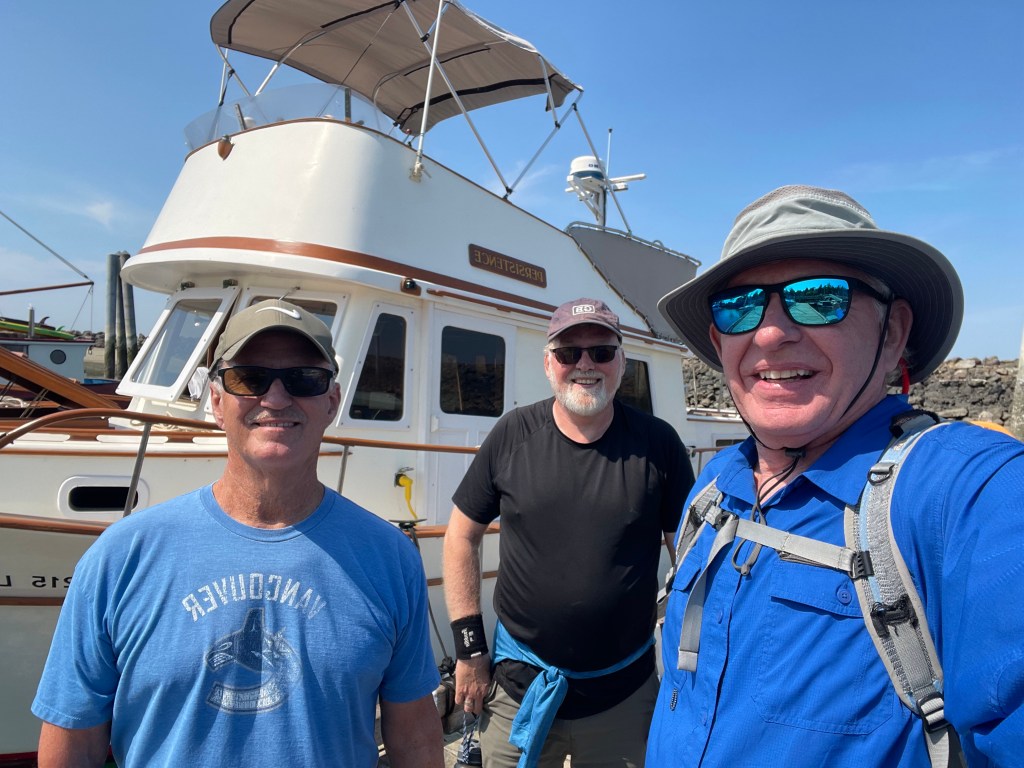
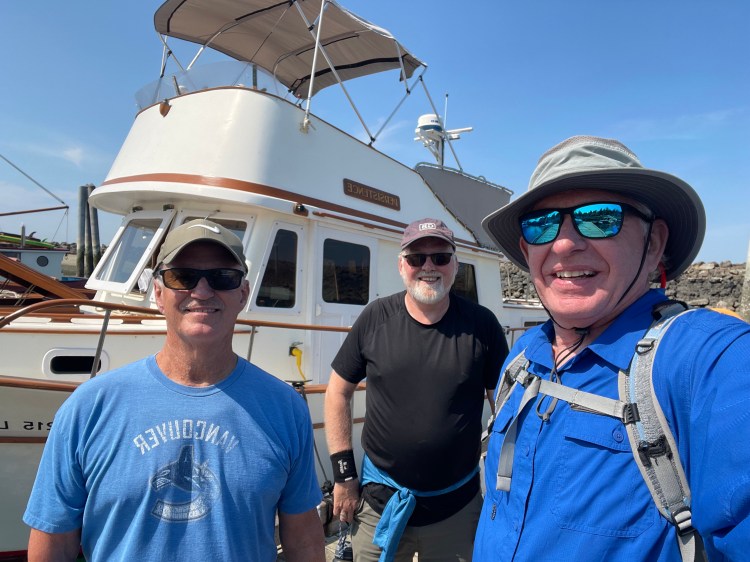
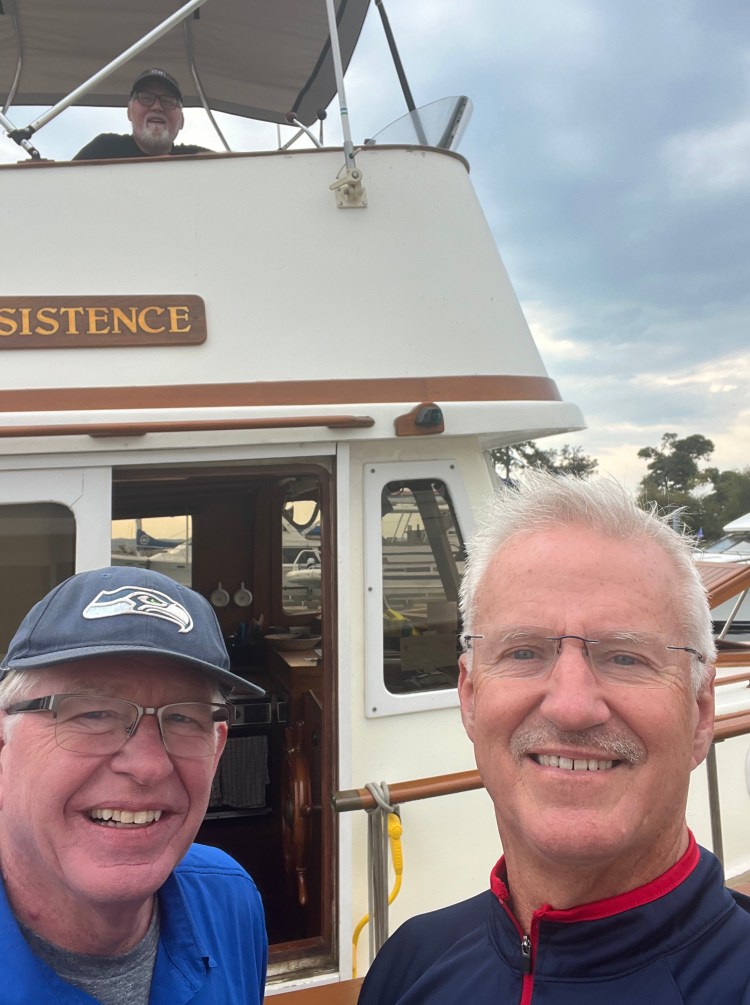
A familiar trio on a three-day boat trip: Myself, Kent Oldenburger and Bob Swenson in front of Kent’s 35-foot Trawler “Persistence” at the Blake Island Marina in Puget Sound.
The Three Amigos.
The Three Vikings.
Three Brothers From Different Mothers.
Or, as Bob Swenson suggested, “Oly, Lund and Swen.”
Whatever the moniker, the three of us have shared many journeys over the years. It’s a bond built on family and friendship. Kent Oldenburger is my brother-in-law. Bob was a groomsman in Vicki and my wedding, and a longtime friend.
For the past 13 years, it was the annual Lund family backpack trip that drew us together. This year, we traded the huffing and puffing up steep mountain trails for a more relaxing passage on Puget Sound’s waterways.
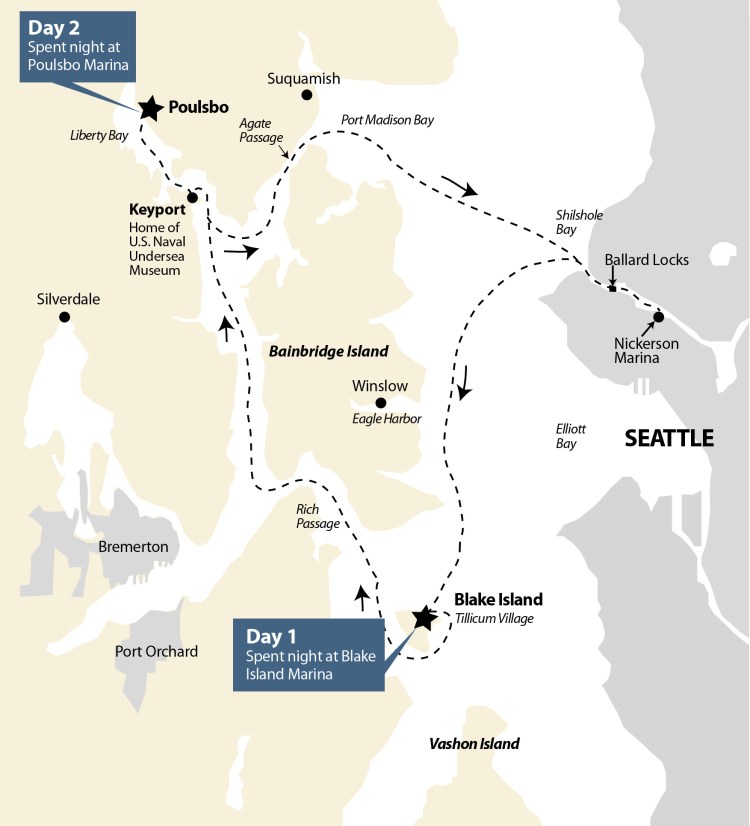
Kent owns a 35-foot trawler named “Persistence.” I had been on the boat a couple times on Seattle’s Lake Union, but never west of the Ballard Locks and the open waters of Puget Sound. Beginning at Nickerson Marina, where Kent’s boat is moored, the three-day trip featured overnight stops at idyllic Blake Island and the quaint Kitsap Peninsula town of Poulsbo, also known as “Little Norway.”
The route of our three-hour – make that three-day – tour. You would have had to have watched Gilligan’s Island to get that one.
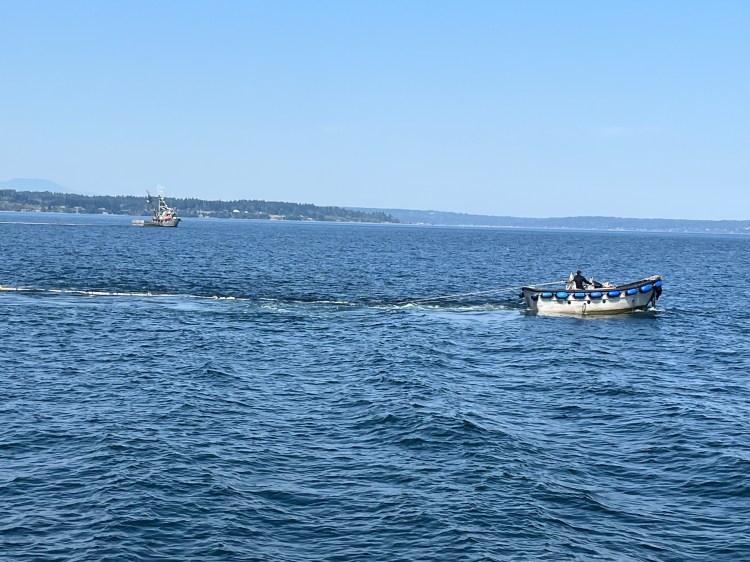
As we motored along shipping lanes and dodged a Washington State ferry shuttling cars and passengers between Seattle and Bainbridge Island, we saw dolphins, seals, and tribal fishermen setting gill nets with the help of a “skiff boat.”
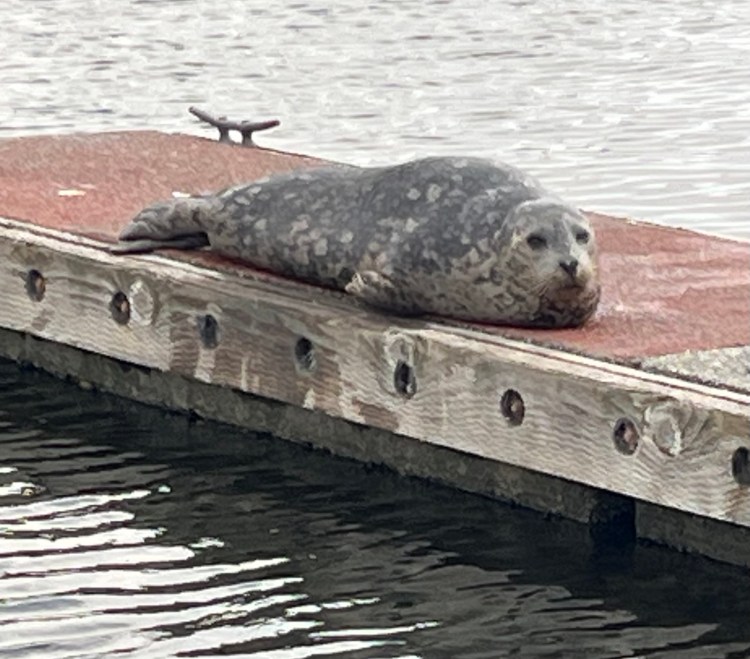
The fishing boat (in the background), also known as a “purse seiner,” releases a small but powerful “skiff boat,” which drags a wall-like net, eventually closing the loop at the fishing vessel to collect fish.We saw seals in the water and on marina docks. We worried beforehand we wouldn’t get a spot at the marinas at Blake and Poulsbo. You could say these critters helped “seal” our reservations.
The sights and sounds along the way, however, ultimately took a backseat to meaningful discourse. As was the case with our backpack trips, it was an opportunity for deep conversations. We talked about the state of our nation, the state of The Church in America, our “faith walk,” our hopes and dreams for the future, and yes, even our regrets.
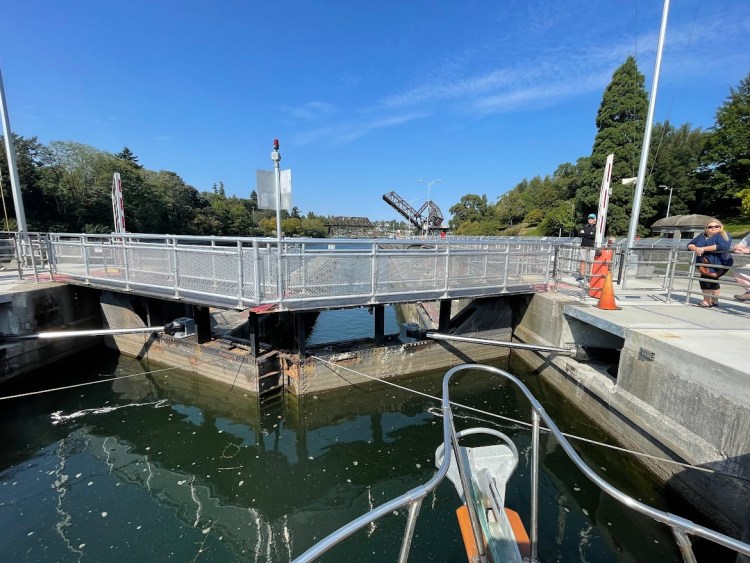
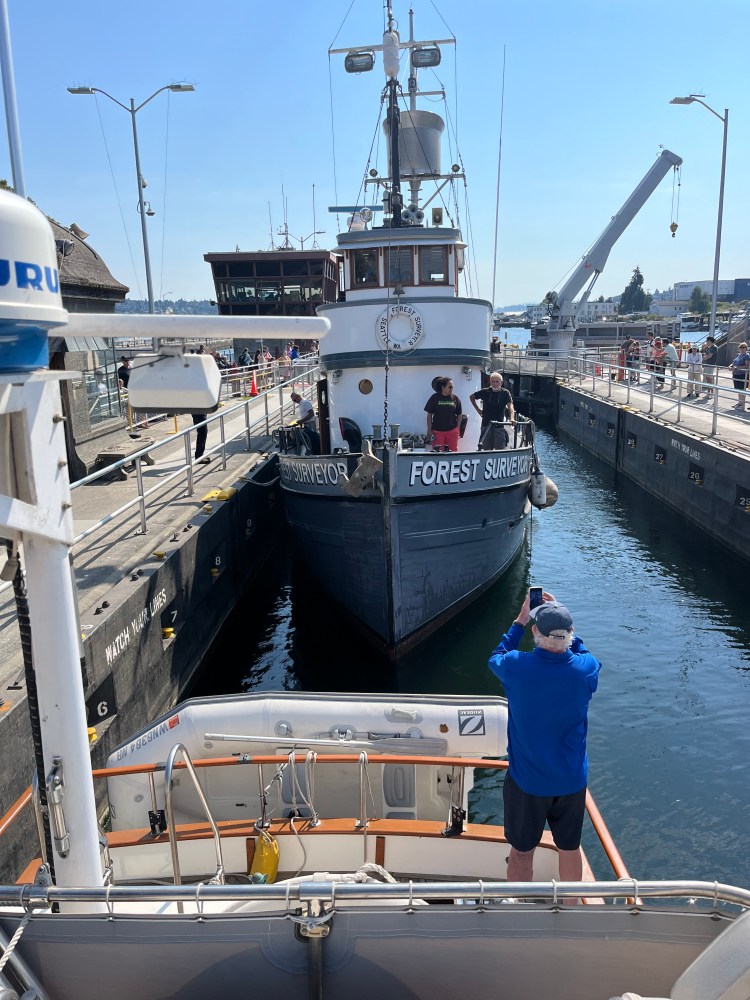
Approaching the “small” Ballard Locks on our way to saltwater. The water level of the Salmon Bay Waterway, Lake Union and Lake Washington is higher than the Puget Sound.Waiting for the water level to drop in the “small” locks, Bob takes a picture of the surveyor boat behind us. I didn’t any “forests” in the ocean.
After we “drop down” to sea level, the doors on the Ballard Locks slowly open up, and we’re on our way.
We made it through the trip, including the harrowing Ballard Locks, without incident. And that’s saying something. When it comes to boating, Kent is detail-oriented and knowledgable. His deckhands – first-mate Bob and second-mate Rick – are borderline teachable. But we did learn – well mostly – to correctly tie rope to a boat cleat.
And for that, we owe a debt of gratitude to our captain.
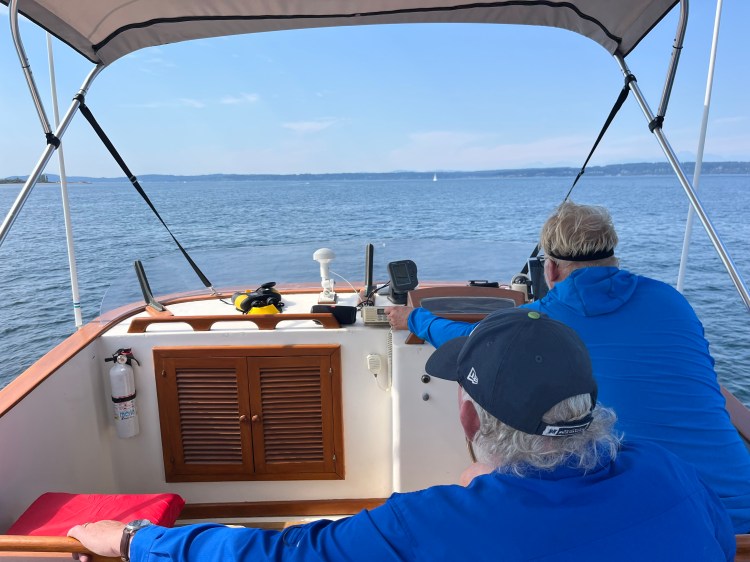
Captain Kent Oldenburger. He put a lot of effort into planning the three-day trip. And while Bob and I had our turns at the wheel, he was always piloting the boat when skill was needed.
Kent-O (Sung to the tune of John Denver’s hit tune “Calypso”)
Aye, Kent-O, the places we’ve been to The things you have taught us The stories we tell Aye, Kent-O, we bow to you, captain We’re the men who have served you So brief, not so well Olole iiiii, ololo ululululu Ololw iiii, ololu uu
Our captain is so high above us. Yet, as the name of the boat suggests, we “persist.”
Some more photos from our trip:
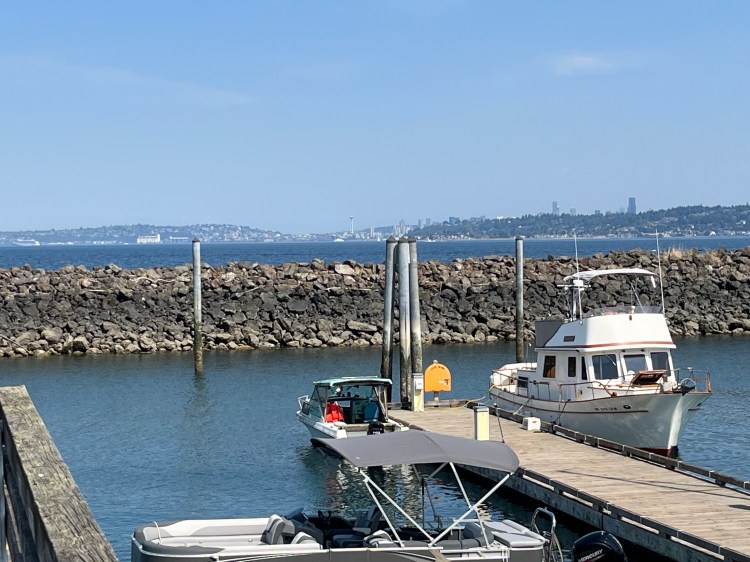
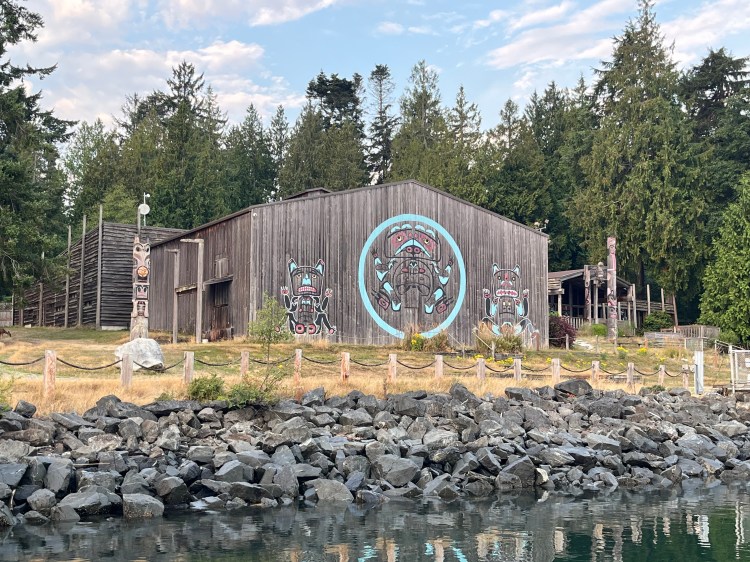
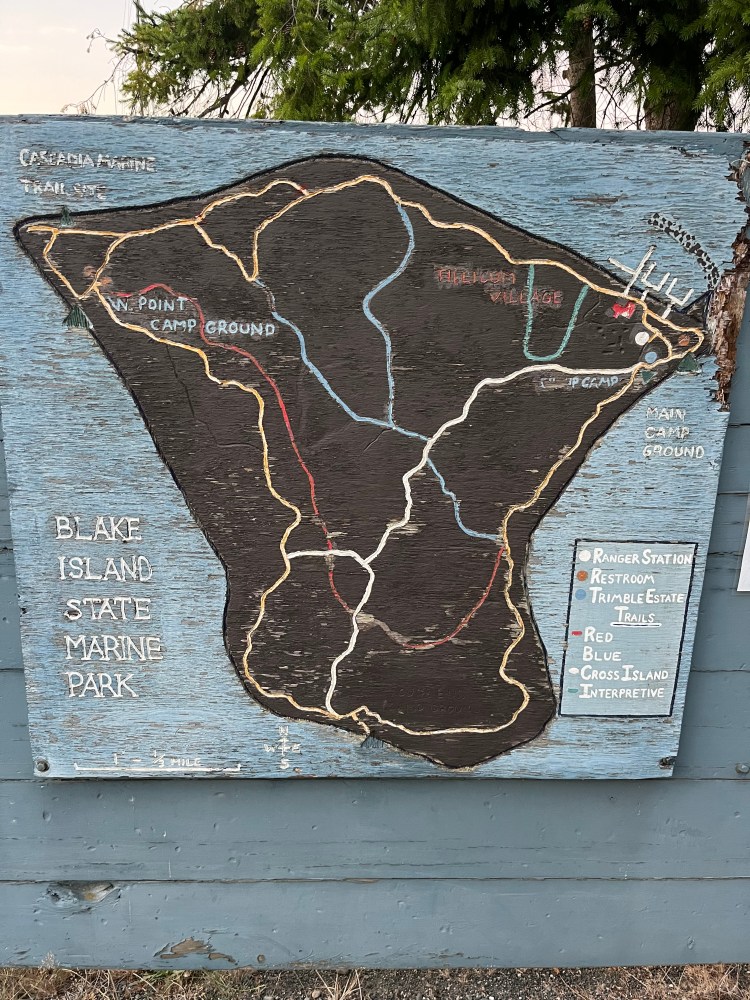
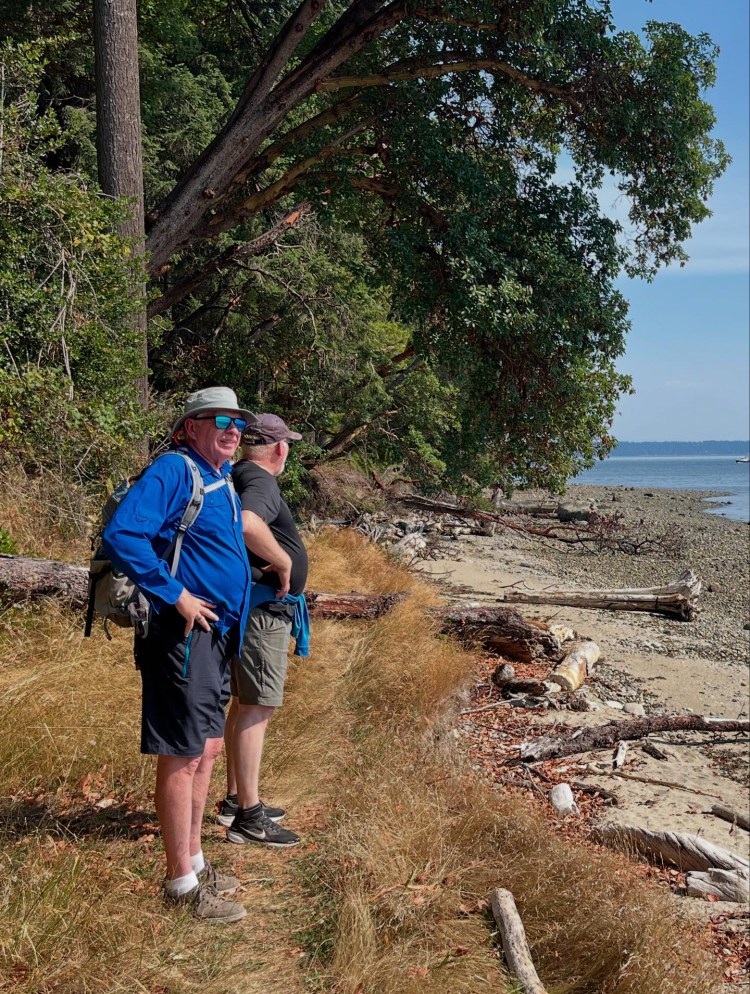
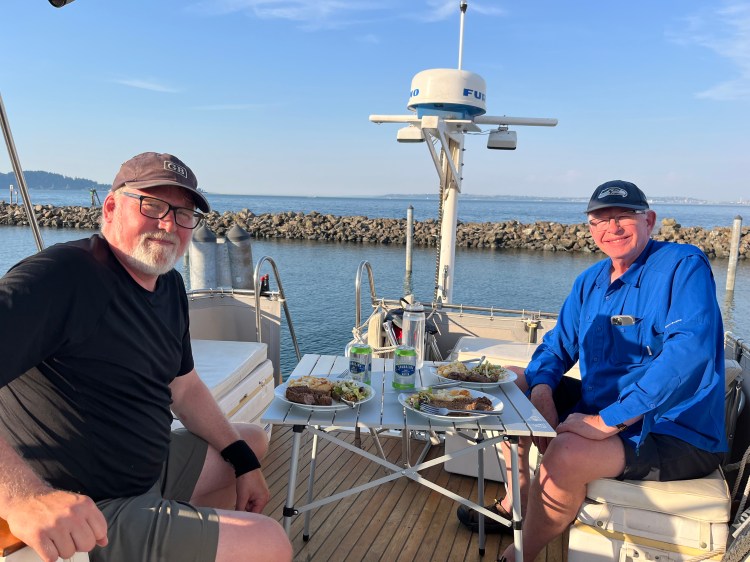
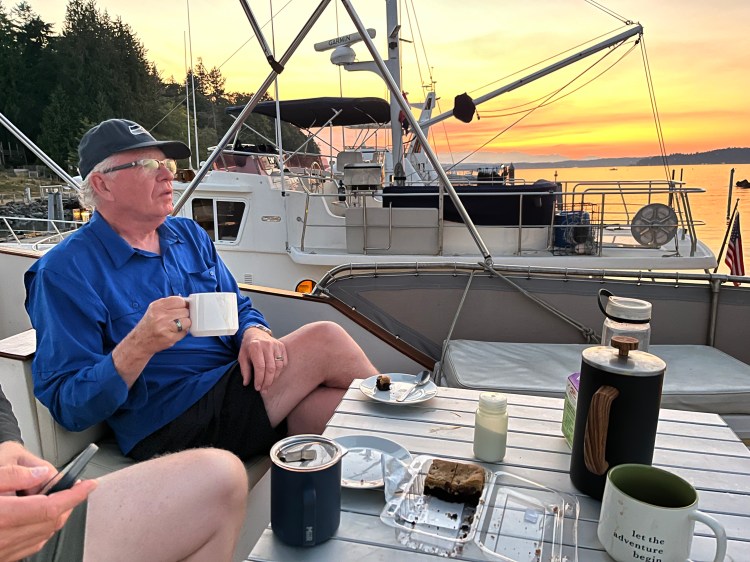
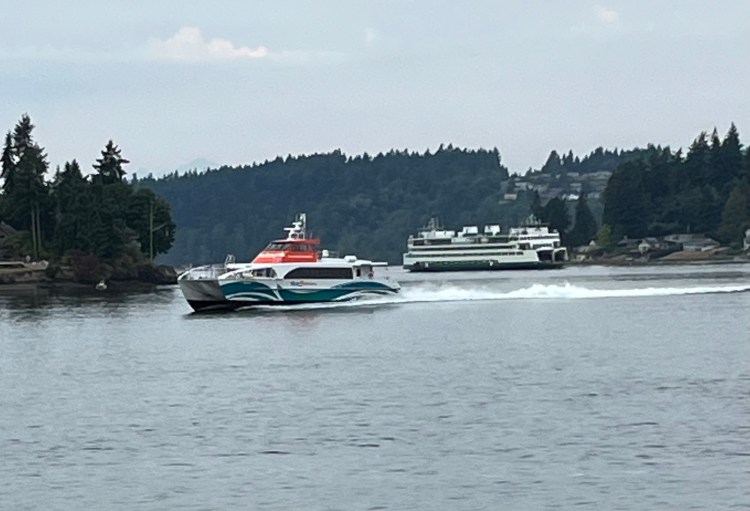
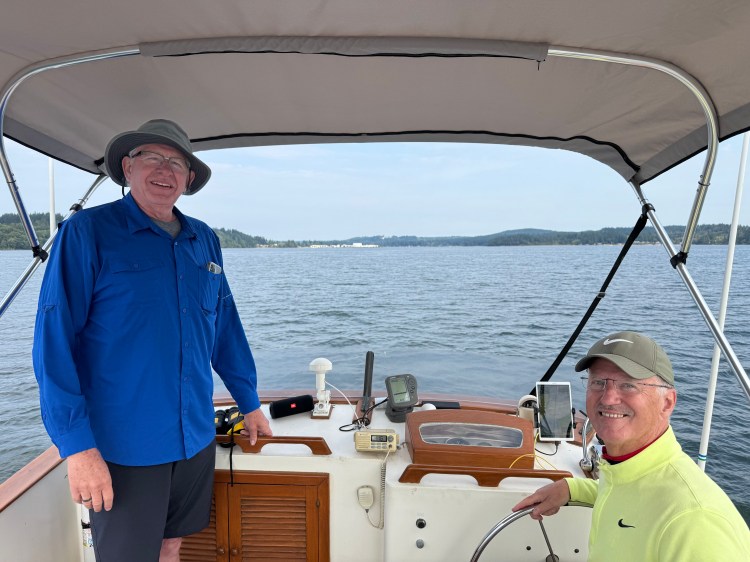
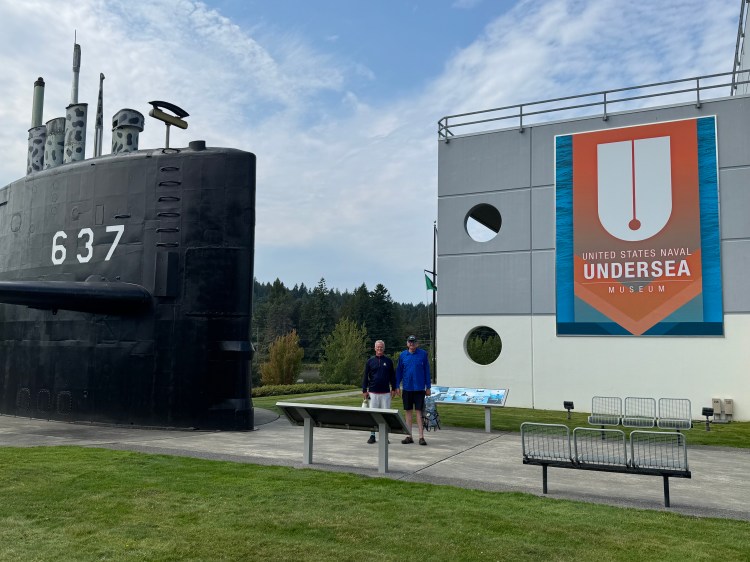
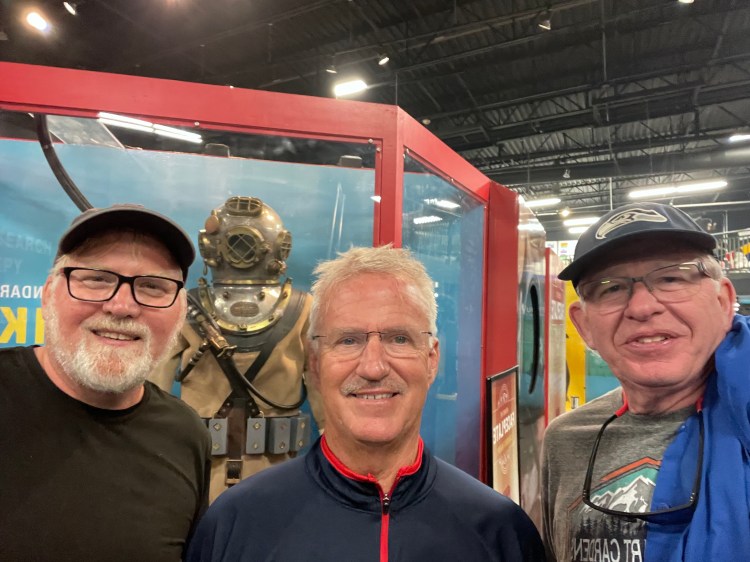
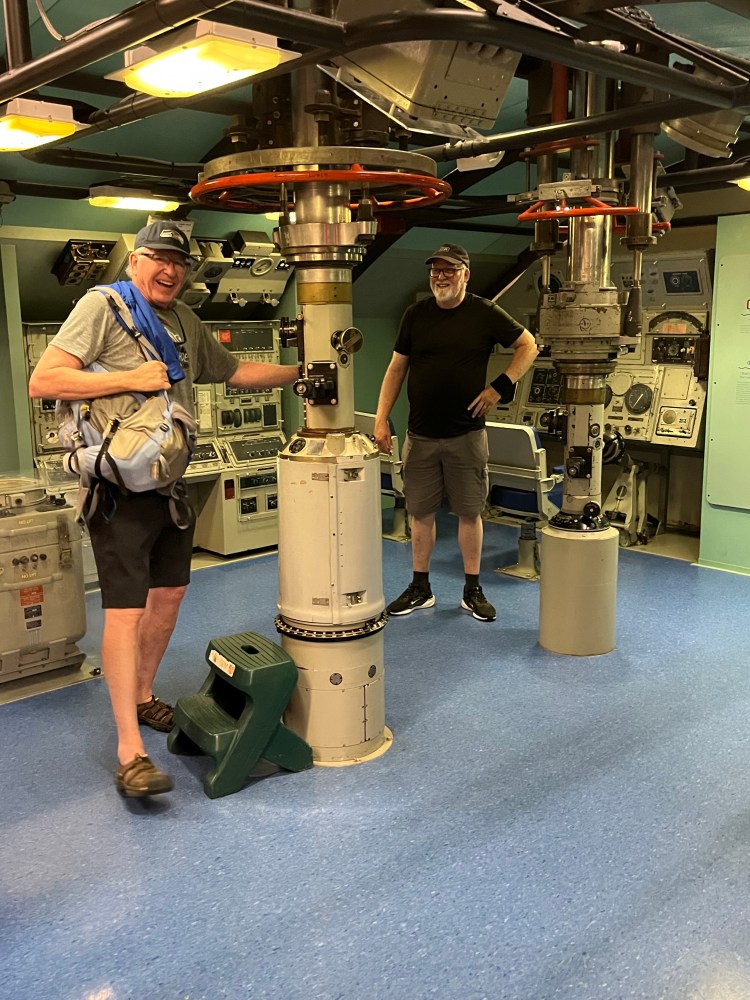
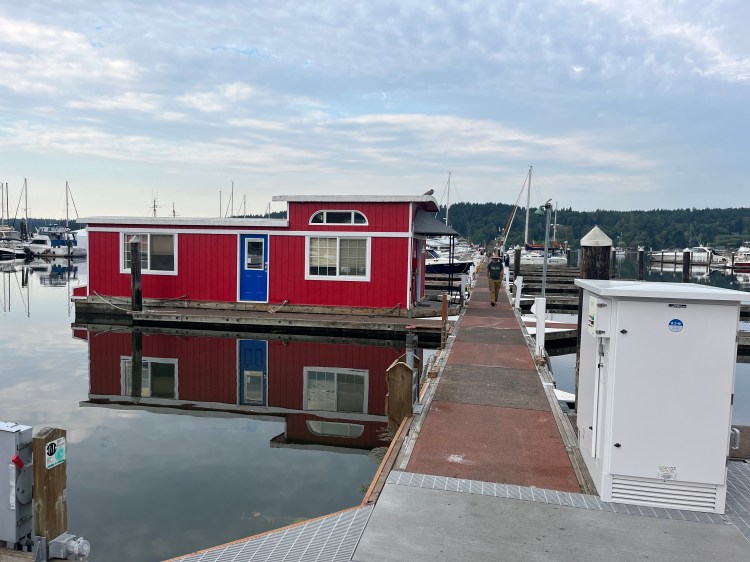
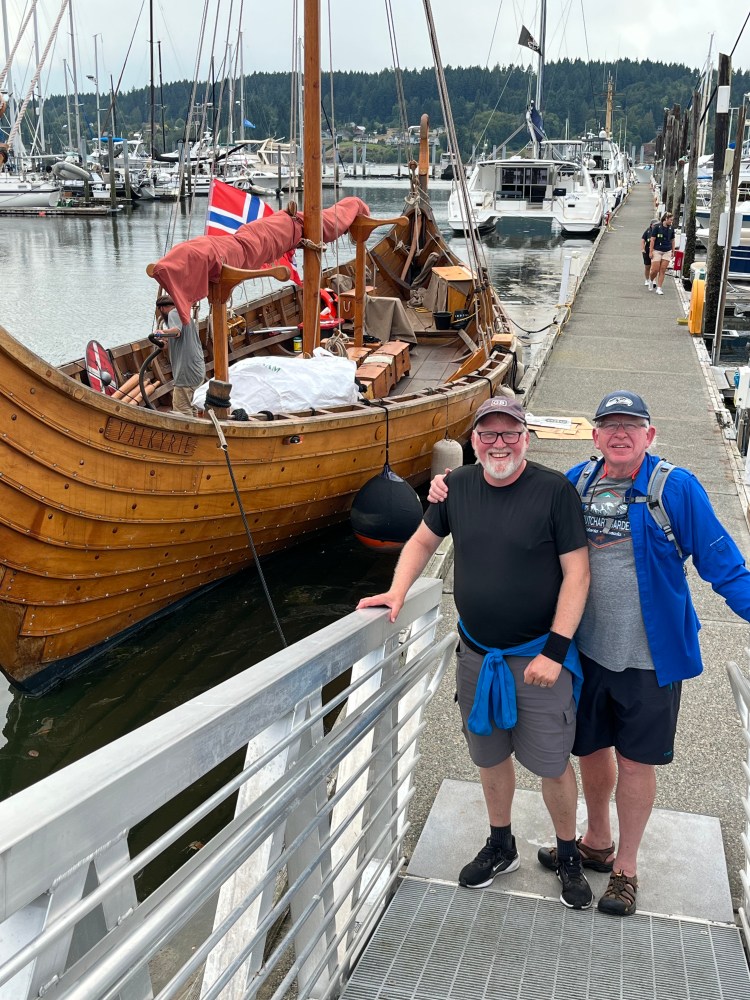
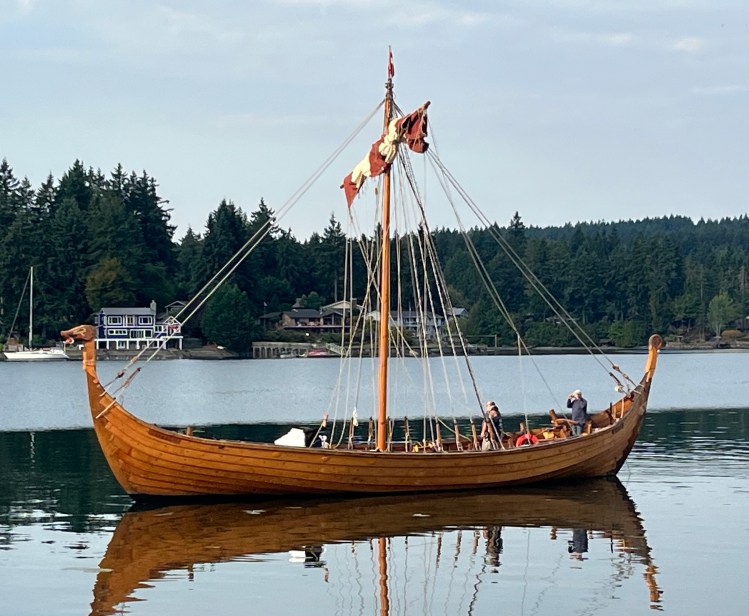
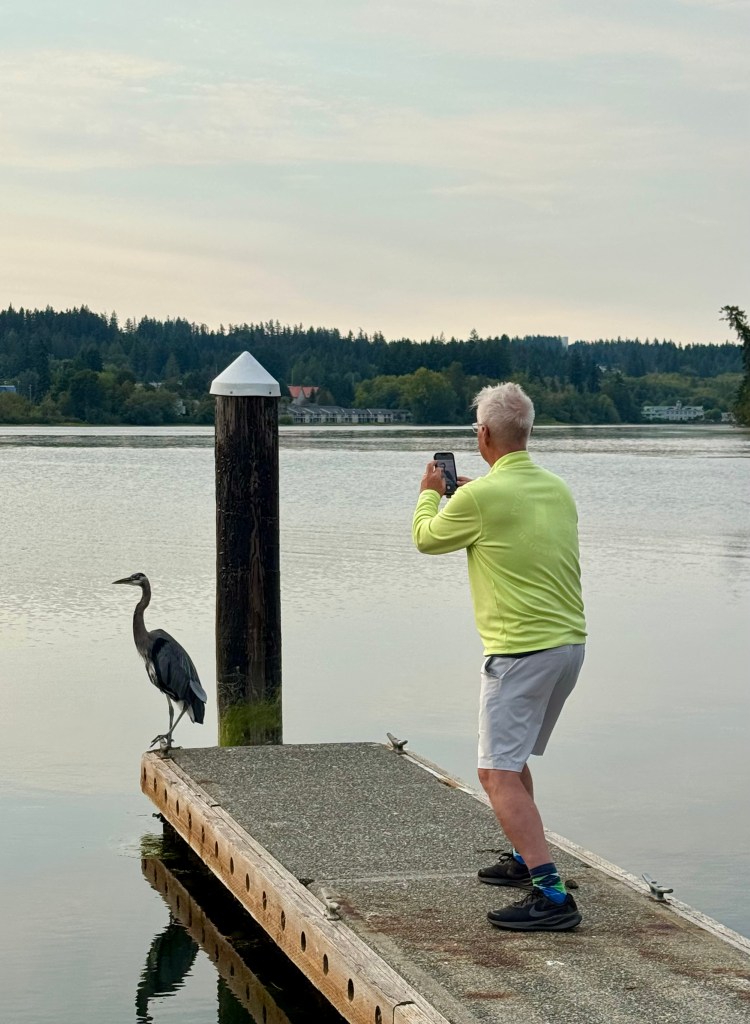
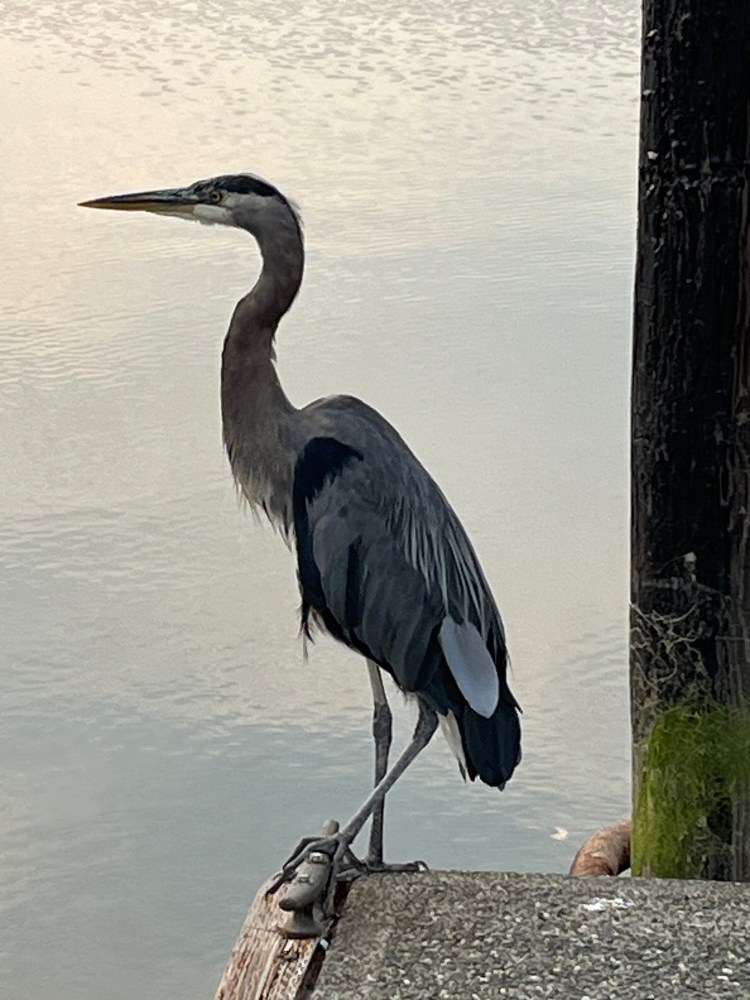
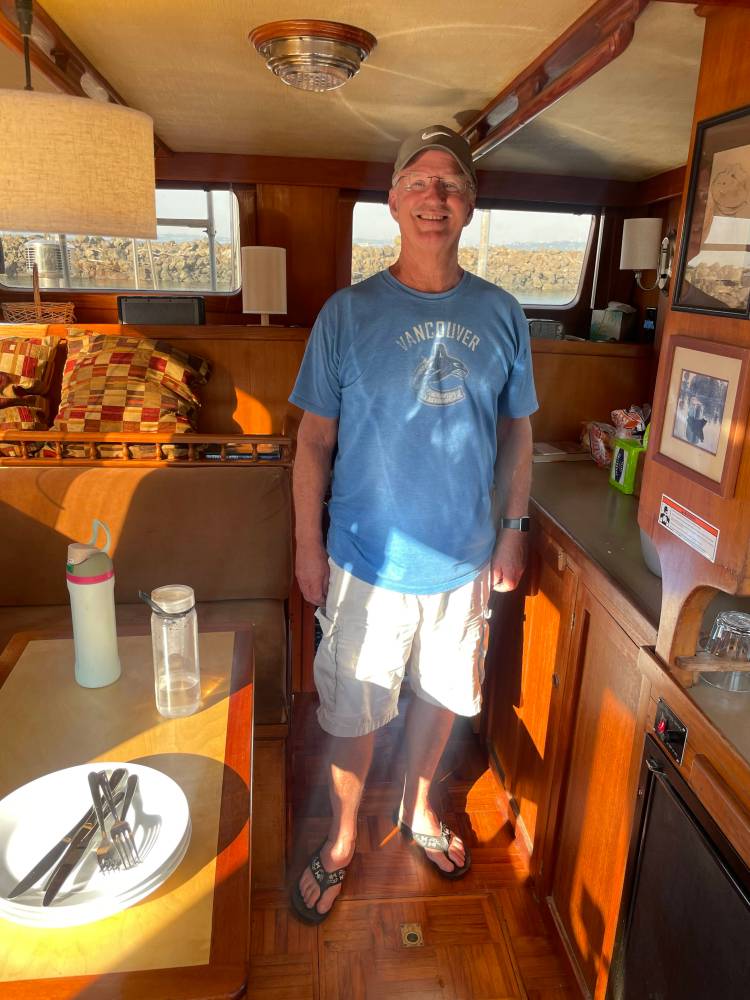
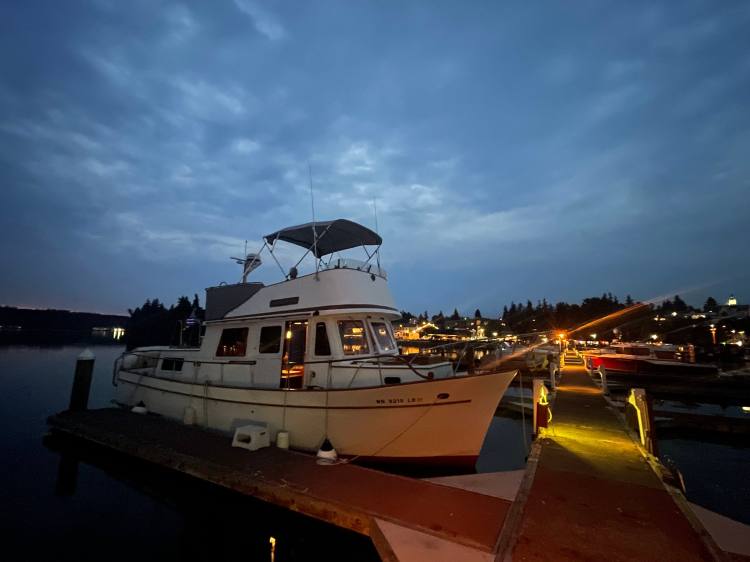
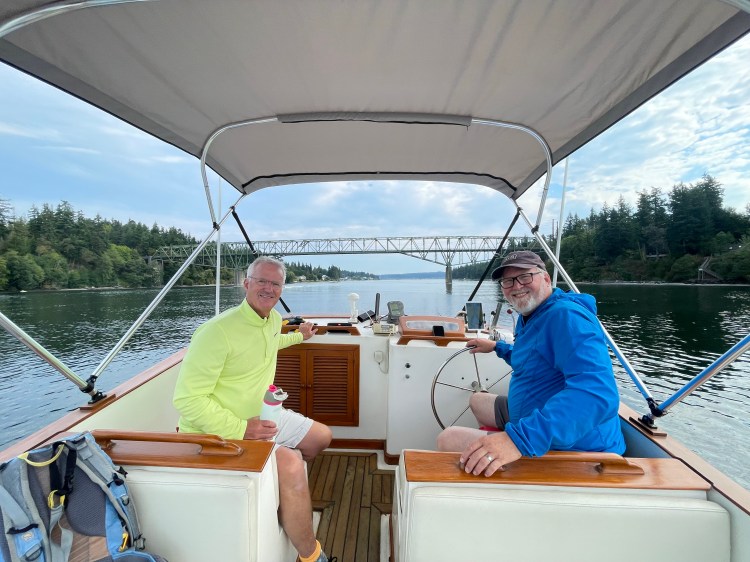
We got a parking spot at Blake Island, southwest of Seattle (background). The marina filled up pretty fast after we arrived. The small boat pulled out, and a yacht Kent said was worth $750,000 pulled up in its place. Tillicum Village over the years has hosted salmon barbecues for tour groups. Vicki and I were here in 1979 for a media event for the Major-League All-Star Game that was played in Seattle. Unfortunately, the tribal village has been closed for the past three years.The trail system on the island. We hiked the four-mile loop trail.We take a break from the hike to survey the scenery on the south end of the island, looking toward both the Vashon and Southworth ferry landings.Kent grilled tri-tip steak for dinner the first day.Dessert and decaf coffee as the sun sets, a perfect setting for meaningful conversations.On our way to Poulsbo, we crossed paths with a Bremerton-bound Washington State Ferry and a smaller, modern “fast ferry” that provides passenger-only service between Seattle, Bremerton and Port Orchard.Approaching Keyport (in the background), and I get a chance to take the wheel.A planned visit on the second day to the United States Naval Undersea Museum in Keyport.The main reason for our visit to the museum was it featured some diver equipment Bob’s father, Bud, wore as a Navy deep sea diver. Bob was excited to see the gear his father used. And it matches the tattoo he has in honor of his father, who died of cancer at a young age, shortly after Bob and Peggy were married.Once again, the threesome, for the obligatory shot in front of Bud Swenson’s gear.Bob and Kent check out what it would have been like to serve on a World War II-vintage submarine.The Poulsbo Marina has a Norwegian flavor. A few of the buildings are painted the colors of the nation’s flag, just like in Norway.A vintage Viking boat in the Poulsbo Marina.The aforementioned Viking ship set sail the next morning, in Liberty Bay.Boys will be boys. Trying to get close to a Heron.And that’s as close as I got before it flew away, but not before he scolded me.Suspect deckhand in the boat cabin.Kent and I on the waterfront with the “Sons of Norway” building in the background.We spent our second night in Poulsbo, which was incorporated in the 1880s. A Norwegian settler suggested it be named “Paulsbo,” after his hometown in Norway. But authorities in the U.S. Post Office in Washington, D.C. misspelled the town’s name, likely misreading the immigrant’s handwritingNight time in Poulsbo. It’s an unique, different lifestyle, this group of boat people who hop from one marina to the next in the Puget Sound during the summer months.Day 3. Heading back to Seattle, and about to pass under the Agate Passage Bridge linking the Kitsap Peninsula to Bainbridge Island.The open water, heading toward Shilshole Bay and the Ballard Locks.
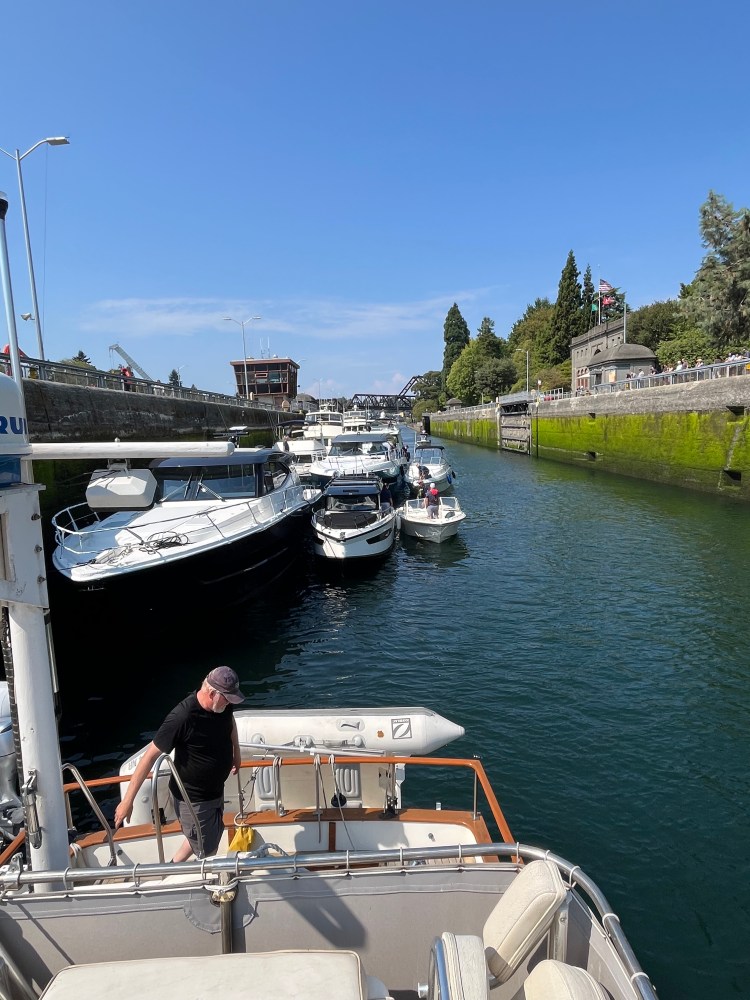
An expensive yacht leaving the Ballard Locks as we waited to enter. He had a Washington State University flag and an Auburn University flag, which was interesting.We passed through the “large” Ballard Locks on our return to Nickerson Marina. The yacht and matching blue “chaser boat” behind us were being delivered to their owner. Kent says as many as 100 boats can fit in the large locks.