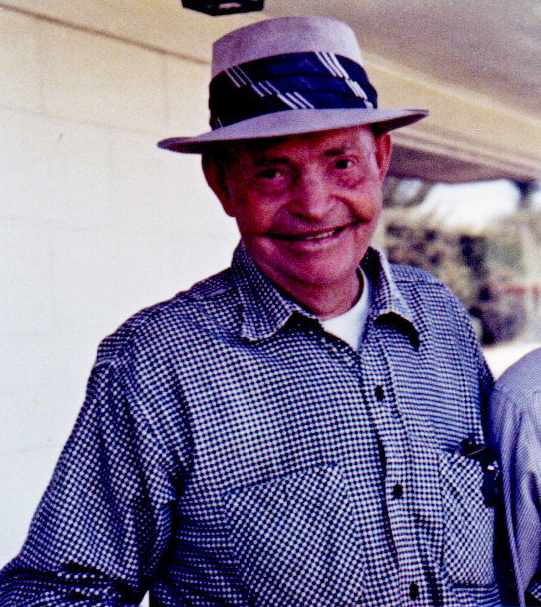
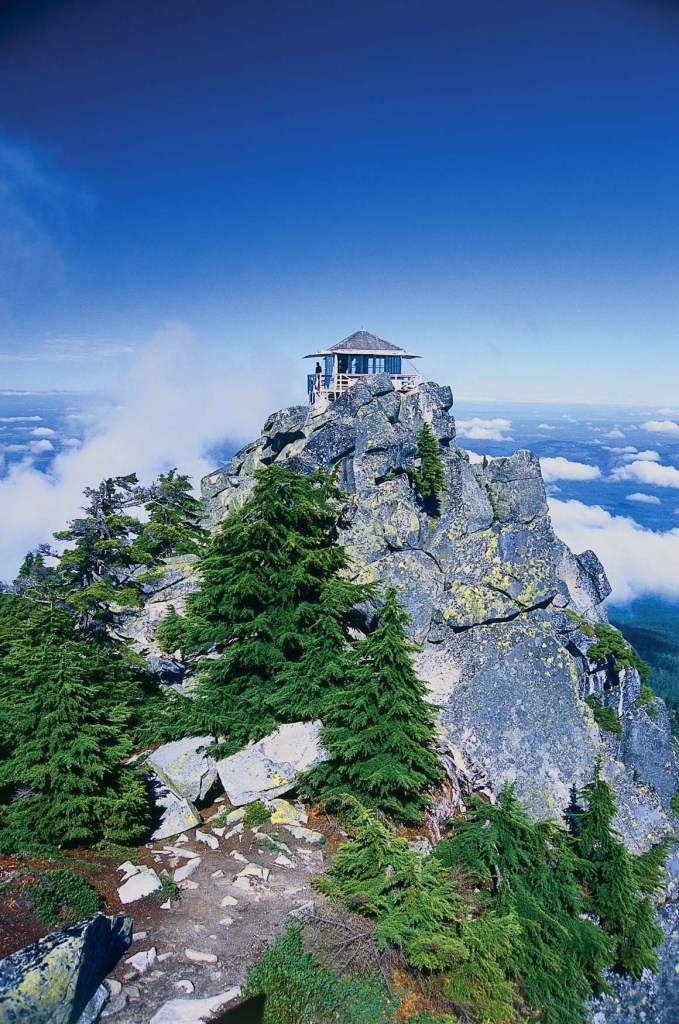
Veteran fire lookout watchman Jim Henterly looks through the “Osborne Fire Finder” in the iconic Desolation Peak fire lookout in North Cascades National Park (Photo courtesy of Jim Henterly)
Doing a story on a fire lookout watchman has long been on my bucket list. I can now check that box.
I have to say, though, this was not an easy story to do. First of all, only about a third of the state’s remaining 93 fire lookouts are staffed. I talked to several rangers with the U.S. Forest Service. No dice. Finally, one ranger suggested I contact North Cascades National Park. A spokesperson with the park directed me to the guy who mans the famous Desolation Peak fire lookout, which also happens to be the only one in the park that is staffed.
My intent was to hike to the lookout for the story. But I soon discovered that was going to be challenging. It’s roughly 50 miles round trip from the Ross Lake east bank trailhead off Highway 20. An easier option is to take a water taxi from Ross Lake Resort to Lightning Creek Campground. That puts you at the trailhead to Desolation Peak, a 4,400-foot climb in elevation over 4.7 miles. But the water taxi option comes at a price — $145 each way — thereby gobbling up much of the money I was to be paid for this story.
So I reached out to Desolation’s watchman, Jim Henterly, by phone. At first he was reluctant to be interviewed. He thought other reporters from various media had misrepresented him. He gradually warmed up to me. He was a wealth of information and a great quote.
Oh, and Desolation Peak isn’t just any fire lookout.
It’s tradition at the Indianapolis Motor Speedway for the winning race driver to kiss the bricks at the conclusion of the race. I think it’s almost sacrilegious for a non-auto racing fan for me to do that. But I do have the utmost respect for this race track in a city that is known as the “Racing Capital of the World.”
To paraphrase the most interesting man in the Dos Equis beer commercial, “I don’t visit race tracks very often. But when I do, I kiss the bricks at the finish line of the Indy 500.”
Full disclosure here. I’m not into motorsports. The last time I stepped near a racing oval was Skagit Speedway, in like 1962. I have watched only small portions of auto races on TV in my lifetime.
Winners of each race since 1911 are displayed on a wall in the Indy 500 Museum.
I am, however, familiar, with the drivers who made names for themselves in a city they call “The Racing Capital of the World:” A.J. Foyt. Mario Andretti. Al Unser. Bobby Unser. Johnny Rutherford. Rick Mears. Helio Castroneves. Emerson Fittipaldi. Arie Lurendyk.
One can’t follow sports for as long as I have and be oblivious to these auto-racing icons.
The enormity of this race and the venue aren’t lost on me. The track seats 350,000, which makes the Indy 500 the largest single sporting event in the world. The buildup to race time, I’m told is memorable, culminating with the song “Back Home Again in Indiana, ” sung for many years by Indiana native Jim Nabors (aka Gomer Pyle). Our tour guide said most people are in their seats three hours before the race. An Indianapolis native, the tour guide was my age and said he’s been to every race since he was 8 years old. He’s also a longtime track employee, and while being at the track has become ordinary, he said the excitement of “race day” never gets old.
Layer No. 8 is the bricks, only to be covered later by seven layers of asphalt.
I won’t bore you with too many facts and figures about the Indy 500. But here’s a few to chew on.
The track is 2.5 miles long, which means it takes 200 laps to complete the race. The average speed is 230-240 miles per hour. At those speeds, it takes about 40 seconds to complete one lap. Our trip in a small shuttle bus around the track at an average speed of 20 mph took us considerably longer. More than 70 drivers have been killed on this oval. Ticket prices ranges from $100 to $250. Compared to ticket prices for NFL, NHL and NBA games, that seemed reasonable to me.
Where did the brick theme come from? 3.2 million paving bricks, each weighing 9.5 pounds, were laid on top of the original surface of crushed rock and tar over a span of 63 days when the track was constructed in 1909. Seven layers of asphalt have since been paved over that brick layers. The brick-lined starting and finish line consists of some of those original bricks, which are changed out when they are damaged.
We’re in Indiana to visit our daughter, Greta, and her family, Karl, Svea, Ida and Aksel. They live in Valparaiso, located in the northwest corner of the state, about a 2 1/2-hour drive from Indianapolis. Son-in-law Karl, his brother Eric and I talked this weekend about attending the Indy 500 (always held on Sunday of Memorial Day weekend) as early as next year.
Looking from the starting line to Turn No. 1, arguably the most dangerous turn in racing as the field of 33 cars traveling in excess of 200 mph vie for the early lead.The crow’s nest at the start/finish line where someone waves the starting and checkered flags.Vicki and I standing at the Terrace Tower at the start/finish line, This fairly new addition to the track is where the scoring happens and includes the most expensive corporate suites and seating. The track was purchased by Roger Penske in 2020. He’s already making improvements to make the race more attractive to younger fans.I shot this photo of the Indy 500 Motor Speedway from our plane as we prepared to land at the airport in Indianapolis.One of the older Indy 500 cars on display in the museum. I believe this was 1950s-1960s vintage.
Boiler up!
Truth be told, however, I’d just as soon attend a Purdue University football or basketball game. We stopped in West Lafayette on our way to Valparaiso to check out the Big Ten campus and athletic facilities. Here’s some photos from the home of the Boilermakers.
Outside the main entrance to Ross-Ade Stadium, home of the Purdue Boilermakers.A peak inside the football stadium. Note the painted train tracks leading to the field (where the Boilermaker train runs).Legendary UCLA basketball coach John Wooden was an All-American at Purdue. His statue is outside Mackey Arena. Behind him is displayed Wooden’s famous “pyramid of success.”Purdue has a long tradition of championship-caliber basketball teams.
My brother John and I with our dad at a Father’s Day gathering at our home in Conway in 2014. My dad was a good man – the best of the best.
As a college student in 1975 I once mailed a birthday card to my dad that he was to open on March 29, his birthday. There was just one problem. His birthday was a month later, on April 29.
Years later, we joked about that. Better early than late, right dad?
On this 29th day of April, 2022, my dad would have been 90. And rather than being early to the party – as I was 47 years ago – I feel like I was a little late.
I always envisioned I would spend more time with my dad after I retired. But time would not wait for dad. My retirement at age 65 in 2020 would come nearly three years after his death. My dad had Multiple Sclerosis for more than 50 years. I thought he would experience a slow decline from that disease, not the catastrophic pulmonary embolism that abruptly took his life on August 10, 2017.
Time. It’s our most precious commodity. Your time is your life. I know this to be true as a parent. You can always give your kids money or gifts. When you give them your time – look them in the eye, be fully present in the moment – you’re giving them a slice of your life you’ll never get back. You are telling that person that he or she matters.
Dad and our three girls in the early 1990s.
Did I give my dad enough of my time? I’m probably a little hard on myself, but I still wrestle with that today. Did I have too many things going on in my life to give him my undivided attention?
I recall one incident a couple years before his death where I clearly had not shared enough of my time.
It was just dad and I at my parents’ condo in Burlington. Mom was gone, and after a hour-long visit, dad suggested we go out and grab a burger for lunch. I had a project at the lake cabin I wanted to attend to, and said I’d take a pass.
He looked at me and said: “You’re a workaholic.”
Me with my parents on August 13, 1977, the day Vicki and I got married. Though dad isn’t smiling here, I think he was very pleased with what was about to happen.
Whoa. That was NOT like my dad. For him to confront me like that must have taken considerable courage. I can count on one hand the times in my life he ever gave me advice, much less admonish me. I stayed and we grabbed a burger.
Dad was, let’s say “the less forceful” disciplinarian in our home. But he was no slouch, and when he reached a boiling point you knew you had crossed a line. Yet, he never laid a hand on me. He never uttered a curse word. There were certainly many times I frustrated him, disappointed him. When he got really mad, he’d say – and my brother, John, will chuckle at this because he got the same treatment – “Gee, you gripe me!” The punishment was the look of disappointment in his eyes. You didn’t want to receive “that look.”
Dad at his 60th birthday party at our home.
My dad was not flashy, was never one to draw attention to himself. He was soft-spoken. He could get lost in a crowd. He would never have a Facebook or Twitter account today. He was a successful banker, but wasn’t eager to climb the corporate ladder. He didn’t equate net worth with self worth. As a lifelong Christian, he really understood that God is not interested in what we accomplish on this earth, but rather who we become. You don’t bring your career or your bank account to heaven. You bring your character. He was known for his kind and gentle spirit. That warmth and ready smile was evident to all he met, a living testimonial to the God he served.
Dad also had what I would describe as a “non-anxious spirit.” Nothing ever seem to rattle him, though he had reasons to live in fear. MS was his constant companion, and he shared privately with me in later years his declining ability to move his legs. He was discouraged, which was unlike him. Yet, he drew assurance from his favorite verse in the Bible, Isaiah 30:15. “In quietness and confidence is my strength.”
When I addressed the crowd at my dad’s memorial service more than four years ago, I said “I know why you’re here. Because you saw in my dad characteristics that are rare in our self-absorbed, me-first culture: Kindness. Gentleness. Giving.”
People who knew my dad made a point to be at that service in Sedro-Woolley. One of my cousins drove from Idaho. I didn’t know he was even that close to my dad. But as one who himself had an angry, abusive father, my dad over the years had obviously made an impression on him. My sister-in-law and her husband made the trip from Leavenworth. I saw the two of them recently and thanked them once again for making the effort to attend my dad’s funeral. Suzann’s response: “Your dad was probably the kindest man I’ve ever met.”
I guess I shouldn’t have been surprised to hear that. To me, that was normal .. that was just “dad.” My cousin Terry undoubtedly wished his dad was more like my dad. We don’t choose our parents. I was fortunate.
So here I am, marking what would have been my dad’s 90th birthday. Although his earthly life is over, his story, his legacy, lives in me. I continue to discover things about my dad since his death that challenge me, that continue to shape me – attributes about him I hadn’t totally grasped before. I am intentional in my retirement to offer myself – my time – to my mom, who will turn 89 in July and suffers from dementia. It is a slice of my life I am glad to give, thanks in no small part to the man who gave so much of himself to me.
Mom and dad were a good team. Mom was a faithful caregiver in my dad’s later years as he struggled with MS.
I’ll close with a Father’s Day card I wrote for for my dad a couple years before he died. It’s titled “To a good dad. From a fortunate son.”
Happy Father’s Day, dad; my how the years have flown; my childhood is a fading memory, heck, now my girls are grown.
What I’ll never forget, though, is that you were always there; guiding me, prodding me, and yes your occasional rant about my long hair.
I remember you driving me on my Sunday morning paper route, even watching John and I mow the grass; whether it was going to our games, or our piano recitals – you always put your family first, never last.
You and mom worked hard so I could go to North Park; met a pretty blonde there, asked her to marry me on a lark.
So now I’m a little bit like you, slowing down, getting more gray; I don’t like watching the Mariners as much as you, I will have to say.
But we’re alike in many ways, the apple doesn’t fall far from the tree; I’m a fortunate son to have been raised by you. Lucky me.
The snarling, snow-covered Cougar outside Martin Stadium
Until yesterday (March 9, 2022), I had never been to Pullman, Washington.
I’m almost embarrassed to admit that. I’m 67 years old. I’m a native Washingtonian. My brother went to Washington State University, for crying out loud. My beloved Husky football team plays there every two years.
It’s just that, for me, it was never on the way to anywhere. When we went to Montana, or points beyond, we always drove through Spokane. What’s Pullman on the way to? Moscow or Lewiston, Idaho?
Heck, even George Raveling, the Cougars’ great basketball coach who worked the sidelines there from 1972-1983, once said this of Pullman:
“It’s not the end of the world. But you can see it from there.”
One season, when Raveling was preparing to bring his team to a preseason tournament in Anchorage, Alaska, he said: “When you live in Pullman, you’re just happy to go anywhere.”
I don’t know who “Gesa is.” I believe it’s named after a credit union in Richland, but your Gesa is as good as mine.
And yet …. I have talked to so many devoted Cougar alums over the years who have this great, great love for their school and the town of Pullman. Former Seattle Times sportswriter Craig Smith, who covered WSU football for several years, once described this allure as “Mother Pullman,” the nurturing place this cozy campus nestled in the rolling hills of the Palouse is for its students. They study together, play together, root together – and undoubtedly drink (a lot!) together.
Martin Stadium’s seating capacity of 32,952 is the smallest in the Pac-12.
So Vicki and I just this past week made a quick road trip to Bozeman, Montana to attend a memorial service for Vicki’s uncle. We drove there in one day – through Spokane of course. But because of a morning commitment with her uncle’s family in Big Sky, Montana on the day of our departure, we needed to split the return trip over two days. I suggested, instead of spending the night in Spokane, we drive to out-of-the-way Pullman.
We explored “downtown Pullman” Saturday evening, ending up at “The Porchlight” for artesian pizza. What a quaint town. The backdrop of the rolling hills of the Palouse is stunningly beautiful.
The University of Idaho is eight miles to the east in Moscow. The old saying is “Pullman is a campus with a town. Moscow is a town with a campus.” Having driven through Moscow to reach Pullman, I believe that to be true.
The plan was to explore the WSU campus the next morning. What we woke up to was 4-5 inches of snow. Sort of put a damper on things. You see, this is why I never went to the Apple Cup in Pullman, which is always held in late November, and is usually played in snow or at least frigid temperatures. So here we are in Pullman in April, and the weather is very November-like.
Still, we were able to drive through this cozy, friendly campus. And yes, I got out of the car to snap the obligatory pictures of Martin Stadium. Unlike Husky Stadium, the Cougs’ stadium is carved into the campus. I like that. I can see why students embrace “Mother Pullman,” love their school and their COUGS! I can sense their “us against the world” mentality. I can even imagine why they hate the city slickers from the other side of the state. That would be the arrogant and entitled Husky fans (of course, I’m not one of them).
I’m ready to come back to “Wazzu,” but preferably under more favorable weather conditions. I’d like to spend some more time there.
Having said that, there’s nothing quite like that stadium by the lake. Purple is, after all, the color of royalty. And the Alaskan Malamute is a beautiful animal.
A peak inside snow-covered Martin Stadium, which unlike Husky Stadium, is carved into the campus.
Early Bethany Covenanter Alice Van Liew Anderson had a story to tell – of God’s faithfulness and goodness, through the joys and tragedies of her long and full life
Running a farm at Baker Heights and raising two small children (Alice and Johnny) was a challenging job for Otto and Jennie Johnson. But through hard work and prayer, the farm provided a good life.
Sometimes you meet people that just stand out. Alice Van Liew Anderson, to me, was one of those persons. Just a year before she died – during the depths of the pandemic – she wrote her life story in a book titled “Looking West: Remembering a Life Well-Lived.” Raised by Swedish immigrant parents, on a stump farm at Baker Heights just east of Mount Vernon, she tells her story. I was captivated by this book. March 12 would have been her 98th birthday. Here is my story on her, and the book, that was published in a new newsletter I’ve put together called “The Bethany Beacon.”
By Rick Lund
Storytelling has long been a characteristic of the Swedish culture. It’s been said the long, dark days prompted people to gather, to share, to talk and to say “tell me a story.”
Former Bethany Covenant member Alice Van Liew Anderson has done just that. She has told “her story” – all 97 years of it – in a book titled “Looking West: Remembering a Life Well-Lived.” The 336-page, paperback book is available on Amazon for $8.90.
Alice Van Liew Anderson’s book is available on Amazon for a bargain: $8.90
The book offers a poignant glimpse of what life was like during the Great Depression for Alice as the daughter of Swedish immigrants who was raised on a stump ranch in Baker Heights just east of Mount Vernon.
Summing up her book, Alice writes she “learned to treasure life and the people who impacted her. Embracing a deep love of God and the joys and tragedies of life, she reached out to welcome her present and future, always looking West and striving to be the best she could be!”
Longtime Bethany Covenanters will remember Alice’s parents, Otto and Jennie Johnson. Faithful attenders for many years, Otto and Jennie became members in Year 3 of our 100-year history. That would be 1924, when the church was known as the Swedish Tabernacle of Mount Vernon. Alice joined the church in 1941, and as a young woman would become a fixture in the life of Bethany Covenant, especially when it came to teaching children’s Sunday School and Daily Vacation Bible School. I know I have vivid memories of her as a leader of VBS. She was a gifted communicator and an energizer-bunny-like, dynamo.
“Alice always loved children,” recalled Doris (Bergman) Oliver, who grew up at Bethany Covenant and is Alice’s second cousin.
The book talks of Otto teaching his daughter to speak his native tongue, Swedish, which would come in handy in the early years of the church. Sunday morning worship services at Bethany were in Swedish-only until 1938. Doris recalls that in those early days of Swedish services a young child from a Swedish-speaking home would recite a Swedish Christmas poem or reading.
“I think she started this as a pre-schooler,” Doris said. “Her father (Otto) would begin months before working with her so it would be perfect, both in pronunciation, but also never missing a word.
“As time passed, and the church switched to English services, she did the Christmas recitations in English. I think she did these until she graduated from high school. A gentleman in church was so taken by how well these were done, from the very first one, he gave Alice 50 cents each year in appreciation for her great work. That was a lot of money for a little girl during the Depression.”
At Sedro-Woolley High School, Alice Van Liew distinguished herself as an eager learner and an oustanding student.
The book is filled with interesting tales about quirky neighbors, the family pets on the farm, a memorable Christmas Eve gathering with said quirky neighbors, dinners after church with visiting pastors from Covenant headquarters in Chicago and the challenges of making ends meet during tough times.
It harkens back to a slower, simpler time, when the mail lady would stop by for a cup of coffee and honk her horn at the mailbox when the Johnsons had received a letter from a relative in their homeland of Sweden.
Alice writes about visits with their favorite church family in Conway, the Torseths – that would include Arnold, Mel, Gudrun (Hanstad) and Louise (Bottles) – and a risky purchase of three dairy cows from an unnamed church member (I know it to be Swan Hammer). Otto would nearly lose the cows because the loan came due shortly after he lost his job during the Great Depression.
Alice and her husband, Jud, were active members of Bethany while Jud worked for Skagit Steel in Sedro-Woolley. Their adopted children – daughter Sally and son Garrit – attended the church in their early years. The closure of Skagit Steel forced the Van Liews to move to Seattle, where Jud found other work in his field of engineering. But Bethany Covenant remained a central point of reference over the years.
Alice wrote and delivered a poem at the church’s 50th anniversary celebration, and “came home” often to visit her brother, Johnny, who remained on the family farm in Baker Heights until his death. Johnny worked as an excavator for many years for Melvin Nilson, also a former Bethany Covenant member. Johnny and Melvin donated their labor for the excavation work at the church’s present site on 18th Street.
The Van Liews lived for many years at Covenant Beach – the Pacific Northwest Conference’s former camping center – and attended Midway Covenant in Des Moines.
Alice Van Liew Anderson at a book-signing gathering in Silverdale on Aug. 28, 2021. She passed away a couple months later at the age of 97.
Alice was also in demand as a speaker at women’s retreats, and an avid writer whose stories were published in The Seattle Times.
Jud passed away of cancer in 1986. In 1995 Alice married Harold Anderson, who had lost his first wife. They met while they were both attending Kent Covenant. Harold passed away in 2002.
Alice spent her final years at Crista Shores, an assisted living facility in Silverdale, Washington. She wrote the book “Looking West” during the lockdown, first year of the global COVID-19 pandemic. She wanted to attend Bethany’s 100th anniversary celebration last October, but was unable to because of declining health.
Alice Van Liew was a bright light for Jesus who gave her all for His Kingdom. She truly was “the best she could be!”
Alice passed away November 1, 2021 at the age of 97. Fittingly, it was All Saints Day.
(EDITOR’S NOTE: This story hits close to home. Otto and Jennie are the reason I exist. My mother, Sally, is the daughter of Morris and Sylvia Davidson. The Davidson family lived near the Johnsons in Baker Heights. But my grandparents, at least at that time, were not church-goers. Otto and Jennie invited my mother and her sisters, Shirley and Sheila, to come to Bethany. All three girls became very involved in Sunday School and youth group. And at some point during those high-school, youth-group days, my mom began dating some guy named “Skip” Lund, whose family went back to the church’s beginnings. I think you can figure out the story from there.)
Vicki surprises Rick in the Sports department of The Seattle Times as Alex MacLeod, the newspaper’s managing editor, looks on.
Vicki and I recently returned from a trip to Maui. We figured it was our sixth trip to the Hawaiian island. We took note of the new, much-improved rental car center upon our arrival at the airport in Kahului that wasn’t there when we last visited in 2019. That prompted me to exclaim: “I guess we haven’t been here in three years.”
Vicki and Rick in 1994 at Ioa Valley State Park near Wailuki on the island of Maui. Yes, we were younger then.
Pandemic travel restrictions aside, it struck me how odd that statement was. Some members of our family have never been to Hawaii. I had equated a visit to Hawaii as if it were as commonplace as a trip to Eastern Washington or Canada. Spending any time at this tropical paradise should never be taken for granted.
Now fast forward, 27 years later. Vicki and Rick in Maui in February 2022. Yes, we are (much) older now.
Especially the first one. Let me explain.
I was nearly a decade into my job as a lead Sports designer at The Seattle Times and about to turn 40. I had no idea how I was to turn 40.
But one November morning in 1994, Vicki walked into the newspaper office wearing a grass skirt, sunglasses, a straw hat and puka shells and a Hawaiian lei around her neck. After much fanfare with others in the newsroom, she whisked me to Sea-Tac Airport for a flight to Maui.
Was I surprised? As cousin Eddie of National Lampoon’s Christmas Vacation once famously said: “If I woke up tomorrow morning with my head sewn to the carpet, I wouldn’t be more surprised than I am right now.”
I have been known to be clueless. So it goes without saying I had no clue what Vicki had up her sleeve – or in this case her grass skirt. In late summer of that year she had conspired with Seattle Times sports editor Cathy Henkel to kidnap me at the office. Vicki had arranged for our three girls to stay with friends during our five-day trip to Maui, packed up our suitcases, which would even include frozen steaks to be barbecued (we were on a budget!).
I was in charge of the Sunday Sports section at the time, and was in the early stages of setting up our Apple Cup presentation plan that week. So my first question to Cathy was “who’s taking my place on Saturday?” Not to worry. She had long ago scheduled my replacement, even though the posted work schedule said otherwise, contributing to the element surprise.
Two days into our Hawaiian vacation, I recall stepping into our hotel room after yet another snorkeling adventure to turn on the TV and get a glimpse of the aforementioned Apple Cup. To my astonishment, the UW-WSU game in Pullman was being played in a snowstorm. The juxtaposition of the snow globe on the TV screen and the view of the ocean and cloudless sky outside was very surreal. I didn’t waste much time heading back to the 85-degree temps and the beach.
That Vicki wanted to do this for me in the first place – not to mention the fact she was able to pull it off – made me the envy of many in The Seattle Times newsroom. A couple of editors – male and female – later told me “I wish I were married to your wife.” You have to remember this was 1994.
We stayed in the Kaanapali area just north Lahaina. In subsequent years we seemed to gravitate to the Kihei region of Maui. A little less-crowded than Maui’s west side, Kihei – or Low-Kihei as I call it– is a little more relaxed and less touristy in my opinion. I believe it also has better beaches for boogie-boarding and snorkeling.
So if you’re going to the Kihei region anytime soon, here are my five favorite beaches (although I’m sure there are others I don’t know about):
Former University of Washington Coach Jimmy Lake poses for a picture on an elevator ride at Husky Stadium just before the UCLA game on October 16.
Vicki and I are personally witnessed the “ups and downs” of Jimmy lake’s brief tenure as the football coach at the University of Washington. We shared an elevator ride with him. You could say we saw this all coming down on several levels.
You groan. It’s true, though. We did really ride the elevator with the embattled coach before the UCLA game on October 16. Only, he didn’t look like a coach in trouble. Far from it.
We had just been to the “off leash” deck at Husky Stadium to share a beer. We were about to take the stairs down to the main concourse to go to our seat when an elevator door opened up. It was an elevator operator and a nattily-dressed man who looked a lot like Jimmy Lake. Turns out it was Jimmy Lake, and he motioned for us to join him.
I exclaimed “It’s Coach Montlake!,” only then to think to myself, “uh, that was a really dumb thing to say.” We greeted each other and made small talk about the game. He said he’d been upstairs entertaining recruits, and was on his way down to the locker room. He did not look like a coach on the hot seat. He was gracious. He seemed jovial and care free. No “game face” here. I couldn’t have imagined a Don James or Chris Petersen looking this chill less than an hour before kickoff of an important conference game. When it was our turn to get off, we wished him luck. He said it was nice to meet us, and left us with a parting shot of “Go Dawgs!”
The Dawgs would go on to lose the game to UCLA, 24-17. Less than a month later, Lake would be fired.
After consecutive road victories over Arizona and Stanford to end the month of October, even the harshest of Lake’s critics believed the second-year coach would be given at least a third season. Then came the lack of “academic prowress” barbs aimed at Oregon leading up to the rivalry game, and finally the unsightly scene on the sidelines during the game in which Lake went after one of his players in an effort to separate him from an Oregon player who we learned later had spit in the UW player’s face.
I didn’t want to see this happen. Even the athletic director who fired him didn’t want to see this happen.
“No one wanted Jimmy to succeed more than I when I hired him in 2019,” said UW’s Jen Cohen in a prepared statement this past Sunday (November 14). “But ultimately, this change is necessary for a variety of reasons, both on the field and off.”
Unfortunately – and it’s really hard to write this – the dismissal of Lake had to happen. Whatever he was doing wasn’t working.
Jimmy Lake was a great position coach. He recruited and developed so many defensive backs for the NFL that UW has been dubbed “DBU.” The list includes Budda Baker, Kevin King, Byron Murphy, Taylor Rapp, Elijah Molden, Sydney Jones and Jordan Miller.
It was a big step for Lake to go from defensive backs to coach to defensive coordinator, a job he shared for one season with Pete Kwiatkowski, who graciously agreed to accommodate Lake. Some would say the Huskies’ defense regressed a little under Lake.
But it was an even greater leap to then go all the way to head coach. Jimmy Lake was no Chris Petersen. In Petersen’s seven seasons at Washington he never once disparaged an opponent leading up to the game, much less lose control during a game and strike one of his players. There’s a lot more to being a head coach than many people probably realize. Having a sense of social awareness and dealing with the media are just a few.
For me, Lake’s message didn’t line up with the results, or even reality.
When he took the microphone at halftime of a UW basketball game in January 2020 shortly after being named coach and said UW “will continue to dominate the West Coast in football,” that statement just wasn’t true. Oregon two months earlier had beaten Washington for the second time in four seasons – and the 14th time in 16 seasons – and had just won the Rose Bowl. Washington is the last Pac-12 team to go to college football’s final four playoffs, but it hasn’t dominated West Coast football since James was coach.
Entering the 2021 season, Lake said the team’s strength was its offensive line, which he claimed was not only the best in the Pac-12, but one of the best in the country. Instead, in the season opener, the O-line got pushed around by FCS school Montana. UW’s rushing offense ranks 10th in the conference, just one of the reasons for its disappointing 4-6 record.
When Lake said Oregon is not a recruiting rival because UW went head-to-head with schools with more “academic prowress” like Stanford, Notre Dame and USC, that also wasn’t true. Oregon over the summer “flipped” two previous UW commits – defensive linemen Sir Mells of Las Vegas and Ben Roberts of Salt Lake City – in the Class of 2022. The two schools go after a lot of the same players, and lately, Oregon has gotten the majority of them.
What happened to this rising star of a coach? A source close to the program said at one point “Jimmy stopped being Jimmy. He became cocky, arrogant and stubborn.” He had a mentor in Petersen. The former UW coach meets weekly with coaches at the school. But it’s been said Lake, perhaps wanting to escape the shadow of his former boss, didn’t talk to him after being named head coach. Lake’s hiring of offensive coordinator John Donovan in 2020 was widely panned as a reach from the start. Lake has shown his stubbornness by continuing to defend Donovan while the offense struggled. Donovan was finally let go after the Oregon game, perhaps at Cohen’s insistence.
For all of Lake’s failures, it’s the face plant in recruiting that to me is the most puzzling. When Petersen stepped down in 2019, many thought UW recruiting would actually get a boost from the effervescent Lake. Under the Petersen regime, UW recruiting classes were consistently in the top 15 nationally and first or second in the Pac-12. Still, there was a sense UW could do even better. But in the latest 247sports.com rankings for the 2022 class, Washington’s ranks a lowly 53rd nationally. By contrast, Oregon’s class is ranked No. 9 in the nation. Either recruits aren’t buying the message Lake is delivering, or Lake and his staff aren’t doing the hard work on the recruiting trail that is necessary to build a championship contender.
My hunch is Lake and his staff haven’t made recruiting a top priority. Lake at times has minimized recruiting, saying UW prides itself on “developing talent.” Mario Cristobal and his staff at Oregon, on the other hand, are relentless recruiters. Most coaches would rather draw Xs and Os and teach football. Recruiting requires an almost 24-7 mentality. It never stops. Ask Petersen, who in his final years at UW grew weary of the recruiting grind. But he did it.
If you want to be a national championship contender, you better keep the top local talent home. Washington in its first year under Lake had a golden opportunity to harvest one of the richest bumper crops of high-school talent in state history.
But several of the biggest names went elsewhere. The most notable in-state senior defectors – five-star defensive lineman J.T. Tuimoloau of Eastside Catholic and five-star wide receiver Emeka Egbuka of Steilacoom – went to Ohio State.
247Sports.com state rankings: Class of 2021
Rank
Player
Position
High School(City)
College
1.
J.T. Tuimolau
DL
Eastside Catholic (Sammamish)
Ohio State
2.
Emeka Egbuka
WR
Steilacoom
Ohio State
3.
Sam Huard
QB
Kennedy Catholic (Burien)
Washington
4.
Owen Prentice
OL
O’Dea (Seattle)
Washington
5.
Julien Simon
LB
Lincoln (Tacoma)
USC
6.
Clay Millen
QB
Mount Si (Snoqualmie)
Nevada
7.
Junior Alexander
WR
Kennedy Catholic (Burien)
Arizona State
8.
Jabez Tinae
WR
Kennedy Catholic (Burien)
Washington
9.
Jacob Schuster
DL
Tumwater (Olympia)
Minnesota
10.
Josh McCarron
Edge
Archbishop Murphy (Everett)
Virginia Tech
11.
Will Latu*
Ath
Bethel (Spanaway)
Washington
* Left team during fall camp
The class of 2022 looks even less promising for Washington. The prize of the in-state crop – five-star offensive lineman Josh Conerly, Jr. of Rainier Beach High – is expected to sign with Michigan.
247Sports.com state rankings: Class of 2022
Rank
Player
Position
High School (City)
College (verbal)
1.
Josh Conerly, Jr.
OL
Rainier Beach (Seattle)
Uncommitted
2.
Tobias Merriweather
WR
Union (Camas)
Notre Dame
3.
Ryan Otton
TE
Tumwater (Olympia)
Washington
4.
Tristan Dunn
S
Sumner
Arizona State
5.
Dishawn Misa
LB
Eastside Catholic (Sammamish)
Boise State
6.
Dave Iuli
OL
Puyallup
Oregon
7.
Malik Agbo
OT
Todd Beamer (Federal Way)
LSU
8.
Vega Ioane
OL
Graham-Kapowsin (Graham)
Washington
9.
Jack Velling
TE
Seattle Prep
Oregon State
10.
Mark Nabou
OL
O’Dea (Seattle)
Uncommitted
11.
Hudson Cedarland
LB
Gig Harbor
Washington State
12.
Luke Vincic
OT
Bothell
Oregon State
13.
Djouvensky Schlenbaker
RB
Squalicum (Bellingham)
Washington State
14.
Austin Terry
TE
Tumwater (Olympia)
Boise State
15.
Andrew Savaiinaea
DL
Graham-Kapowsin (Graham)
Oregon
That just isn’t going to cut it at Washington. The word during the season was Cohen “was furious” with the football team’s struggles. Lake’s missteps leading up to the Oregon game and the sideline incident left her little choice but to bring an end to the Lake Show.
I really wish the man we shared the elevator with could have enjoyed a long ride as Washington’s football coach. The pitfalls he encountered – like choosing to take easy elevator rides – I wish he would have taken the steps to avoid them.
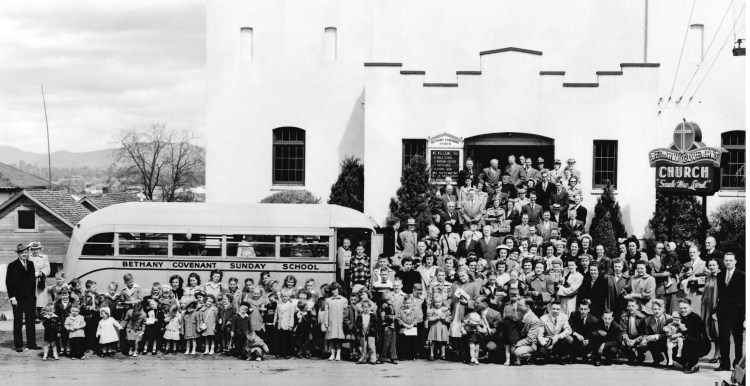
The congregation of Bethany Covenant Church in 1951 in Mount Vernon, Washington poses for a group photo in front of the old church on Evergreen Street. My grandfather built this church. My dad grew up here. My mom began attending here while she was in high school. They were married in this church. Each of my parents and grandparents are in this photo. My earliest memories in life were spent here as well in a soundproof room –in the arms of my mom – behind the sanctuary known as “the cry room.” I would attend here until I went away to college in September of 1973, only to come back nearly 17 years later with my young family to the new church building on 18th Street just east of town.
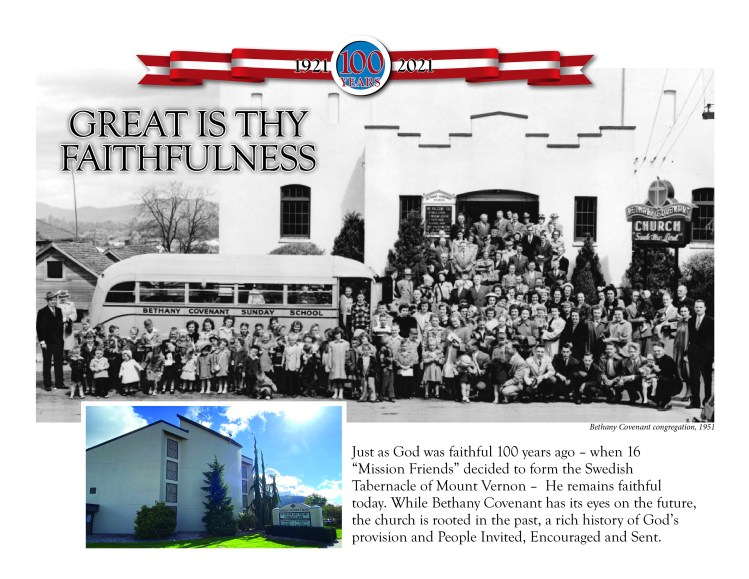
Bethany Covenant Church of Mount Vernon recently turned 100. As a nearly-lifelong attender of BCC I was on the committee that planned the centennial celebration October 23-24. I guess that makes me an old guy.
John Erik Lund was a Swedish immigrant and charter member of Bethany Covenant Church.
We began meeting in April, and one of the things I wanted to do was profile in a video two or three people in the church for each of the 10 decades on consecutive Sundays leading up to the 100th anniversary. Decade No. 1 (1921-1931) highlighted two charter members: John Lund, my grandfather, and Nels Elde, my great grandfather. Also among the 16 charter members was my grandpa’s first wife, Olga. They were joined by my grandpa’s brother, Axel Lund, and his wife, Emily. All four were Swedish immigrants. Olga passed away just one year after our church was formed. In 1923 my grandpa married Elizabeth Elde – known to most as “Lizzie” – who was Nels and Christina’s daughter.
I have such fond memories of my grandparents. Grandpa was a storyteller, had a playful sense of humor, had a nickname for just about everyone – mine was “Rickochet,” my brother “Johnny Cake” – and was a faithful follower of Jesus Christ. All the old-timers at Bethany have a story about my grandpa. He’s one of those special people everyone gravitated to. I was only 12 when he passed away. But I can say without hesitation he’s one of the more influential people in my life. My Grandma Lizzie was also faithful, was liked by everyone, had the gift of hospitality and was leader among the women at Bethany. When our oldest daughter, Krista, was born, we gave her the middle name “Elizabeth” in honor of my grandmother.
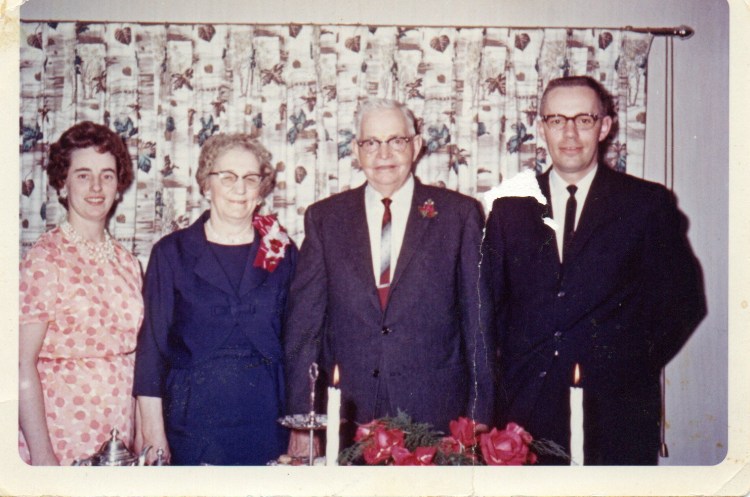
My parents with my grandparents, John and Lizzie Lund, in a photo taken on March 24, 1963. The occasion was be my grandparents’ 40th wedding anniversary, held at my parents’ home on the Beaver Marsh Road west of Mount Vernon.
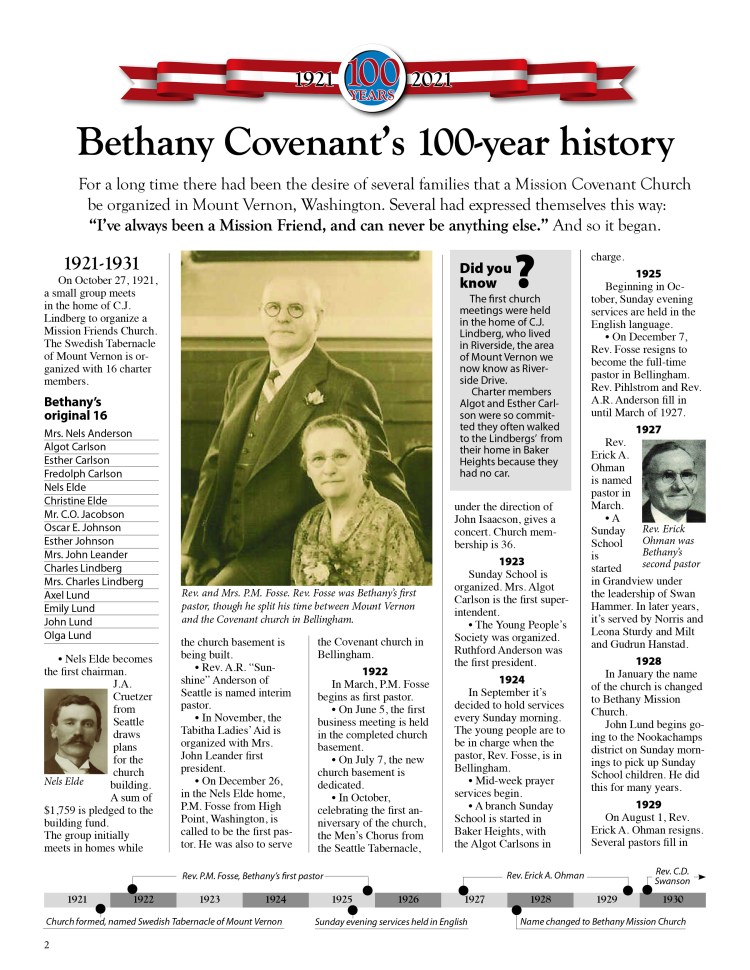
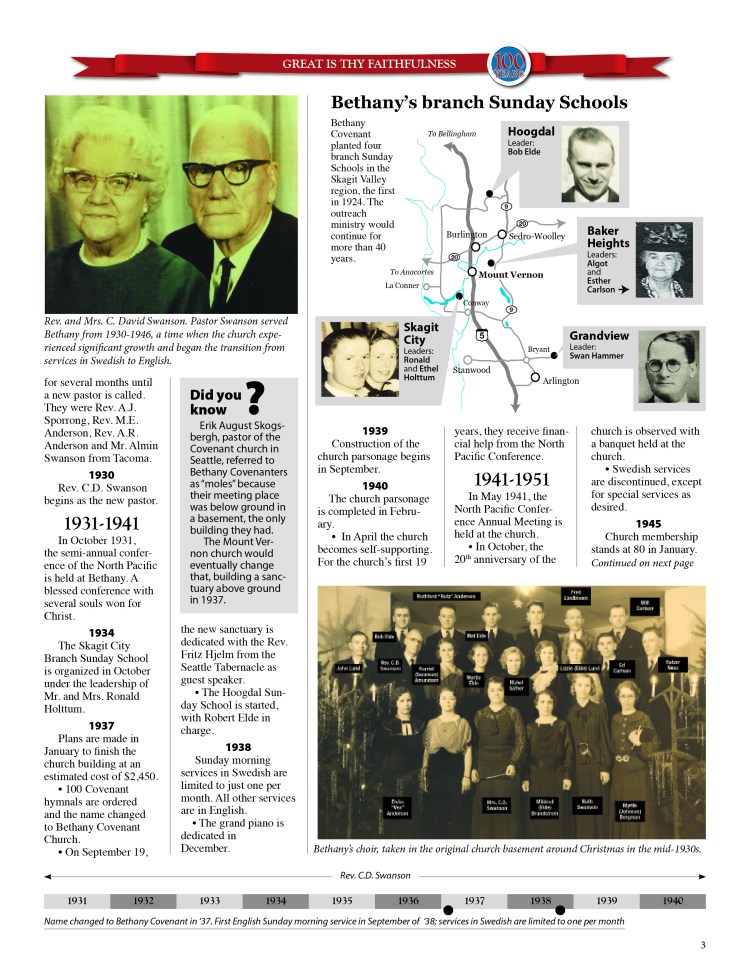
When Bethany turned 50 and 75, the church had compiled historical timelines as a part of commemorative anniversary booklets. As we drew closer to the 100th anniversary, it was apparent no one had updated the timeline since the 75th, in 1996. I was able to do that, with help from former and current staff. Previous timelines were text only. Being a visual journalist, I envisioned a timeline illustrated with photos and graphics. Here’s the first three pages of the 12-page booklet.
A running timeline bar graphic, one for each 10 years, accompanied each page, calling out the more significant events.
A “did you know?” box for each page and a map graphic on BCC’s “branch Sunday Schools” back in the day.
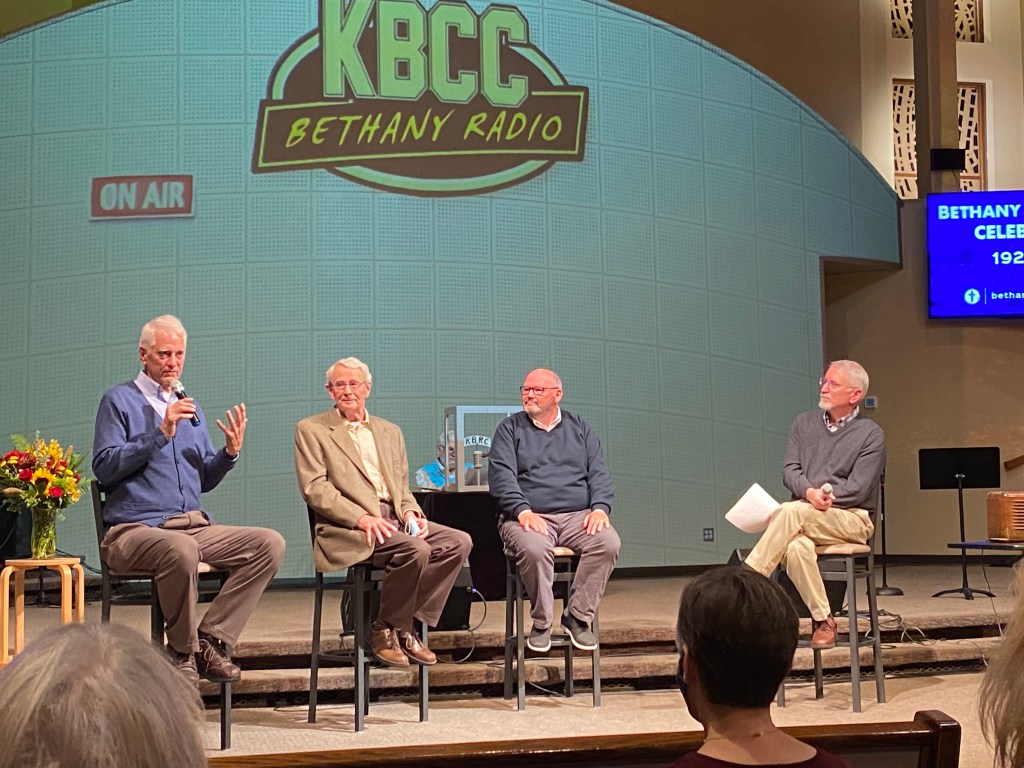
Bethany Covenant had its own live, weekly radio show on KRBC of Mount Vernon. On Saturday night, October 23, we re-inacted what that old-time radio show that began in 1947 would have looked like. The DJ for in this case, “KBCC,” was Bethany’s own Don Wick, who for many years was the voice of KBRC. The emcee for the evening was Steve Elde, my second cousin and one who also grew up in the church.
Steve Elde, far right, interviews three of BCC’s former pastors who are still living, From left, Dwight Nelson, Gary Peterson and Kent Egging. Gary was my pastor when I was in junior high and high school. If not for Gary, I probably wouldn’t have gone to North Park University, where I met Vicki. I had already been accepted to Seattle Pacific College and was definitely headed there when Gary coaxed me to attend the Chicago school. In the background is Don Wick in the KBRC “radio broadcast booth.”
Recently-retired Covenant pastor Don Robinson, who began attending BCC in high school, was the evening’s keynote speaker. The theme for his sermon was “Looking Unto Jesus.” Longtime Bethany Covenanters will also remember those words were mounted on the wall behind the choir loft. These words from the Apostle Paul call us to look back at where we have come from, where we are, and a look ahead to where we are going.
Don’s prefaced his remarks with a story from 1975, a seminal moment in both of our lives. But first, some background.
Don and I were college students at Western Washington University and considering a call to the ministry. Carl Main was Bethany’s pastor at the time. He invested a considerable amount of time in us. Carl was a kind, unassuming man. He met with us on Friday afternoons to go over the order of the Sunday morning service, and gave us opportunities to participate in those worship services. That usually meant giving announcements, or reading scripture. Each of us also were given opportunities to deliver a message for a Sunday evening service. Don was a year away from beginning studies at North Park Theological Seminary. I would return to North Park College for my senior year the following year as well, but unsure what I was going to do with the rest of my life.
Back to Don’s intro to his sermon. Don and I were in charge of that Sunday evening service in 1975. If memory serves me right, Don also was the “keynote speaker” that evening. We ended the service with a silly rendition of the song “Royal Telephone” that was choreographed by Steve Elde. The lyrics went like this:
Telephone to glory, oh what a joy divine! I can feel the current moving on the line. ‘Made by God the Father for His very own, You may talk to Jesus on this royal telephone.
As Don correctly stated, as soon as we finished the song, Willard Hansen rose from his pew, came up to the front and proclaimed: “Boys, we’re on holy ground here!” At that moment, Don and I feared the worst, thinking we were actually “on shaky ground.” Willard, probably in his 50s at the time, was a longtime leader in the church. He was a good man with firm convictions. But he was also a man who wouldn’t put up with any nonsense. He often said what was on his mind.
Willard and Clara Hansen.
What happened next would be a defining moment in each of our lives. Instead of admonishing us, Willard asked for several in the church to come forward, lay hands on us, and pray a prayer of blessing. Don would go on to become an effective pastor and associate superintendent of the Pacific Northwest Conference of Covenant churches. I was probably more infatuated with the idea of being a pastor than of being a pastor. In the end, I didn’t sense God was leading me into ministry, and rightly so. Instead, I pursued a career in journalism.
For many years I felt like Don “passed the test” on that struggle with the call to ministry, and I didn’t. But as Don reflected on that Sunday evening so very long ago at our church’s 100th anniversary, I looked back on that experience through a new lens. I was also the beneficiary of a prayer of blessing. I was dating Vicki long-distance at that time. I was hopeful but not completely confident things were going to work out. Less than two years later, we were married. Truth be told, I am blessed beyond measure. We have three grown, beautiful daughters, three wonderful sons-in-law and seven grandchildren. I just retired from a satisfying career in journalism that led me to experiences and achievements I never dreamed possible. I am blessed with good friends, and continue to serve and be blessed at the same church that in large part shaped my life.
Mount Pilchuck’s lookout shelter offers stunning views of the Central Cascades and the Puget Sound (State Parks photo)
September is a great month for a day hike. I shared my hike to Mount Pilchuck’s historical, restored fire lookout in a story in Sunday’s Seattle Times.
The mountain also has some historical significance for me. I’m old enough to remember seeing the lights from the old ski area at the top of the mountain while driving down I-5 in the early 70s.
Sonja Lund and JB Foreman tie the knot on “Good Saturday,” April 3, on the shores of Seattle’s Lake Union.
The loop has closed. All three of our daughters are now married, and their dad couldn’t be happier, more grateful.
Our beloved middle daughter, Sonja, was the last to tie the knot. She and JB Foreman exchanged vows April 3 on the dock at College Club, a boathouse and headquarters for a rowing club on the shores of Seattle’s Lake Union.
The bride and groom arrived at the wedding venue in a boat – Sonja’s longtime dream on her wedding day — and left in a boat. Now Sonja and her sisters are all in the same boat.
Sandwiched between Good Friday and Easter, I guess you could say this was “Good Saturday.” This day was good in every way.
We all knew the day Sonja got married would be cause for considerable celebration. Her sisters Krista and Greta were both married the summer of 2009. Sonja took her time. We all wondered “when is Sonja going to meet ‘The One?’” Even Sonja wondered from time to time.
“If you would have told me in 2009 that I wouldn’t get married for another 12 years I would have been really depressed,” she told Vicki and I in January, shortly after her and JB were engaged.
It wasn’t like boys weren’t interested in her. I’m a little biased here, but anyone who knows her will agree with this assessment: She’s gorgeous, smart and a kind, caring person.
She dated several guys. But none checked all the boxes, including that her future husband be a man of faith.
“She was picky,” said JB, not trying to sound smug, but agreeing with my “gorgeous, smart and strong faith” description when the two of us met in early January so he could ask me for her hand.
From left, Greta, Sonja and Krista at Sonja’s bachelorette party two days before her wedding.
As a father who helped raise three girls – all of whom I adore — I am glad she was choosy. She could easily have settled. But she didn’t.
JB, like my other two sons-in-law, is a man of integrity. He is a man of deep faith, will be an excellent provider and shares Sonja’s adventurous spirit and zest for life.
The nautical theme for the wedding was right up his alley, or in his case, boat slip. He’s a licensed boat captain, a yacht broker and the owner of an invention company. He wore “boat shoes” and a “boat rope belt” with his suit at the ceremony.
Sonja had always told her friends that when she met “The One,” she would fall fast. That would be the case with JB. The two were introduced to each other by JB’s sister, Katie, a classmate of Sonja’s at Seattle Pacific University. But it took awhile for the romance to begin.
Sonja had confided in Krista she had a crush on JB, but didn’t quite know how to start the relationship. Sonja made the first move, and the two began dating in May of last year. Within seven months they were engaged.
Unfortunately, not all extended family members and friends of Sonja and JB were able to attend this much-anticipated wedding. COVID-19 restrictions kept the number of attendees to 50.
But friends and family were able to watch the ceremony, which was streamed live on Zoom. Earlier-in-the-week forecasts for rain, thankfully, never materialized. Under cloudy skies, but comfortable 63-degree temperatures, and with waves lapping up to the dock, Sonja and JB’s dreams came true.
A Good Saturday, indeed.
Sonja and I for a final father-daughter date at the Palisades Restaurant in Seattle, a few days before her wedding.